
Gesamtpreis (1 Artikel Artikel):
Versandziel:

system logic ratiocinative inductive two von mill john stuart (13 Ergebnisse)
Direkt zu den wichtigsten Suchergebnissen
Suchfilter
Produktart
- Alle Product Types
- Bücher (13)
- Magazine & Zeitschriften (Keine weiteren Ergebnisse entsprechen dieser Verfeinerung)
- Comics (Keine weiteren Ergebnisse entsprechen dieser Verfeinerung)
- Noten (Keine weiteren Ergebnisse entsprechen dieser Verfeinerung)
- Kunst, Grafik & Poster (Keine weiteren Ergebnisse entsprechen dieser Verfeinerung)
- Fotografien (Keine weiteren Ergebnisse entsprechen dieser Verfeinerung)
- Karten (Keine weiteren Ergebnisse entsprechen dieser Verfeinerung)
- Manuskripte & Papierantiquitäten (Keine weiteren Ergebnisse entsprechen dieser Verfeinerung)
Zustand Mehr dazu
Einband
Weitere Eigenschaften
- Erstausgabe (1)
- Signiert (Keine weiteren Ergebnisse entsprechen dieser Verfeinerung)
- Schutzumschlag (Keine weiteren Ergebnisse entsprechen dieser Verfeinerung)
- Angebotsfoto (10)
Sprache (2)
Preis
- Beliebiger Preis
- Weniger als EUR 20 (Keine weiteren Ergebnisse entsprechen dieser Verfeinerung)
- EUR 20 bis EUR 45
- Mehr als EUR 45
Gratisversand
Land des Verkäufers
Verkäuferbewertung
-

A System of Logic, Ratiocinative and Inductive: Being a Connected View of the Principles of Evidence, and the Methods of Scientific Investigation : in Two Volumes
Anbieter: PBShop.store UK, Fairford, GLOS, Vereinigtes Königreich
Verkäuferbewertung 5 von 5 Sternen

EUR 26,01
EUR 6,70 shipping
Versand von Vereinigtes Königreich nach USAAnzahl: 15 verfügbar
In den WarenkorbPAP. Zustand: New. New Book. Shipped from UK. Established seller since 2000.
-
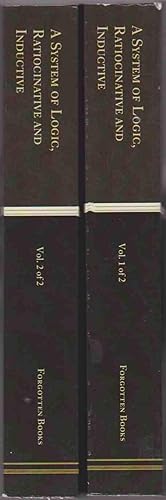
A SYSTEM OF LOGIC, RATIOCINATIVE AND INDUCTIVE: BEING A CONNECTED VIEW OF THE PRINCIPLES OF EVIDENCE AND THE METHODS OF SCIENTIFIC INVESTIGATION; IN TWO VOLUMES
Verlag: Forgotten Books, 2012
Anbieter: Easton's Books, Inc., Mount Vernon, WA, USA
Verkäuferbewertung 5 von 5 Sternen
Paperback. Zustand: VG+. Paperbacks in Very Good+ condition. . 8vo 8" - 9" tall. Includes volume 1 and volume 2. Classic Reprint Series. . * Quick Shipping * All Books Mailed in Boxes * Free Tracking Provided *.
-
Taschenbuch. Zustand: Neu. A System of Logic, Ratiocinative and Inductive | Being a connected view of the principles of evidence and the methods of scientific investigation. In two volumes. Vol. 2 | John Stuart Mill | Taschenbuch | 580 S. | Englisch | 2018 | hansebooks | EAN 9783337418656 | Verantwortliche Person für die EU: Hansebooks GmbH, Trakehner Weg 52, 22844 Norderstedt, gb[at]hansebooks[dot]com | Anbieter: preigu.
-
Taschenbuch. Zustand: Neu. A System of Logic, Ratiocinative and Inductive | Being a connected view of the principles of evidence and the methods of scientific investigation. In two volumes. Vol. 1 | John Stuart Mill | Taschenbuch | 588 S. | Englisch | 2018 | hansebooks | EAN 9783337418663 | Verantwortliche Person für die EU: Hansebooks GmbH, Trakehner Weg 52, 22844 Norderstedt, gb[at]hansebooks[dot]com | Anbieter: preigu.
-
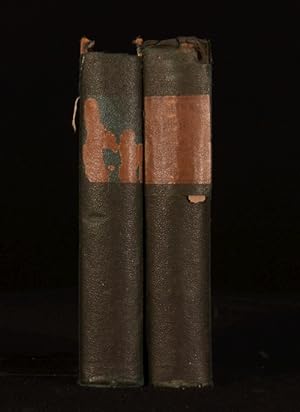
A System of Logic - Ratiocinative and Inductive [Complete in Two Volumes] Being a Connected View of the Principles of Evidence, and the Methods of Scientific Investigation
Verlag: Longmans, Green, Reader and Dyer, 1865
Anbieter: Walden Books, London, Vereinigtes Königreich
Verkäuferbewertung 4 von 5 Sternen

EUR 58,81
EUR 17,13 shipping
Versand von Vereinigtes Königreich nach USAAnzahl: 1 verfügbar
In den WarenkorbHardback. Zustand: Fair. Zustand des Schutzumschlags: No Dust Jacket. [Vol i - Sixth Edition (1865), Vol ii - Eigth Edition (1872)] Boards bound uniformly in dark navy cloth with embossed borders and a paper title-plate at the spine, vol i is the worse for wear with water and mildew damage at the front and rear, a torn title plate and considerable splits to the cloth at the spine; The boards on vol ii remain firm and bright, with only a few light scuffs and bumps, title plate a little nicked; No ownership signature in either volume, foxing to the prelims, the text is clean in vol ii, however vol i bears occasional underlining in light blue pencil, and one or two marks in red ink, these annotations are almost entirely confined to the first 100 pages; Paper covering at hinges is split in vol i, however the text remains tightly bound, as is the case in vol ii. Overall a fair set with great fragility in vol i. ; 23 x 15 x 8 cm; i 543, ii 557 pages.
-
A System of Logic, Ratiocinative and Inductive In Two Volumes
Verlag: Longmans, Green, Reader and Dyer, London, 1872
Anbieter: Rooke Books PBFA, Bath, Vereinigtes Königreich
Verbandsmitglied: PBFA
Verkäuferbewertung 5 von 5 Sternen
EUR 117,61
EUR 17,12 shipping
Versand von Vereinigtes Königreich nach USAAnzahl: 1 verfügbar
In den WarenkorbCloth. Zustand: Fair. None (illustrator). The complete set of John Stuart Mill's influential philosophical work. Eighth Edition. 'Being a connected view of the principles of evidence and the methods of scientific investigation'. John Stuart Mill was a British philosopher, political economist and civil servant. He was also an influential contributor to social theory, political theory, and political economy. He has been called "the most influential English-speaking philosopher of the nineteenth century". Hoping to remedy the problems found in an inductive approach to science, such as confirmation bias, he clearly set forth the premises of falsification as the key component in the scientific method. In this work, he formulated the five principles of inductive reasoning that are known as Mill's methods. Featuring half titles to both volumes. Complete in two volumes. In original publisher's cloth bindings with paper spine labels. Externally, both volumes are lightly rubbed with loss to the spine labels. One backstrip is lifting. All joints are starting, three hinges have failed and the other is weak. Internally, volume two is generally firmly bound, with the text block being split to volume one. Bright and generally clean, although with light spotting to the first and last pages. Fair. book.
-
A System of Logic, Ratiocinative and Inductive. In two volumes
Verlag: Longmans, Green, Reader and Dyer, London, 1872
Anbieter: Rooke Books PBFA, Bath, Vereinigtes Königreich
Verbandsmitglied: PBFA
Verkäuferbewertung 5 von 5 Sternen
EUR 117,61
EUR 17,12 shipping
Versand von Vereinigtes Königreich nach USAAnzahl: 1 verfügbar
In den WarenkorbCloth. Zustand: Fair. None (illustrator). An early edition of John Stuart Mill's influential philosophical work. Eighth Edition. 'Being a connected view of the principles of evidence and the methods of scientific investigation'. Complete in two volumes. Bookseller's labels of 'Veuve J. Boyveau', France, to front pastedowns. John Stuart Mill FRSE (20 May 1806 8 May 1873) was a British philosopher, political economist and civil servant. He was also an influential contributor to social theory, political theory, and political economy. He has been called "the most influential English-speaking philosopher of the nineteenth century" Mill's conception of liberty justified the freedom of the individual in opposition to unlimited state control. He was a proponent of utilitarianism, an ethical theory developed by Jeremy Bentham. Hoping to remedy the problems found in an inductive approach to science, such as confirmation bias, he clearly set forth the premises of falsification as the key component in the scientific method. Mill was also a Member of Parliament and an important figure in liberal political philosophy. In this work, he formulated the five principles of inductive reasoning that are known as Mill's methods. In original publisher's cloth bindings, paper spine labels. Externally worn, joints starting, one hinge has failed and the others are weak. In need of a sympathetic rebinding. Internally, generally firmly bound, title page of volume I detached but present, strained in one or two places. Bright and clean, just the odd spot, slight dusting Fair. book.
-
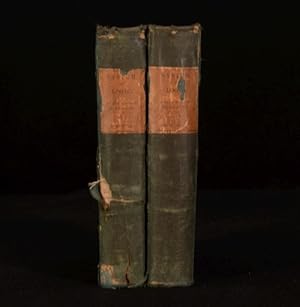
A System of Logic, ratiocinative and inductive, being a connected view of the principles of evidence and the methods of scientific investigations [.] In two volume. Vol. I. Sixth edition.
Anbieter: Libreria Oreste Gozzini snc, Firenze, FI, Italien
Verkäuferbewertung 5 von 5 Sternen
London, Longamans, Green anc Co., 1865, un volume in-8, legatura editoriale in piena tela (evidenti ondulazioni dovute ad umidità alla tela sul dorso e sul piatto posteriore), pp. XX, 543, [1]. Manca il volume secondo.
-

A System of Logic, Ratiocinative and Inductive, Being a Connected View of the Principles of Evidence, and the Methods of Scientific Investigation. In Two Volumes. Vol. II. Second Edition.
Verlag: London: John W. Parker, 1846
Anbieter: Books From California, Simi Valley, CA, USA
Verkäuferbewertung 5 von 5 Sternen
Hardcover. Zustand: Good. Volume 2 only. Ex-library copy with usual markings. Rebacked spine, marbled boards and erosion on the leather corners, cover shows minor wear and rubbing, edgewear. Pages are lightly tanned and mostly clean.
-
A System of Logic, Ratiocinative and Inductive, Being a Connected View of the Principles of Evidence, and the Methods of Scientific Investigation, in Two Volumes
Verlag: John W. Parker, London, 1851
Anbieter: Minotavros Books, ABAC ILAB, Whitby, ON, Kanada
Verkäuferbewertung 5 von 5 Sternen
Hardcover. Zustand: Near Fine. No Jacket. 3rd Edition. 8vo. Third edition.Rebound, Contemporary calf,New leather spine labels, raised bands, gilt stamped compartments and armorial devices to front boards. Outer edges gilt dentelle Marbled edges and endpapers. Ribbon markers. xvi, 502; xii, 527 pp. Darkening to spineds, some scuffing and chafing to leather, minor wear to corners and spine ends, very clean.
-
A System of Logic, Ratiocinative and Inductive, being a connected view of the principles of evidence and the methods of scientific investigation (in two volumes)
Verlag: London, Longmans Green, , 10th edition, 1879
Anbieter: Pallas Books Antiquarian Booksellers, Leiden, Niederlande
Verkäuferbewertung 4 von 5 Sternen
decorated leather prize-binding, maarbled endpapers, 8vo, 2 vols xx+563, xv+557 pp. fine richly decorated prize binding; Alleyn's College of God's Gift at Dulwich, awarded to G.E. Crawford, 1881; in fine condition, almost unused.
-
A System of Logic, Ratiocinative and Inductive, Being a Connected View of the Principal Evidence, and the Methods of Scientific Investigation. In Two Volumes. 2 vols.
Anbieter: Herman H. J. Lynge & Søn ILAB-ABF, Copenhagen, Dänemark
Verkäuferbewertung 4 von 5 Sternen
London, Longmans, Green, and Co, 1879. 8vo. Two volumes uniformly bound in publisher's original cloth bindings with paper title-labels to spines. Spines with wear and hinges a bit weak. Tenth edition of what is probably Mill's greatest book, an epochal work in logical enquiry, not only for British philosophy, but for modern thought in general.
-
A System of Logic, Ratiocinative and Inductive, Being a Connected View of the Principal Evidence, and the Methods of Scientific Investigation. In Two Volumes. 2 vols. - [THE SCIENTIST'S CLAIM TO TRUTH]
Anbieter: Herman H. J. Lynge & Søn ILAB-ABF, Copenhagen, Dänemark
Verkäuferbewertung 4 von 5 Sternen
Erstausgabe
London, John W. Parker, 1843. 8vo. 2 uniform contemporary half calf bindings with five raised gilt bands to gilt spines. Marbled edges. A nice and tight set with only minor wear to extremities. Vol. 1 with tiny damp-stainin to upper margin, barely affecting but a little bit of the end-papers and the first three leaves - here only the top blank margin, far from affecting any text. Blank leaves a bit brownspotted, otherwise also internally very nice and clean. (2), XVI, 580" (2), XII, 624 pp. Bookplate of "Reginald Dykes Marshall" to inside of both front boards. The scarce first edition of what is probably Mill's greatest book, an epochal work in logical enquiry, not only for British philosophy, but for modern thought in general. "Mill's most important work in pure philosophy was his "System of Logic", which he began at the age of twenty-four and completed thirteen years later" (D.S.B. IX:383).By the first quarter of the 19th century, the theory of logic had been almost overlooked in the English speaking world for centuries. Logic was practiced merely as an academic study on traditional lines, with Aristotle as the great master, but with Mill and some of his contemporaries this was about to change, and Mill's theory of terms, propositions, the syllogism, induction etc., greatly affected 19th century English thought. The many years that Mill allowed himself to work on his "System of Logic" allowed him to be inspired by a number of important steps that were made towards the development of the theory of logic in order to fulfill his groundbreaking work. Mill's main concern as a philosopher was to overrule the influence of the sceptical philosophers and provide science with a better claim to truth. A main breakthrough in Mill's Logic was thus his analysis of inductive proof, and his originality on this point cannot be denied. "We have found that all Inference, consequently all Proof, and all discovery of truths not self-evident, consists of inductions, and the interpretation of inductions: that all our knowledge, not intuitive, comes to us exclusively from that source. What Induction is, therefore, and what conditions render it legitimate, cannot but be deemed the main question of the science of logic - the question which includes all others. It is, however, one which professed writers of logic have almost entirely passed over. The generalities of the subject have not been altogether neglected by metaphysicians, but, for want of sufficient acquaintance with the processes by which science has actually succeeded in establishing general truths, their analysis of the inductive operation, even when unexceptionable as to correctness, has not been specific enough to be made the foundation of practical rules, which might be for induction itself what the rules of syllogism are for the interpretation of induction. " (A System of Logic, Vol. 1, p. 345) . With his demonstrative theory of induction, Mill reduced the conditions of scientific proof to strict rules and scientific tests. He provided the empirical sciences with formulae and criteria that played as important a role to them as the formulae of syllogism had done to arguments that proceeded from general principles. The laws that Mill established are discovered with his famous "eliminative methods of induction", which later figured prominently in controversies about scientific method.Mill's Logic came to found a new strand in the theory of logic, logic as incorporated in a general theory of knowledge, where the whole is rendered more precise by its definite reference to the question of proof. According to Mill the ultimate elements of knowledge are subjective entities, however, knowledge does have objective validity. "Logic alone can never show that the fact A proves the fact B" but it can point out to what conditions all facts must confirm, in order that they might prove other facts. To decide whether any given fact fulfils these conditions, or whether facts can be found which fulfil them in any given case, belongs, exclusively, to the particular art or science, or to our knowledge of the particular subject." (Introduction, § 3, p. 11). The work underwent several editions, and Mill kept changing it considerably. The first edition is said to have been printed in a small number, less than 1.000.



![Bild des Verkäufers für A System of Logic - Ratiocinative and Inductive [Complete in Two Volumes] Being a Connected View of the Principles of Evidence, and the Methods of Scientific Investigation zum Verkauf von Walden Books](https://pictures.abebooks.com/inventory/md/md31127604365.jpg)

![Bild des Verkäufers für A System of Logic, ratiocinative and inductive, being a connected view of the principles of evidence and the methods of scientific investigations [.] In two volume. Vol. I. Sixth edition. zum Verkauf von Libreria Oreste Gozzini snc](https://pictures.abebooks.com/inventory/md/md30857503029.jpg)


![Bild des Verkäufers für A System of Logic, Ratiocinative and Inductive, Being a Connected View of the Principal Evidence, and the Methods of Scientific Investigation. In Two Volumes. 2 vols. - [THE SCIENTIST'S CLAIM TO TRUTH] zum Verkauf von Herman H. J. Lynge & Søn ILAB-ABF](https://pictures.abebooks.com/inventory/md/md12686266567.jpg)