

Gesamtpreis (1 Artikel Artikel):
Versandziel:

pthreads programming posix standard von buttlar dick (9 Ergebnisse)
Direkt zu den wichtigsten Suchergebnissen
Suchfilter
Produktart
- Alle Product Types
- Bücher (9)
- Magazine & Zeitschriften (Keine weiteren Ergebnisse entsprechen dieser Verfeinerung)
- Comics (Keine weiteren Ergebnisse entsprechen dieser Verfeinerung)
- Noten (Keine weiteren Ergebnisse entsprechen dieser Verfeinerung)
- Kunst, Grafik & Poster (Keine weiteren Ergebnisse entsprechen dieser Verfeinerung)
- Fotografien (Keine weiteren Ergebnisse entsprechen dieser Verfeinerung)
- Karten (Keine weiteren Ergebnisse entsprechen dieser Verfeinerung)
- Manuskripte & Papierantiquitäten (Keine weiteren Ergebnisse entsprechen dieser Verfeinerung)
Zustand Mehr dazu
- Neu (2)
- Wie Neu, Sehr Gut oder Gut Bis Sehr Gut (Keine weiteren Ergebnisse entsprechen dieser Verfeinerung)
- Gut oder Befriedigend (7)
- Ausreichend oder Schlecht (Keine weiteren Ergebnisse entsprechen dieser Verfeinerung)
- Wie beschrieben (Keine weiteren Ergebnisse entsprechen dieser Verfeinerung)
Einband
- alle Einbände
- Hardcover (Keine weiteren Ergebnisse entsprechen dieser Verfeinerung)
- Softcover (9)
Weitere Eigenschaften
- Erstausgabe (Keine weiteren Ergebnisse entsprechen dieser Verfeinerung)
- Signiert (Keine weiteren Ergebnisse entsprechen dieser Verfeinerung)
- Schutzumschlag (Keine weiteren Ergebnisse entsprechen dieser Verfeinerung)
- Angebotsfoto (2)
Sprache (1)
Preis
- Beliebiger Preis
- Weniger als EUR 20
- EUR 20 bis EUR 45
- Mehr als EUR 45 (Keine weiteren Ergebnisse entsprechen dieser Verfeinerung)
Gratisversand
Land des Verkäufers
Verkäuferbewertung
-

Pthreads Programming: A Posix Standard for Better Multiprocessing
Anbieter: ThriftBooks-Phoenix, Phoenix, AZ, USA
Verkäuferbewertung 5 von 5 Sternen

Paperback. Zustand: Very Good. No Jacket. May have limited writing in cover pages. Pages are unmarked. ~ ThriftBooks: Read More, Spend Less.
-
Pthreads Programming: A Posix Standard for Better Multiprocessing
Anbieter: ThriftBooks-Atlanta, AUSTELL, GA, USA
Verkäuferbewertung 5 von 5 Sternen
Paperback. Zustand: Very Good. No Jacket. May have limited writing in cover pages. Pages are unmarked. ~ ThriftBooks: Read More, Spend Less.
-
PThreads Programming : A POSIX Standard for Better Multiprocessing
Sprache: Englisch
Verlag: O'Reilly Media, Incorporated, 1996
ISBN 10: 1565921151 ISBN 13: 9781565921153
Anbieter: Better World Books: West, Reno, NV, USA
Verkäuferbewertung 5 von 5 Sternen
Zustand: Good. Pages intact with minimal writing/highlighting. The binding may be loose and creased. Dust jackets/supplements are not included. Stock photo provided. Product includes identifying sticker. Better World Books: Buy Books. Do Good.
-
PThreads Programming: A POSIX Standard for Better Multiprocessing
Sprache: Englisch
Verlag: O'Reilly Media (edition 1), 1996
ISBN 10: 1565921151 ISBN 13: 9781565921153
Paperback. Zustand: Good. 1. It's a preowned item in good condition and includes all the pages. It may have some general signs of wear and tear, such as markings, highlighting, slight damage to the cover, minimal wear to the binding, etc., but they will not affect the overall reading experience.
-
PThreads Programming: A POSIX Standard for Better Multiprocessing
Anbieter: Wonder Book, Frederick, MD, USA
Verkäuferbewertung 5 von 5 Sternen
Zustand: Good. Good condition. A copy that has been read but remains intact. May contain markings such as bookplates, stamps, limited notes and highlighting, or a few light stains.
-
Zustand: good. Befriedigend/Good: Durchschnittlich erhaltenes Buch bzw. Schutzumschlag mit Gebrauchsspuren, aber vollständigen Seiten. / Describes the average WORN book or dust jacket that has all the pages present.
-
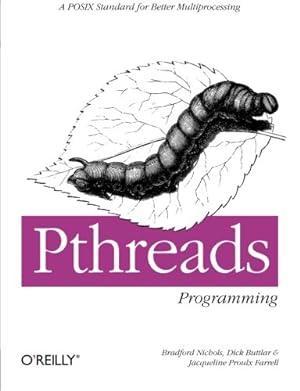
Pthreads Programming: A Posix Standard for Better Multiprocessing (A Nutshell handbook)
Sprache: Englisch
Verlag: O'Reilly Media 01.10.1996., 1996
ISBN 10: 1565921151 ISBN 13: 9781565921153
Anbieter: NEPO UG, Rüsselsheim am Main, Deutschland
Verkäuferbewertung 5 von 5 Sternen
Zustand: Gut. 286 Seiten ex library book - Sprache: Englisch Gewicht in Gramm: 469 23,2 x 17,8 x 2,0 cm, Taschenbuch.
-
Pthreads Programming: A POSIX Standard for Better Multiprocessing (O'Reilly Nutshell)
Anbieter: Revaluation Books, Exeter, Vereinigtes Königreich
Verkäuferbewertung 5 von 5 Sternen
EUR 37,43
EUR 11,49 Versand
Versand von Vereinigtes Königreich nach USAAnzahl: 2 verfügbar
In den WarenkorbPaperback. Zustand: Brand New. 1st edition. 286 pages. 9.00x7.50x0.50 inches. In Stock.
-

Pthreads Programming : A Posix Standard for Better Multiprocessing
Anbieter: AHA-BUCH GmbH, Einbeck, Deutschland
Verkäuferbewertung 5 von 5 Sternen
Taschenbuch. Zustand: Neu. Neuware - Computers are just as busy as the rest of us nowadays. They have lots of tasks to do at once, and need some cleverness to get them all done at the same time.That's why threads are seen more and more often as a new model for programming. Threads have been available for some time. The Mach operating system, the Distributed Computer Environment (DCE), and Windows NT all feature threads.One advantage of most UNIX implementations, as well as DCE, is that they conform to a recently ratified POSIX standard (originally 1003.4a, now 1003.1c), which allows your programs to be portable between them. POSIX threads are commonly known as pthreads, after the word that starts all the names of the function calls. The standard is supported by Solaris, OSF/1, AIX, and several other UNIX-based operating systems.The idea behind threads programming is to have multiple tasks running concurrently within the same program. They can share a single CPU as processes do, or take advantage of multiple CPUs when available. In either case, they provide a clean way to divide the tasks of a program while sharing data.A window interface can read input on dozens of different buttons, each responsible for a separate task. A network server has to accept simultaneous calls from many clients, providing each with reasonable response time. A multiprocessor runs a number-crunching program on several CPUs at once, combining the results when all are done. All these kinds of applications can benefit from threads.In this book you will learn not only what the pthread calls are, but when it is a good idea to use threads and how to make them efficient (which is the whole reason for using threads in the first place). The authors delves into performance issues, comparing threads to processes, contrasting kernel threads to user threads, and showing how to measure speed. He also describes in a simple, clear manner what all the advanced features are for, and how threads interact with the rest of the UNIX system.Topics include: Basic design techniques - Mutexes, conditions, and specialized synchronization techniques - Scheduling, priorities, and other real-time issues - Cancellation - UNIX libraries and re-entrant routines - Signals - Debugging tips - Measuring performance - Special considerations for the Distributed Computing Environment (DCE).
