
Gesamtpreis (1 Artikel Artikel):
Versandziel:

onflow dynamics consciousness experience von pred ralph jason (4 Ergebnisse)
Direkt zu den wichtigsten Suchergebnissen
Suchfilter
Produktart
- Alle Product Types
- Bücher (4)
- Magazine & Zeitschriften (Keine weiteren Ergebnisse entsprechen dieser Verfeinerung)
- Comics (Keine weiteren Ergebnisse entsprechen dieser Verfeinerung)
- Noten (Keine weiteren Ergebnisse entsprechen dieser Verfeinerung)
- Kunst, Grafik & Poster (Keine weiteren Ergebnisse entsprechen dieser Verfeinerung)
- Fotografien (Keine weiteren Ergebnisse entsprechen dieser Verfeinerung)
- Karten (Keine weiteren Ergebnisse entsprechen dieser Verfeinerung)
- Manuskripte & Papierantiquitäten (Keine weiteren Ergebnisse entsprechen dieser Verfeinerung)
Zustand Mehr dazu
- Neu (Keine weiteren Ergebnisse entsprechen dieser Verfeinerung)
- Wie Neu, Sehr Gut oder Gut Bis Sehr Gut (1)
- Gut oder Befriedigend (2)
- Ausreichend oder Schlecht (Keine weiteren Ergebnisse entsprechen dieser Verfeinerung)
- Wie beschrieben (1)
Einband
Weitere Eigenschaften
- Erstausgabe (Keine weiteren Ergebnisse entsprechen dieser Verfeinerung)
- Signiert (Keine weiteren Ergebnisse entsprechen dieser Verfeinerung)
- Schutzumschlag (2)
- Angebotsfoto (Keine weiteren Ergebnisse entsprechen dieser Verfeinerung)
Sprache (2)
Preis
- Beliebiger Preis
- Weniger als EUR 20
- EUR 20 bis EUR 45
- Mehr als EUR 45 (Keine weiteren Ergebnisse entsprechen dieser Verfeinerung)
Gratisversand
Land des Verkäufers
Verkäuferbewertung
-
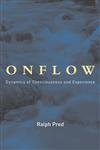
Onflow: Dynamics Of Consciousness And Experience
Anbieter: ThriftBooks-Atlanta, AUSTELL, GA, USA
Verkäuferbewertung 5 von 5 Sternen

Hardcover. Zustand: Good. No Jacket. Pages can have notes/highlighting. Spine may show signs of wear. ~ ThriftBooks: Read More, Spend Less.
-
Onflow â" Dynamics of Consciousness and Experience
Verlag: MIT Press Ltd, United States, Massachusetts, 2005
ISBN 10: 026216227X ISBN 13: 9780262162272
Sprache: Englisch
Anbieter: WorldofBooks, Goring-By-Sea, WS, Vereinigtes Königreich
Verkäuferbewertung 5 von 5 Sternen
EUR 32,87
EUR 6,41 shipping
Ships from Vereinigtes Königreich to USAAnzahl: 1 verfügbar
In den WarenkorbPaperback. Zustand: Very Good. The book has been read, but is in excellent condition. Pages are intact and not marred by notes or highlighting. The spine remains undamaged.
-
Onflow : dynamics of consciousness and experience.
Anbieter: Kloof Booksellers & Scientia Verlag, Amsterdam, Niederlande
Verkäuferbewertung 4 von 5 Sternen

Zustand: as new. Cambridge, MA : MIT Press, 2005. Hardcover. Dustjacket. 348 pp. Condition : as new. "A Bradford book." - Understanding consciousness by taking the stream of consciousness seriously; a general characterization of experience and a detailed description of experience from within, drawing on theories of William James, Alfred North Whitehead, John Searle, and Gerald Edelman.In Onflow, Ralph Pred supplies an account of the nature of consciousness that grapples with the raw unverbalized stream of experience. Unlike other recent philosophical accounts of consciousness, Pred's analysis deals with the elusive and commonly neglected continuities in the stream of consciousness. Pred offers a general characterization and analysis of experience as well as a highly detailed interpretation of experience from within. Determined to make conceptual contact with the immediacy of actual experience, Pred carries forward the radical empiricism pioneered by William James (who coined the term stream of consciousness ) and draws on the process philosophy of Alfred North Whitehead.To help readers apprehend the formation of conscious thoughts, the intertwining of perception and action, and the working of consciousness in onflowing experience, Pred applies methods of analysis developed in John Searle's theory of intentionality to James's views, thereby showing how intentional states are embedded in the stream of consciousness. Then, calling on Whitehead's treatment of lived moments as acts of experience, Pred provides an account of consciousness that at once deals with conscious thoughts as they emerge from and function in embodied, socialized experience and illustrates how language distorts our understanding of experience and subjectivity. Finally, he details striking parallels between this account and Gerald Edelman's biological theory of consciousness, and, in contrasting the two, argues for a revitalized version of the experiental monism originally formulated by James. Condition : as new copy. ISBN 9780262162272. Keywords : PHILOSOPHY,
-

Onflow: Dynamics of Consciousness and Experience
Verlag: MIT Press (2005), Cambridge [MA], 2005
Anbieter: Expatriate Bookshop of Denmark, Svendborg, Dänemark
Verkäuferbewertung 5 von 5 Sternen
orig.cloth Minor rubbing. An ink mark to bottom page-edge. VG., dustwrapper 24x15cm, xii,348 p. "In Onflow, Ralph Pred supplies an account of the nature of consciousness that grapples with "the raw unverbalized stream of experience." Unlike other recent philosophical accounts of consciousness, Pred's analysis deals with the elusive and commonly neglected continuities in the stream of consciousness. Pred offers a general characterization and analysis of experience as well as a highly detailed interpretation of experience from within. Determined to make "conceptual contact" with the immediacy of actual experience, Pred carries forward the radical empiricism pioneered by William James (who coined the term "stream of consciousness") and draws on the process philosophy of Alfred North Whitehead. To help readers apprehend the formation of conscious thoughts, the intertwining of perception and action, and the working of consciousness in onflowing experience, Pred applies methods of analysis developed in John Searle's theory of intentionality to James's views, thereby showing how intentional states are embedded in the stream of consciousness. Then, calling on Whitehead's treatment of lived moments as acts of experience, Pred provides an account of consciousness that at once deals with conscious thoughts as they emerge from and function in embodied, socialized experience and illustrates how language distorts our understanding of experience and subjectivity. Finally, he details striking parallels between this account and Gerald Edelman's biological theory of consciousness, and, in contrasting the two, argues for a revitalized Minor rubbing. An ink mark to bottom page-edge. VG., dustwrapper.


