
Mosquitoes wolves evolution airborne (3 Ergebnisse)

Anbieter: Better World Books, Mishawaka, IN, USABetter World Books
Verkäufer/-in kontaktierenVerkäufer/-in mit 5 SternenZustand: Gebraucht - Befriedigend
EUR 10,45
Versand nach gratisVersand innerhalb von USAAnzahl: 1 verfügbar
Zustand: Good. Pages intact with minimal writing/highlighting. The binding may be loose and creased. Dust jackets/supplements are not included. Stock photo provided. Product includes identifying sticker. Better World Books: Buy Books. Do Good.
- Softcover
Anbieter: Revaluation Books, Exeter, Vereinigtes KönigreichRevaluation Books
Verkäufer/-in kontaktierenVerkäufer/-in mit 5 SternenZustand: Neu
EUR 37,66
EUR 14,59 VersandVersand von Vereinigtes Königreich nach USAAnzahl: 1 verfügbar
Paperback. Zustand: Brand New. 295 pages. 10.00x7.00x0.74 inches. In Stock.
Verlag: Air University Press, Maxwell Air Force Base, Alabama, 1997
- Softcover
- Erstausgabe
Anbieter: Ground Zero Books, Ltd., Silver Spring, MD, USAGround Zero Books, Ltd.
Verkäufer/-in kontaktierenVerkäufer/-in mit 5 SternenZustand: Gebraucht - Gut
EUR 49,79
EUR 4,39 VersandVersand innerhalb von USAAnzahl: 1 verfügbar
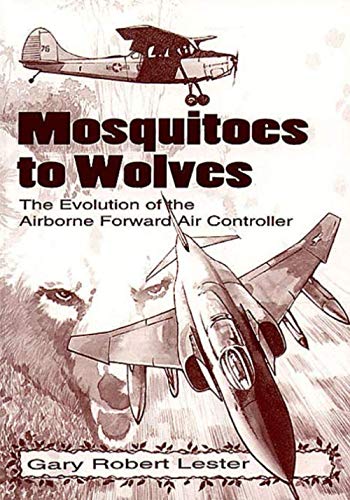
Trade paperback. Zustand: Very good. Presumed First Edition, First printing. xiii, [1], 280, [2] pages. Illustrations. Maps. Notes. Bibliography. Index. Cover has slight wear and soiling. Topics addressed include: Close Air Support, Air Superiority, Pusan, Yalu, Command and Control, Mosquito Operations, Counterinsurgency, Gulf o…f Tonkin, Visual Reconnaissance, Air Operations, Commando Sabre, Lam Son 719, Interdiction, Operation Linebacker. Lt. Col. (Ret.) Gary R. Lester, Ph.D. was born August 3, 1947. After graduating from Wichita State University, he followed his father into military service in 1969 and was a veteran combat pilot. He retired from the Air Force in 1990 after 22 years of service that included two tours in Vietnam and earned him the Distinguished Flying Cross, Meritorious Service Medal, Air Medal, and Air Force Commendation Medal, among other honors. After retiring in 1992, he obtained his doctorate in military history from Florida State University and began a second career as a college professor. He was the author of the seminal work, Mosquitoes to Wolves: The Evolution of the Forward Air Controller. In 2004, he returned to the Air Force in a civilian role as an official historian, documenting the war in Iraq. Dr. Lester traces the evolution of US close air support, with special emphasis on Korea and Vietnam. He discusses the differing views of the Army, Navy, Marine Corps, and Air Force at some length and compares close air support in these two conflicts. The author notes the need for close air support in the Gulf War and explores the future of close air support. He punctuates this history and analysis with dramatic experiences of those who made it happen. Forward air controllers (FACs) played a significant part in the Vietnam War from the very start. Largely relegated to airborne duty by the constraints of jungle terrain, FACs began operations as early as 1962. Using makeshift propeller-driven aircraft and inadequate radio nets, they became so essential to air operations that the overall need for FACs would not be completely satisfied until 1969. The FAC's expertise as an air strike controller also made him an intelligence source, munitions expert, communication specialist, and above all, the on-scene commander of the strike forces and the start of any subsequent combat search and rescue if necessary. Present as advisors under Farm Gate, FACs grew even more important as American troops poured into Vietnam after the Gulf of Tonkin incident. The U.S. Air Force (USAF) would swell its FAC complement to as many as 668 FACs in Vietnam by 1968; there were also FACs from the U.S. Army, U.S. Navy, U.S. Marine Corps, and allied nations. For the early years of the war USAF manning levels were at about 70% of need; they finally reached 100% in December 1969. The FACs would be essential participants in close air support in South Vietnam, interdiction efforts against the Ho Chi Minh Trail, supporting a guerrilla war on the Plain of Jars in Laos, and probing home defenses in North Vietnam. As the war came to center on the Trail in 1969, the FAC role began to be marginalized. Anti-aircraft (AAA) defenses became steadily more aggressive and threatening along the Trail as the bombing of North Vietnam closed down. The communist enemy moved their supply activities to nighttime, quite literally leaving the FACs in the dark. The American response was twofold. They used fixed-wing gunships with electronic sensors to detect communist trucks, and onboard weaponry to destroy them. They also began putting FACs in jet aircraft and in flareships as a counter to the AAA threat. At about the same time, emplaced ground sensors began to complement and overshadow FAC reconnaissance as an intelligence source. FAC guidance of munitions also began to come into play in 1970. By the time the Vietnam War ended in 1975, the U.S. and its allies had dropped about six times as many tons of bombs as had been dropped in the entirety of World War II. A considerable proportion of this tonnage had been directed by forward air contro.
