
Gesamtpreis (1 Artikel Artikel):
Versandziel:

microorganisms bioterrorism (8 Ergebnisse)
Direkt zu den wichtigsten Suchergebnissen
Suchfilter
Produktart
- Alle Product Types
- Bücher (8)
- Magazine & Zeitschriften (Keine weiteren Ergebnisse entsprechen dieser Verfeinerung)
- Comics (Keine weiteren Ergebnisse entsprechen dieser Verfeinerung)
- Noten (Keine weiteren Ergebnisse entsprechen dieser Verfeinerung)
- Kunst, Grafik & Poster (Keine weiteren Ergebnisse entsprechen dieser Verfeinerung)
- Fotografien (Keine weiteren Ergebnisse entsprechen dieser Verfeinerung)
- Karten (Keine weiteren Ergebnisse entsprechen dieser Verfeinerung)
- Manuskripte & Papierantiquitäten (Keine weiteren Ergebnisse entsprechen dieser Verfeinerung)
Zustand Mehr dazu
- Neu (5)
- Wie Neu, Sehr Gut oder Gut Bis Sehr Gut (1)
- Gut oder Befriedigend (1)
- Ausreichend oder Schlecht (Keine weiteren Ergebnisse entsprechen dieser Verfeinerung)
- Wie beschrieben (1)
Einband
Weitere Eigenschaften
- Erstausgabe (Keine weiteren Ergebnisse entsprechen dieser Verfeinerung)
- Signiert (Keine weiteren Ergebnisse entsprechen dieser Verfeinerung)
- Schutzumschlag (Keine weiteren Ergebnisse entsprechen dieser Verfeinerung)
- Angebotsfoto (3)
Sprache (1)
Gratisversand
Land des Verkäufers
Verkäuferbewertung
-
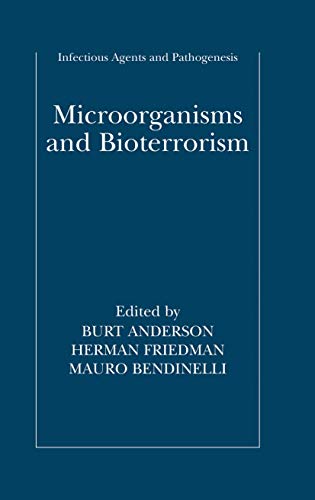
Microorganisms and Bioterrorism
Buch 8 von 9: Infectious Agents and PathogenesisAnbieter: Better World Books, Mishawaka, IN, USA
Verkäuferbewertung 5 von 5 Sternen

Zustand: Very Good. Used book that is in excellent condition. May show signs of wear or have minor defects.
-
Microorganisms and Bioterrorism (Infectious Agents and Pathogenesis)
Buch 8 von 9: Infectious Agents and PathogenesisSonderangebotEUR 4,24
EUR 20,50 Versand
Versand von Frankreich nach USAAnzahl: 1 verfügbar
In den WarenkorbHardcover. Zustand: Très bon. Ancien livre de bibliothèque avec équipements. Edition 2006. Ammareal reverse jusqu'à 15% du prix net de cet article à des organisations caritatives. ENGLISH DESCRIPTION Book Condition: Used, Very good. Former library book. Edition 2006. Ammareal gives back up to 15% of this item's net price to charity organizations.
-
Microorganisms and Bioterrorism.
Buch 8 von 9: Infectious Agents and PathogenesisAnbieter: Universitätsbuchhandlung Herta Hold GmbH, Berlin, Deutschland
Verbandsmitglied: GIAQ ILAB VDA
Verkäuferbewertung 5 von 5 Sternen
XX, 240 p. Hardcover. Versand aus Deutschland / We dispatch from Germany via Air Mail. Einband bestoßen, daher Mängelexemplar gestempelt, sonst sehr guter Zustand. Imperfect copy due to slightly bumped cover, apart from this in very good condition. Stamped. Stamped. Sprache: Englisch.
-
Microorganisms and Bioterrorism
Buch 8 von 9: Infectious Agents and PathogenesisAnbieter: Majestic Books, Hounslow, Vereinigtes Königreich
Verkäuferbewertung 4 von 5 Sternen

EUR 50,42
EUR 7,49 Versand
Versand von Vereinigtes Königreich nach USAAnzahl: 4 verfügbar
In den WarenkorbZustand: New. pp. 264 Illus.
-
Microorganisms And Bioterrorism
Buch 8 von 9: Infectious Agents and PathogenesisAnbieter: Romtrade Corp., STERLING HEIGHTS, MI, USA
Verkäuferbewertung 5 von 5 Sternen
Zustand: New. This is a Brand-new US Edition. This Item may be shipped from US or any other country as we have multiple locations worldwide.
-
Microorganisms and Bioterrorism
Buch 8 von 9: Infectious Agents and PathogenesisAnbieter: AHA-BUCH GmbH, Einbeck, Deutschland
Verkäuferbewertung 5 von 5 Sternen
Taschenbuch. Zustand: Neu. Druck auf Anfrage Neuware - Printed after ordering - The threat of bioterrorism has become a major challenge for the twenty- rst century. However, the potentials of infectious agents as bioweapons have been recognized for centuries. Throughout history there have been attempts to i- tiate infectious disease outbreaks and epidemics during warfare. In the last decade the attention of the biomedical community, as well as governments and the United Nations, has increasingly focused on the threat of bioterr- ism, especially the use of biological and/or chemical weapons against military and civilian populations. As an example, there is now much interest conce- ing microbial infection and bioterrorism in the medical microbiology and - munologycommunities. Thisvolumeaddressessuchconcernsandemphasizes bothbasicandclinicalconcepts,aswellasproblematicimplicationsofinfection by various microbes now recognized as potential bioterrorism agents. The rst chapter by Drs. Andrew Canons, Philip Amuso, and Burt And- son from the University of South Florida is an overview of the biotechnology of bioterrorismbothinthepublichealthresponsetopossibleactsofbioterrorism, aswellasfortheconcernsaboutthemisuseofbiotechnology. Thesecondch- ter is a historical perspective of microbial bioterrorism by Dr. Steven Morse, Director of the Bioterrorism Division at the Center for Disease Control and Prevention in Atlanta, GA. This chapter describes in detail historical aspects concerning the early use of biological agents in warfare, development and international conventions to prohibit the use of such weapons, and a brief - scription of important incidents of infectious agents as bioterrorist agents and use during the last few centuries. The next chapter by Dr. Sandra Gompf from the University of South Florida discusses the role of public health physicians and infectious diseases specialists in the control of microbial bioterrorism.
-
EUR 178,14
EUR 48,99 Versand
Versand von Deutschland nach USAAnzahl: Mehr als 20 verfügbar
In den WarenkorbGebunden. Zustand: New. Offers a concise overview of the past and most recent developments in microbiology and neuroscienceContributed to internationally renowned experts in the fieldOffers a concise overview of the past and most recent developments in microbi.
-

Microorganisms and Bioterrorism
Buch 8 von 9: Infectious Agents and PathogenesisAnbieter: AHA-BUCH GmbH, Einbeck, Deutschland
Verkäuferbewertung 5 von 5 Sternen
Buch. Zustand: Neu. Neuware - The threat of bioterrorism has become a major challenge for the twenty- rst century. However, the potentials of infectious agents as bioweapons have been recognized for centuries. Throughout history there have been attempts to i- tiate infectious disease outbreaks and epidemics during warfare. In the last decade the attention of the biomedical community, as well as governments and the United Nations, has increasingly focused on the threat of bioterr- ism, especially the use of biological and/or chemical weapons against military and civilian populations. As an example, there is now much interest conce- ing microbial infection and bioterrorism in the medical microbiology and - munologycommunities. Thisvolumeaddressessuchconcernsandemphasizes bothbasicandclinicalconcepts,aswellasproblematicimplicationsofinfection by various microbes now recognized as potential bioterrorism agents. The rst chapter by Drs. Andrew Canons, Philip Amuso, and Burt And- son from the University of South Florida is an overview of the biotechnology of bioterrorismbothinthepublichealthresponsetopossibleactsofbioterrorism, aswellasfortheconcernsaboutthemisuseofbiotechnology. Thesecondch- ter is a historical perspective of microbial bioterrorism by Dr. Steven Morse, Director of the Bioterrorism Division at the Center for Disease Control and Prevention in Atlanta, GA. This chapter describes in detail historical aspects concerning the early use of biological agents in warfare, development and international conventions to prohibit the use of such weapons, and a brief - scription of important incidents of infectious agents as bioterrorist agents and use during the last few centuries. The next chapter by Dr. Sandra Gompf from the University of South Florida discusses the role of public health physicians and infectious diseases specialists in the control of microbial bioterrorism.

