

Gesamtpreis (1 Artikel Artikel):
Versandziel:

impression management organization (5 Ergebnisse)
Direkt zu den wichtigsten Suchergebnissen
Suchfilter
Produktart
- Alle Product Types
- Bücher (5)
- Magazine & Zeitschriften (Keine weiteren Ergebnisse entsprechen dieser Verfeinerung)
- Comics (Keine weiteren Ergebnisse entsprechen dieser Verfeinerung)
- Noten (Keine weiteren Ergebnisse entsprechen dieser Verfeinerung)
- Kunst, Grafik & Poster (Keine weiteren Ergebnisse entsprechen dieser Verfeinerung)
- Fotografien (Keine weiteren Ergebnisse entsprechen dieser Verfeinerung)
- Karten (Keine weiteren Ergebnisse entsprechen dieser Verfeinerung)
- Manuskripte & Papierantiquitäten (Keine weiteren Ergebnisse entsprechen dieser Verfeinerung)
Zustand Mehr dazu
- Neu (2)
- Wie Neu, Sehr Gut oder Gut Bis Sehr Gut (Keine weiteren Ergebnisse entsprechen dieser Verfeinerung)
- Gut oder Befriedigend (Keine weiteren Ergebnisse entsprechen dieser Verfeinerung)
- Ausreichend oder Schlecht (2)
- Wie beschrieben (1)
Einband
Weitere Eigenschaften
- Erstausgabe (Keine weiteren Ergebnisse entsprechen dieser Verfeinerung)
- Signiert (Keine weiteren Ergebnisse entsprechen dieser Verfeinerung)
- Schutzumschlag (Keine weiteren Ergebnisse entsprechen dieser Verfeinerung)
- Angebotsfoto (3)
Sprache (2)
Gratisversand
Land des Verkäufers
Verkäuferbewertung
-

Impression Management in the Organization
Sprache: Englisch
Verlag: Psychology Press (edition ), 1990
ISBN 10: 0805806962 ISBN 13: 9780805806960
Paperback. Zustand: Fair. The item might be beaten up but readable. May contain markings or highlighting, as well as stains, bent corners, or any other major defect, but the text is not obscured in any way.
-
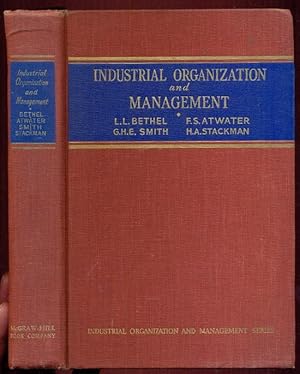
Industrial Organization and Management. First Edition / Fifth Impression
Verlag: New York: McGraw-Hill Book Company 1945, 1945
Anbieter: Antikvariat Valentinska, Praha, Tschechien
Verbandsmitglied: ILAB
Verkäuferbewertung 5 von 5 Sternen

OLWd., xii, 798 Seiten, 8°, mit gefalt. Tabellen. Einband etwas berieben und gelockert. Besitzerunterschrift mit Buntstift auf Titel. Seltene Bleistiftanmerkungen und -unterstreichungen, sonst guter Zustand. Book Language/s: English.
-
Impression Management in the Organization
Sprache: Englisch
Verlag: Lawrence Erlbaum Associates, 1989
ISBN 10: 0805806962 ISBN 13: 9780805806960
Anbieter: Anybook.com, Lincoln, Vereinigtes Königreich
Verkäuferbewertung 5 von 5 Sternen
EUR 50,64
EUR 15,32 Versand
Versand von Vereinigtes Königreich nach USAAnzahl: 1 verfügbar
In den WarenkorbZustand: Poor. This is an ex-library book and may have the usual library/used-book markings inside.This book has soft covers. Book contains pen & pencil markings. In poor condition, suitable as a reading copy. Please note the Image in this listing is a stock photo and may not match the covers of the actual item,800grams, ISBN:0805806962.
-

EUR 183,16
EUR 48,99 Versand
Versand von Deutschland nach USAAnzahl: Mehr als 20 verfügbar
In den WarenkorbZustand: New. Robert A. Giacalone, Paul RosenfeldImpression management theory has been popular in sociology and social psychology for many years. This volume offers the first comprehensive application of impression management theory to organizational settings.
-

Impression Management in the Organization
Sprache: Englisch
Verlag: Taylor & Francis Inc Feb 1990, 1990
ISBN 10: 0805800883 ISBN 13: 9780805800883
Anbieter: AHA-BUCH GmbH, Einbeck, Deutschland
Verkäuferbewertung 5 von 5 Sternen
Buch. Zustand: Neu. Neuware - Impression management theory has been popular in sociology and social psychology for many years. This volume offers the first comprehensive application of impression management theory to organizational settings.Researchers and practitioners in organizational settings have recently been using this theory as an explanatory model to focus on the roles and identities that 'social actors' utilize in interpersonal situations. The theory of impression management provides a framework for the techniques and strategies people use in order to look good as well as the excuses and justifications they employ to avoid looking bad.

