
Gesamtpreis (1 Artikel Artikel):
Versandziel:

future perspectives risk models (10 Ergebnisse)
Direkt zu den wichtigsten Suchergebnissen
Suchfilter
Produktart
- Alle Product Types
- Bücher (10)
- Magazine & Zeitschriften (Keine weiteren Ergebnisse entsprechen dieser Verfeinerung)
- Comics (Keine weiteren Ergebnisse entsprechen dieser Verfeinerung)
- Noten (Keine weiteren Ergebnisse entsprechen dieser Verfeinerung)
- Kunst, Grafik & Poster (Keine weiteren Ergebnisse entsprechen dieser Verfeinerung)
- Fotografien (Keine weiteren Ergebnisse entsprechen dieser Verfeinerung)
- Karten (Keine weiteren Ergebnisse entsprechen dieser Verfeinerung)
- Manuskripte & Papierantiquitäten (Keine weiteren Ergebnisse entsprechen dieser Verfeinerung)
Zustand Mehr dazu
- Neu (7)
- Wie Neu, Sehr Gut oder Gut Bis Sehr Gut (1)
- Gut oder Befriedigend (Keine weiteren Ergebnisse entsprechen dieser Verfeinerung)
- Ausreichend oder Schlecht (Keine weiteren Ergebnisse entsprechen dieser Verfeinerung)
- Wie beschrieben (2)
Einband
Weitere Eigenschaften
- Erstausgabe (Keine weiteren Ergebnisse entsprechen dieser Verfeinerung)
- Signiert (Keine weiteren Ergebnisse entsprechen dieser Verfeinerung)
- Schutzumschlag (Keine weiteren Ergebnisse entsprechen dieser Verfeinerung)
- Angebotsfoto (4)
Sprache (1)
Gratisversand
- Kostenloser Versand nach USA (Keine weiteren Ergebnisse entsprechen dieser Verfeinerung)
Land des Verkäufers
Verkäuferbewertung
-
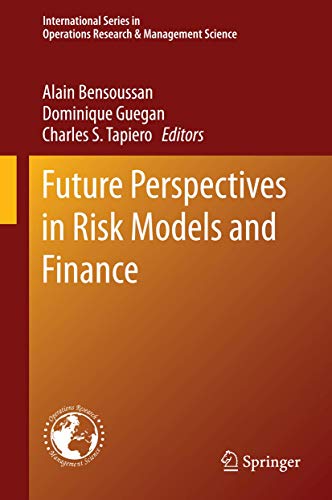
Future Perspectives in Risk Models and Finance.
Buch 206 von 323: International Series in Operations Research & Management ScienceSprache: Englisch
Verlag: Cham, Springer International Publishing., 2015
ISBN 10: 3319075233 ISBN 13: 9783319075235
Anbieter: Universitätsbuchhandlung Herta Hold GmbH, Berlin, Deutschland
Verbandsmitglied: GIAQ ILAB VDA
Verkäuferbewertung 5 von 5 Sternen

Aufl. 2015. XIV, 315 p. Hardcover. Versand aus Deutschland / We dispatch from Germany via Air Mail. Einband bestoßen, daher Mängelexemplar gestempelt, sonst sehr guter Zustand. Imperfect copy due to slightly bumped cover, apart from this in very good condition. Stamped. Stamped. International Series in Operations Research Management Science ; 211. Sprache: Englisch.
-
Future Perspectives in Risk Models and Finance.
Buch 206 von 323: International Series in Operations Research & Management ScienceAnbieter: Majestic Books, Hounslow, Vereinigtes Königreich
Verkäuferbewertung 4 von 5 Sternen

EUR 106,57
EUR 7,47 Versand
Versand von Vereinigtes Königreich nach USAAnzahl: 1 verfügbar
In den WarenkorbZustand: New. pp. 300.
-
Zustand: Hervorragend. Zustand: Hervorragend | Seiten: 332 | Sprache: Englisch | Produktart: Bücher | This book provides a perspective on a number of approaches to financial modelling and risk management. It examines both theoretical and practical issues. Theoretically, financial risks models are models of a real and a financial ¿uncertainty¿, based on both common and private information and economic theories defining the rules that financial markets comply to. Financial models are thus challenged by their definitions and by a changing financial system fueled by globalization, technology growth, complexity, regulation and the many factors that contribute to rendering financial processes to be continuously questioned and re-assessed. The underlying mathematical foundations of financial risks models provide future guidelines for risk modeling. The book¿s chapters provide selective insights and developments that can contribute to better understand the complexity of financial modelling and its ability to bridge financial theories and their practice. Future Perspectives in Risk Models and Finance begins with an extensive outline by Alain Bensoussan et al. of GLM estimation techniques combined with proofs of fundamental results. Applications to static and dynamic models provide a unified approach to the estimation of nonlinear risk models. A second section is concerned with the definition of risks and their management. In particular, Guegan and Hassani review a number of risk models definition emphasizing the importance of bi-modal distributions for financial regulation. An additional chapter provides a review of stress testing and their implications. Nassim Taleb and Sandis provide an anti-fragility approach based on ¿skin in the game¿. To conclude, Raphael Douady discusses the noncyclical CAR (Capital Adequacy Rule) and their effects of aversion of systemic risks. A third section emphasizes analytic financial modelling approaches and techniques. Tapiero and Vallois provide an overview of mathematical systems and their use infinancial modeling. These systems span the fundamental Arrow-Debreu framework underlying financial models of complete markets and subsequently, mathematical systems departing from this framework but yet generalizing their approach to dynamic financial models. Explicitly, models based on fractional calculus, on persistence (short memory) and on entropy-based non-extensiveness. Applications of these models are used to define a modeling approach to incomplete financial models and their potential use as a ¿measure of incompleteness¿. Subsequently Bianchi and Pianese provide an extensive overview of multi-fractional models and their important applications to Asset price modeling. Finally, Tapiero and Jinquyi consider the binomial pricing model by discussing the effects of memory on the pricing of asset prices.
-
Zustand: Sehr gut. Zustand: Sehr gut | Seiten: 332 | Sprache: Englisch | Produktart: Bücher | This book provides a perspective on a number of approaches to financial modelling and risk management. It examines both theoretical and practical issues. Theoretically, financial risks models are models of a real and a financial ¿uncertainty¿, based on both common and private information and economic theories defining the rules that financial markets comply to. Financial models are thus challenged by their definitions and by a changing financial system fueled by globalization, technology growth, complexity, regulation and the many factors that contribute to rendering financial processes to be continuously questioned and re-assessed. The underlying mathematical foundations of financial risks models provide future guidelines for risk modeling. The book¿s chapters provide selective insights and developments that can contribute to better understand the complexity of financial modelling and its ability to bridge financial theories and their practice. Future Perspectives in Risk Models and Finance begins with an extensive outline by Alain Bensoussan et al. of GLM estimation techniques combined with proofs of fundamental results. Applications to static and dynamic models provide a unified approach to the estimation of nonlinear risk models. A second section is concerned with the definition of risks and their management. In particular, Guegan and Hassani review a number of risk models definition emphasizing the importance of bi-modal distributions for financial regulation. An additional chapter provides a review of stress testing and their implications. Nassim Taleb and Sandis provide an anti-fragility approach based on ¿skin in the game¿. To conclude, Raphael Douady discusses the noncyclical CAR (Capital Adequacy Rule) and their effects of aversion of systemic risks. A third section emphasizes analytic financial modelling approaches and techniques. Tapiero and Vallois provide an overview of mathematical systems and their use infinancial modeling. These systems span the fundamental Arrow-Debreu framework underlying financial models of complete markets and subsequently, mathematical systems departing from this framework but yet generalizing their approach to dynamic financial models. Explicitly, models based on fractional calculus, on persistence (short memory) and on entropy-based non-extensiveness. Applications of these models are used to define a modeling approach to incomplete financial models and their potential use as a ¿measure of incompleteness¿. Subsequently Bianchi and Pianese provide an extensive overview of multi-fractional models and their important applications to Asset price modeling. Finally, Tapiero and Jinquyi consider the binomial pricing model by discussing the effects of memory on the pricing of asset prices.
-
Future Perspectives in Risk Models and Finance
Buch 206 von 323: International Series in Operations Research & Management ScienceAnbieter: Revaluation Books, Exeter, Vereinigtes Königreich
Verkäuferbewertung 5 von 5 Sternen
EUR 153,88
EUR 14,36 Versand
Versand von Vereinigtes Königreich nach USAAnzahl: 2 verfügbar
In den WarenkorbHardcover. Zustand: Brand New. 2015 edition. 300 pages. 9.25x6.25x1.00 inches. In Stock.
-

Future Perspectives in Risk Models and Finance
Buch 206 von 323: International Series in Operations Research & Management ScienceSprache: Englisch
Verlag: Springer International Publishing, Springer Nature Switzerland Dez 2014, 2014
ISBN 10: 3319075233 ISBN 13: 9783319075235
Anbieter: buchversandmimpf2000, Emtmannsberg, BAYE, Deutschland
Verkäuferbewertung 5 von 5 Sternen
Buch. Zustand: Neu. Neuware -This book provides a perspective on a number of approaches to financial modelling and risk management. It examines both theoretical and practical issues. Theoretically, financial risks models are models of a real and a financial ¿uncertainty¿, based on both common and private information and economic theories defining the rules that financial markets comply to. Financial models are thus challenged by their definitions and by a changing financial system fueled by globalization, technology growth, complexity, regulation and the many factors that contribute to rendering financial processes to be continuously questioned and re-assessed. The underlying mathematical foundations of financial risks models provide future guidelines for risk modeling. The book¿s chapters provide selective insights and developments that can contribute to better understand the complexity of financial modelling and its ability to bridge financial theories and their practice.Future Perspectives in Risk Models and Finance begins with an extensive outline by Alain Bensoussan et al. of GLM estimation techniques combined with proofs of fundamental results. Applications to static and dynamic models provide a unified approach to the estimation of nonlinear risk models.A second section is concerned with the definition of risks and their management. In particular, Guegan and Hassani review a number of risk models definition emphasizing the importance of bi-modal distributions for financial regulation. An additional chapter provides a review of stress testing and their implications. Nassim Taleb and Sandis provide an anti-fragility approach based on ¿skin in the game¿. To conclude, Raphael Douady discusses the noncyclical CAR (Capital Adequacy Rule) and their effects of aversion of systemic risks.A third section emphasizes analytic financial modelling approaches and techniques. Tapiero and Vallois provide an overview of mathematical systems and their use infinancial modeling. These systems span the fundamental Arrow-Debreu framework underlying financial models of complete markets and subsequently, mathematical systems departing from this framework but yet generalizing their approach to dynamic financial models. Explicitly, models based on fractional calculus, on persistence (short memory) and on entropy-based non-extensiveness. Applications of these models are used to define a modeling approach to incomplete financial models and their potential use as a ¿measure of incompleteness¿.Subsequently Bianchi and Pianese provide an extensive overview of multi-fractional models and their important applications to Asset price modeling. Finally, Tapiero and Jinquyi consider the binomial pricing model by discussing the effects of memory on the pricing of asset prices.Springer Verlag GmbH, Tiergartenstr. 17, 69121 Heidelberg 332 pp. Englisch.
-

Future Perspectives in Risk Models and Finance
Buch 206 von 323: International Series in Operations Research & Management ScienceSprache: Englisch
Verlag: Springer International Publishing, Springer Nature Switzerland Sep 2016, 2016
ISBN 10: 3319376217 ISBN 13: 9783319376219
Anbieter: buchversandmimpf2000, Emtmannsberg, BAYE, Deutschland
Verkäuferbewertung 5 von 5 Sternen
Taschenbuch. Zustand: Neu. Neuware -This book provides a perspective on a number of approaches to financial modelling and risk management. It examines both theoretical and practical issues. Theoretically, financial risks models are models of a real and a financial ¿uncertainty¿, based on both common and private information and economic theories defining the rules that financial markets comply to. Financial models are thus challenged by their definitions and by a changing financial system fueled by globalization, technology growth, complexity, regulation and the many factors that contribute to rendering financial processes to be continuously questioned and re-assessed. The underlying mathematical foundations of financial risks models provide future guidelines for risk modeling. The book¿s chapters provide selective insights and developments that can contribute to better understand the complexity of financial modelling and its ability to bridge financial theories and their practice.Future Perspectives in Risk Models and Finance begins with an extensive outline by Alain Bensoussan et al. of GLM estimation techniques combined with proofs of fundamental results. Applications to static and dynamic models provide a unified approach to the estimation of nonlinear risk models.A second section is concerned with the definition of risks and their management. In particular, Guegan and Hassani review a number of risk models definition emphasizing the importance of bi-modal distributions for financial regulation. An additional chapter provides a review of stress testing and their implications. Nassim Taleb and Sandis provide an anti-fragility approach based on ¿skin in the game¿. To conclude, Raphael Douady discusses the noncyclical CAR (Capital Adequacy Rule) and their effects of aversion of systemic risks.A third section emphasizes analytic financial modelling approaches and techniques. Tapiero and Vallois provide an overview of mathematical systems and their use infinancial modeling. These systems span the fundamental Arrow-Debreu framework underlying financial models of complete markets and subsequently, mathematical systems departing from this framework but yet generalizing their approach to dynamic financial models. Explicitly, models based on fractional calculus, on persistence (short memory) and on entropy-based non-extensiveness. Applications of these models are used to define a modeling approach to incomplete financial models and their potential use as a ¿measure of incompleteness¿.Subsequently Bianchi and Pianese provide an extensive overview of multi-fractional models and their important applications to Asset price modeling. Finally, Tapiero and Jinquyi consider the binomial pricing model by discussing the effects of memory on the pricing of asset prices.Springer Verlag GmbH, Tiergartenstr. 17, 69121 Heidelberg 332 pp. Englisch.
-

Future Perspectives in Risk Models and Finance
Buch 206 von 323: International Series in Operations Research & Management ScienceSprache: Englisch
Verlag: Springer International Publishing, Springer International Publishing, 2016
ISBN 10: 3319376217 ISBN 13: 9783319376219
Anbieter: AHA-BUCH GmbH, Einbeck, Deutschland
Verkäuferbewertung 5 von 5 Sternen
Taschenbuch. Zustand: Neu. Druck auf Anfrage Neuware - Printed after ordering - This book provides a perspective on a number of approaches to financial modelling and risk management. It examines both theoretical and practical issues. Theoretically, financial risks models are models of a real and a financial 'uncertainty', based on both common and private information and economic theories defining the rules that financial markets comply to. Financial models are thus challenged by their definitions and by a changing financial system fueled by globalization, technology growth, complexity, regulation and the many factors that contribute to rendering financial processes to be continuously questioned and re-assessed. The underlying mathematical foundations of financial risks models provide future guidelines for risk modeling. The book's chapters provide selective insights and developments that can contribute to better understand the complexity of financial modelling and its ability to bridge financial theories and their practice.Future Perspectives in Risk Models and Finance begins with an extensive outline by Alain Bensoussan et al. of GLM estimation techniques combined with proofs of fundamental results. Applications to static and dynamic models provide a unified approach to the estimation of nonlinear risk models.A second section is concerned with the definition of risks and their management. In particular, Guegan and Hassani review a number of risk models definition emphasizing the importance of bi-modal distributions for financial regulation. An additional chapter provides a review of stress testing and their implications. Nassim Taleb and Sandis provide an anti-fragility approach based on 'skin in the game'. To conclude, Raphael Douady discusses the noncyclical CAR (Capital Adequacy Rule) and their effects of aversion of systemic risks.A third section emphasizes analytic financial modelling approaches and techniques. Tapiero and Vallois provide an overview of mathematical systems and their use infinancial modeling. These systems span the fundamental Arrow-Debreu framework underlying financial models of complete markets and subsequently, mathematical systems departing from this framework but yet generalizing their approach to dynamic financial models. Explicitly, models based on fractional calculus, on persistence (short memory) and on entropy-based non-extensiveness. Applications of these models are used to define a modeling approach to incomplete financial models and their potential use as a 'measure of incompleteness'. Subsequently Bianchi and Pianese provide an extensive overview of multi-fractional models and their important applications to Asset price modeling. Finally, Tapiero and Jinquyi consider the binomial pricing model by discussing the effects of memory on the pricing of asset prices.
-

Future Perspectives in Risk Models and Finance
Buch 206 von 323: International Series in Operations Research & Management ScienceSprache: Englisch
Verlag: Springer International Publishing, 2014
ISBN 10: 3319075233 ISBN 13: 9783319075235
Anbieter: AHA-BUCH GmbH, Einbeck, Deutschland
Verkäuferbewertung 5 von 5 Sternen
Buch. Zustand: Neu. Druck auf Anfrage Neuware - Printed after ordering - This book provides a perspective on a number of approaches to financial modelling and risk management. It examines both theoretical and practical issues. Theoretically, financial risks models are models of a real and a financial 'uncertainty', based on both common and private information and economic theories defining the rules that financial markets comply to. Financial models are thus challenged by their definitions and by a changing financial system fueled by globalization, technology growth, complexity, regulation and the many factors that contribute to rendering financial processes to be continuously questioned and re-assessed. The underlying mathematical foundations of financial risks models provide future guidelines for risk modeling. The book's chapters provide selective insights and developments that can contribute to better understand the complexity of financial modelling and its ability to bridge financial theories and their practice.Future Perspectives in Risk Models and Finance begins with an extensive outline by Alain Bensoussan et al. of GLM estimation techniques combined with proofs of fundamental results. Applications to static and dynamic models provide a unified approach to the estimation of nonlinear risk models.A second section is concerned with the definition of risks and their management. In particular, Guegan and Hassani review a number of risk models definition emphasizing the importance of bi-modal distributions for financial regulation. An additional chapter provides a review of stress testing and their implications. Nassim Taleb and Sandis provide an anti-fragility approach based on 'skin in the game'. To conclude, Raphael Douady discusses the noncyclical CAR (Capital Adequacy Rule) and their effects of aversion of systemic risks.A third section emphasizes analytic financial modelling approaches and techniques. Tapiero and Vallois provide an overview of mathematical systems and their use infinancial modeling. These systems span the fundamental Arrow-Debreu framework underlying financial models of complete markets and subsequently, mathematical systems departing from this framework but yet generalizing their approach to dynamic financial models. Explicitly, models based on fractional calculus, on persistence (short memory) and on entropy-based non-extensiveness. Applications of these models are used to define a modeling approach to incomplete financial models and their potential use as a 'measure of incompleteness'. Subsequently Bianchi and Pianese provide an extensive overview of multi-fractional models and their important applications to Asset price modeling. Finally, Tapiero and Jinquyi consider the binomial pricing model by discussing the effects of memory on the pricing of asset prices.
-

Future Perspectives in Risk Models and Finance
Buch 206 von 323: International Series in Operations Research & Management ScienceAnbieter: Revaluation Books, Exeter, Vereinigtes Königreich
Verkäuferbewertung 5 von 5 Sternen
EUR 151,91
EUR 40,20 Versand
Versand von Vereinigtes Königreich nach USAAnzahl: 2 verfügbar
In den WarenkorbPaperback. Zustand: Brand New. reprint edition. 332 pages. 9.25x6.10x0.78 inches. In Stock.

