

Gesamtpreis (1 Artikel Artikel):
Versandziel:

fiber optic smart structures von udd eric (7 Ergebnisse)
Direkt zu den wichtigsten Suchergebnissen
Suchfilter
Produktart
- Alle Product Types
- Bücher (7)
- Magazine & Zeitschriften (Keine weiteren Ergebnisse entsprechen dieser Verfeinerung)
- Comics (Keine weiteren Ergebnisse entsprechen dieser Verfeinerung)
- Noten (Keine weiteren Ergebnisse entsprechen dieser Verfeinerung)
- Kunst, Grafik & Poster (Keine weiteren Ergebnisse entsprechen dieser Verfeinerung)
- Fotografien (Keine weiteren Ergebnisse entsprechen dieser Verfeinerung)
- Karten (Keine weiteren Ergebnisse entsprechen dieser Verfeinerung)
- Manuskripte & Papierantiquitäten (Keine weiteren Ergebnisse entsprechen dieser Verfeinerung)
Zustand Mehr dazu
- Neu (5)
- Wie Neu, Sehr Gut oder Gut Bis Sehr Gut (1)
- Gut oder Befriedigend (Keine weiteren Ergebnisse entsprechen dieser Verfeinerung)
- Ausreichend oder Schlecht (Keine weiteren Ergebnisse entsprechen dieser Verfeinerung)
- Wie beschrieben (1)
Einband
- alle Einbände
- Hardcover (7)
- Softcover (Keine weiteren Ergebnisse entsprechen dieser Verfeinerung)
Weitere Eigenschaften
- Erstausgabe (Keine weiteren Ergebnisse entsprechen dieser Verfeinerung)
- Signiert (Keine weiteren Ergebnisse entsprechen dieser Verfeinerung)
- Schutzumschlag (Keine weiteren Ergebnisse entsprechen dieser Verfeinerung)
- Angebotsfoto (3)
Sprache (2)
Gratisversand
- Kostenloser Versand nach USA (Keine weiteren Ergebnisse entsprechen dieser Verfeinerung)
Land des Verkäufers
Verkäuferbewertung
-

Fiber Optic Smart Structures.
Sprache: Deutsch
Verlag: New York/John Wiley & Sons
Anbieter: Antiquariat Bookfarm, Löbnitz, Deutschland
Verkäuferbewertung 5 von 5 Sternen

Hardcover. Ehem. Bibliotheksexemplar mit Bib.-Signatur und Stempel in GUTEM Zustand. Kaum Gebrauchsspuren. Sprache: Deutsch Gewicht in Gramm: 550.
-
Sonderangebot
EUR 44,87
EUR 105,00 Versand
Versand von Deutschland nach USAAnzahl: 1 verfügbar
In den WarenkorbZustand: Sehr gut. Zustand: Sehr gut | Seiten: 688 | Sprache: Englisch | Produktart: Bücher | This book is intended as an introduction and reference to fiber optic smart structures. Smart structures are used as sensors in a wide variety of applications and fields--from aerospace engineering to electrical engineering to civil engineering.
-
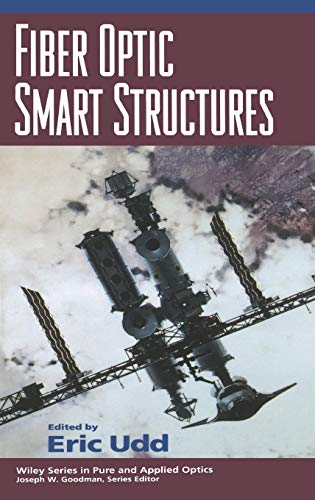
Fiber Optic Smart Structures
Anbieter: Majestic Books, Hounslow, Vereinigtes Königreich
Verkäuferbewertung 4 von 5 Sternen

EUR 290,89
EUR 7,52 Versand
Versand von Vereinigtes Königreich nach USAAnzahl: 3 verfügbar
In den WarenkorbZustand: New. pp. 688.
-

EUR 247,00
EUR 48,99 Versand
Versand von Deutschland nach USAAnzahl: Mehr als 20 verfügbar
In den WarenkorbGebunden. Zustand: New. This study discusses the methods used to embed optical fibres in modern high-strength, lightweight composite materials. It also examines the ingress and egress of optical fibres, and more specialized application concerns, including use of the Fabry-Perot in.
-
Fiber Optic Smart Structures
Anbieter: Revaluation Books, Exeter, Vereinigtes Königreich
Verkäuferbewertung 5 von 5 Sternen
EUR 335,94
EUR 17,36 Versand
Versand von Vereinigtes Königreich nach USAAnzahl: 2 verfügbar
In den WarenkorbHardcover. Zustand: Brand New. 688 pages. 9.75x6.50x1.50 inches. In Stock.
-
Fiber Optic Smart Structures
Anbieter: Kennys Bookstore, Olney, MD, USA
Verkäuferbewertung 5 von 5 Sternen
EUR 367,65
EUR 9,16 Versand
Versand innerhalb von USAAnzahl: Mehr als 20 verfügbar
In den WarenkorbZustand: New. This study discusses the methods used to embed optical fibres in modern high-strength, lightweight composite materials. It also examines the ingress and egress of optical fibres, and more specialized application concerns, including use of the Fabry-Perot interferometer. Editor(s): Udd, Eric. Series: Wiley Series in Pure and Applied Optics. Num Pages: 688 pages, Illustrations. BIC Classification: TGM; TTBF. Category: (P) Professional & Vocational; (UP) Postgraduate, Research & Scholarly. Dimension: 245 x 168 x 42. Weight in Grams: 1112. . 1995. 1st Edition. Hardcover. . . . . Books ship from the US and Ireland.
-

Fiber Optic Smart Structures
Anbieter: AHA-BUCH GmbH, Einbeck, Deutschland
Verkäuferbewertung 5 von 5 Sternen
Buch. Zustand: Neu. Neuware - Recent earthquakes and space program-related news serve as potent reminders of the uses fiber optic technology offers to an increasingly complex world. Like living organisms sensitive to subtle changes in the environment, buildings, structures, and space vehicles can be equipped to sense and react to their surroundings by means of hair-thin glass fiber sensors embedded in structural materials and capable of carrying information and measuring changes in stress and other environmental factors. Data is collected and transmitted to a central location, where the findings are assessed and damage corrected.

