

Gesamtpreis (1 Artikel Artikel):
Versandziel:

9789980853820 - Tyranny of the Terrain: Transport in Papua New Guinea von P. C. H. Ranasinghe (1 Ergebnisse)
Direkt zu den wichtigsten Suchergebnissen
Suchfilter
Produktart
- Alle Product Types
- Bücher (1)
- Magazine & Zeitschriften (Keine weiteren Ergebnisse entsprechen dieser Verfeinerung)
- Comics (Keine weiteren Ergebnisse entsprechen dieser Verfeinerung)
- Noten (Keine weiteren Ergebnisse entsprechen dieser Verfeinerung)
- Kunst, Grafik & Poster (Keine weiteren Ergebnisse entsprechen dieser Verfeinerung)
- Fotografien (Keine weiteren Ergebnisse entsprechen dieser Verfeinerung)
- Karten (Keine weiteren Ergebnisse entsprechen dieser Verfeinerung)
- Manuskripte & Papierantiquitäten (Keine weiteren Ergebnisse entsprechen dieser Verfeinerung)
Zustand Mehr dazu
- Neu (Keine weiteren Ergebnisse entsprechen dieser Verfeinerung)
- Wie Neu, Sehr Gut oder Gut Bis Sehr Gut (Keine weiteren Ergebnisse entsprechen dieser Verfeinerung)
- Gut oder Befriedigend (1)
- Ausreichend oder Schlecht (Keine weiteren Ergebnisse entsprechen dieser Verfeinerung)
- Wie beschrieben (Keine weiteren Ergebnisse entsprechen dieser Verfeinerung)
Einband
- alle Einbände
- Hardcover (Keine weiteren Ergebnisse entsprechen dieser Verfeinerung)
- Softcover (1)
Weitere Eigenschaften
- Erstausgabe (Keine weiteren Ergebnisse entsprechen dieser Verfeinerung)
- Signiert (Keine weiteren Ergebnisse entsprechen dieser Verfeinerung)
- Schutzumschlag (Keine weiteren Ergebnisse entsprechen dieser Verfeinerung)
- Angebotsfoto (1)
Sprache (1)
Preis
- Beliebiger Preis
- Weniger als EUR 20 (Keine weiteren Ergebnisse entsprechen dieser Verfeinerung)
- EUR 20 bis EUR 45 (Keine weiteren Ergebnisse entsprechen dieser Verfeinerung)
- Mehr als EUR 45
Gratisversand
- Kostenloser Versand nach USA (Keine weiteren Ergebnisse entsprechen dieser Verfeinerung)
Land des Verkäufers
Verkäuferbewertung
-
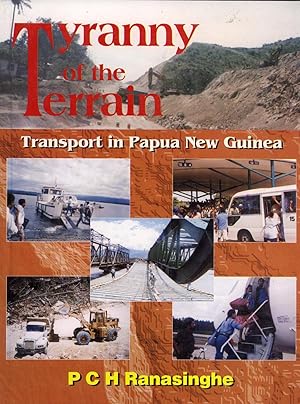
Soft cover. Zustand: Very Good. 184 pp., illustrations, bibliography. Papua New Guinea, the biggest country in the South Pacific region, presents a formidable challenge to any efficient system of transportation. The country's difficult terrain has not permitted railways as a viable mode of transport. Even with the Western techniques of road construction, still it has not been possible to link all the population centres by roads. The outcome had been the emergence of several discrete road networks in the country. Exploration of the interior of the country has, therefore, been mainly through aviation. As a result, the country has the largest number of airstrips in the whole of the developing world. In this arduously and methodically researched study, the author has chronologically unfolded the evolution of various modes of transport as they have developed into individual communication entities over time. Each mode is highlighted as it has influenced the maturing of the nation. The facts are substantiated with maps and some photographs. The author provides a detailed view of the physical and economic factors, which have been responsible for the evolution of various modes of transport. For example, the unique dominance of air, as a mode of transport during the World Wars and the development of gold prospecting throughout the nineteenth and twentieth centuries, has been well documented. 0.0.
