Gesamtpreis (1 Artikel Artikel):
Versandziel:

9788847006379 - Fecal Incontinence: Diagnosis and Treatment (4 Ergebnisse)
Direkt zu den wichtigsten Suchergebnissen
Suchfilter
Produktart
- Alle Product Types
- Bücher (4)
- Magazine & Zeitschriften (Keine weiteren Ergebnisse entsprechen dieser Verfeinerung)
- Comics (Keine weiteren Ergebnisse entsprechen dieser Verfeinerung)
- Noten (Keine weiteren Ergebnisse entsprechen dieser Verfeinerung)
- Kunst, Grafik & Poster (Keine weiteren Ergebnisse entsprechen dieser Verfeinerung)
- Fotografien (Keine weiteren Ergebnisse entsprechen dieser Verfeinerung)
- Karten (Keine weiteren Ergebnisse entsprechen dieser Verfeinerung)
- Manuskripte & Papierantiquitäten (Keine weiteren Ergebnisse entsprechen dieser Verfeinerung)
Zustand Mehr dazu
- Neu (1)
- Wie Neu, Sehr Gut oder Gut Bis Sehr Gut (1)
- Gut oder Befriedigend (1)
- Ausreichend oder Schlecht (Keine weiteren Ergebnisse entsprechen dieser Verfeinerung)
- Wie beschrieben (1)
Einband
- alle Einbände
- Hardcover (4)
- Softcover (Keine weiteren Ergebnisse entsprechen dieser Verfeinerung)
Weitere Eigenschaften
- Erstausgabe (Keine weiteren Ergebnisse entsprechen dieser Verfeinerung)
- Signiert (Keine weiteren Ergebnisse entsprechen dieser Verfeinerung)
- Schutzumschlag (Keine weiteren Ergebnisse entsprechen dieser Verfeinerung)
- Angebotsfoto (2)
Sprache (1)
Preis
- Beliebiger Preis
- Weniger als EUR 20 (Keine weiteren Ergebnisse entsprechen dieser Verfeinerung)
- EUR 20 bis EUR 45
- Mehr als EUR 45
Gratisversand
- Kostenloser Versand nach USA (Keine weiteren Ergebnisse entsprechen dieser Verfeinerung)
Land des Verkäufers
Verkäuferbewertung
-

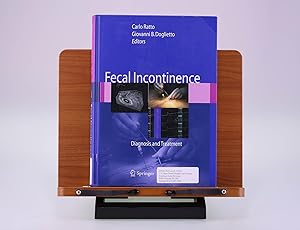
Fecal Incontinence. Diagnosis and Treatment.
Anbieter: Universitätsbuchhandlung Herta Hold GmbH, Berlin, Deutschland
Verbandsmitglied: GIAQ ILAB VDA
Verkäuferbewertung 4 von 5 Sternen

XXI, 362 p. Hardcover. Versand aus Deutschland / We dispatch from Germany via Air Mail. Einband bestoßen, daher Mängelexemplar gestempelt, sonst sehr guter Zustand. Imperfect copy due to slightly bumped cover, apart from this in very good condition. Stamped. Gestempelt. Sprache: Englisch.
-
Fecal Incontinence: Diagnosis and Treatment
Anbieter: Salish Sea Books, Bellingham, WA, USA
Verkäuferbewertung 5 von 5 Sternen

Hardcover. Zustand: Good. 8847006376 Good; Hardcover; Withdrawn library copy with standard library markings; Moderate wear to covers; Library stamps to endpapers; Text pages clean & unmarked; Good binding with straight spine; Blue covers with title in white lettering; 2007, Springer-Verlag Publishing; 362 pages; "Fecal Incontinence: Diagnosis and Treatment," by Carlo Ratto, et al.
-
Zustand: Sehr gut. Zustand: Sehr gut | Seiten: 388 | Sprache: Englisch | Produktart: Bücher | Fecal incontinence is a frequent, distressing condition that has a devastating impact on patients¿ lives. However, patients are typically embarrassed and reluctant to acknowledge this disability, so they relinquish the possibility of being cured and remain socially isolated. Since fecal incontinence may result from various pathophysiological situations, an accurate diagnostic work-up of each patient is fundamental. Today, a wide range of therapeutic options is available, but making the correct choice is pivotal to the successful management of this condition. This book is aimed at all physicians involved in the assessment and treatment of fecal incontinence. Its main purpose is to review the latest advances in the epidemiologic, socio-economic, psychologic, diagnostic, and therapeutic aspects of fecal incontinence, in order to establish guidelines for effective treatment.
-

Fecal Incontinence : Diagnosis and Treatment
Anbieter: AHA-BUCH GmbH, Einbeck, Deutschland
Verkäuferbewertung 5 von 5 Sternen
Buch. Zustand: Neu. Druck auf Anfrage Neuware - Printed after ordering - Fecal incontinence is a frequent, distressing condition that has a devastating impact on patients' lives. However, patients are typically embarrassed and reluctant to acknowledge this disability, so they relinquish the possibility of being cured and remain socially isolated. Since fecal incontinence may result from various pathophysiological situations, an accurate diagnostic work-up of each patient is fundamental. Today, a wide range of therapeutic options is available, but making the correct choice is pivotal to the successful management of this condition. This book is aimed at all physicians involved in the assessment and treatment of fecal incontinence. Its main purpose is to review the latest advances in the epidemiologic, socio-economic, psychologic, diagnostic, and therapeutic aspects of fecal incontinence, in order to establish guidelines for effective treatment.