
Gesamtpreis (1 Artikel Artikel):
Versandziel:

9783631332016 - Continuity and Change in Christian Doctrine: A Study of the Problem of Doctrinal Development (Friedensauer Schriftenreihe) von Pöhler, Rolf J. (4 Ergebnisse)
Direkt zu den wichtigsten Suchergebnissen
Suchfilter
Produktart
- Alle Product Types
- Bücher (4)
- Magazine & Zeitschriften (Keine weiteren Ergebnisse entsprechen dieser Verfeinerung)
- Comics (Keine weiteren Ergebnisse entsprechen dieser Verfeinerung)
- Noten (Keine weiteren Ergebnisse entsprechen dieser Verfeinerung)
- Kunst, Grafik & Poster (Keine weiteren Ergebnisse entsprechen dieser Verfeinerung)
- Fotografien (Keine weiteren Ergebnisse entsprechen dieser Verfeinerung)
- Karten (Keine weiteren Ergebnisse entsprechen dieser Verfeinerung)
- Manuskripte & Papierantiquitäten (Keine weiteren Ergebnisse entsprechen dieser Verfeinerung)
Zustand Mehr dazu
- Neu (2)
- Wie Neu, Sehr Gut oder Gut Bis Sehr Gut (1)
- Gut oder Befriedigend (1)
- Ausreichend oder Schlecht (Keine weiteren Ergebnisse entsprechen dieser Verfeinerung)
- Wie beschrieben (Keine weiteren Ergebnisse entsprechen dieser Verfeinerung)
Einband
- alle Einbände
- Hardcover (Keine weiteren Ergebnisse entsprechen dieser Verfeinerung)
- Softcover (4)
Weitere Eigenschaften
- Erstausgabe (Keine weiteren Ergebnisse entsprechen dieser Verfeinerung)
- Signiert (Keine weiteren Ergebnisse entsprechen dieser Verfeinerung)
- Schutzumschlag (Keine weiteren Ergebnisse entsprechen dieser Verfeinerung)
- Angebotsfoto (2)
Sprache (1)
Gratisversand
Land des Verkäufers
Verkäuferbewertung
-
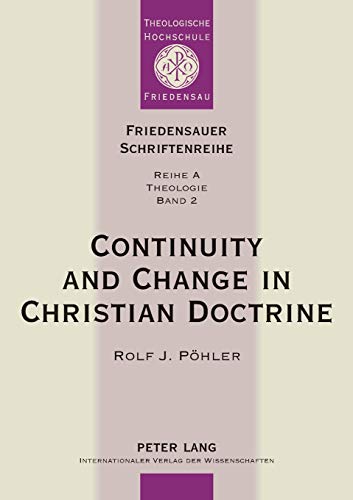
Continuity and Change in Christian Doctrine : A Study of the Problem of Doctrinal Development
Sprache: Englisch
Verlag: Lang Publishing, Incorporated, Peter, 1998
ISBN 10: 3631332017 ISBN 13: 9783631332016
Anbieter: Better World Books, Mishawaka, IN, USA
Verkäuferbewertung 5 von 5 Sternen

Zustand: Very Good. Used book that is in excellent condition. May show signs of wear or have minor defects.
-
Sonderangebot
EUR 5,84
EUR 20,50 shipping
Versand von Frankreich nach USAAnzahl: 1 verfügbar
In den WarenkorbSoftcover. Zustand: Très bon. Ancien livre de bibliothèque. Salissures sur la tranche. Edition 1998. Tome 2. Ammareal reverse jusqu'à 15% du prix net de cet article à des organisations caritatives. ENGLISH DESCRIPTION Book Condition: Used, Very good. Former library book. Stains on the edge. Edition 1998. Volume 2. Ammareal gives back up to 15% of this item's net price to charity organizations.
-

Continuity and Change in Christian Doctrine
Sprache: Englisch
Verlag: Peter Lang, Peter Lang Dez 1998, 1998
ISBN 10: 3631332017 ISBN 13: 9783631332016
Anbieter: buchversandmimpf2000, Emtmannsberg, BAYE, Deutschland
Verkäuferbewertung 5 von 5 Sternen
Taschenbuch. Zustand: Neu. Neuware -This book provides a scholarly and concise introductory treatment of the problem of doctrinal development. The author defines and delineates the problem, offers a historical-genetic survey of proposed solutions, and presents a systematic-typological analysis of possible responses to doctrinal change. The study concludes that doctrinal development involves complex theological and hermeneutical issues, that there are three fundamental approaches successively developed in history in response to the growing awareness of doctrinal change, and that the numerous theories of doctrinal development may be classified in three 'ideal' types representing the basic options available to the Christian church today. In the view of the author, a dialectic approach that is concerned for substantial continuity as well as authentic change can best avoid the twin dangers of doctrinaire immobilism and precipitate revisionism. 160 pp. Englisch.
-
Continuity and Change in Christian Doctrine : A Study of the Problem of Doctrinal Development
Anbieter: AHA-BUCH GmbH, Einbeck, Deutschland
Verkäuferbewertung 5 von 5 Sternen
Taschenbuch. Zustand: Neu. Druck auf Anfrage Neuware - Printed after ordering - This book provides a scholarly and concise introductory treatment of the problem of doctrinal development. The author defines and delineates the problem, offers a historical-genetic survey of proposed solutions, and presents a systematic-typological analysis of possible responses to doctrinal change. The study concludes that doctrinal development involves complex theological and hermeneutical issues, that there are three fundamental approaches successively developed in history in response to the growing awareness of doctrinal change, and that the numerous theories of doctrinal development may be classified in three 'ideal' types representing the basic options available to the Christian church today. In the view of the author, a dialectic approach that is concerned for substantial continuity as well as authentic change can best avoid the twin dangers of doctrinaire immobilism and precipitate revisionism.
