

Gesamtpreis (1 Artikel Artikel):
Versandziel:

9783540958796 - Experience and Knowledge Management in Software Engineering von Schneider, Kurt (6 Ergebnisse)
Direkt zu den wichtigsten Suchergebnissen
Suchfilter
Produktart
- Alle Product Types
- Bücher (6)
- Magazine & Zeitschriften (Keine weiteren Ergebnisse entsprechen dieser Verfeinerung)
- Comics (Keine weiteren Ergebnisse entsprechen dieser Verfeinerung)
- Noten (Keine weiteren Ergebnisse entsprechen dieser Verfeinerung)
- Kunst, Grafik & Poster (Keine weiteren Ergebnisse entsprechen dieser Verfeinerung)
- Fotografien (Keine weiteren Ergebnisse entsprechen dieser Verfeinerung)
- Karten (Keine weiteren Ergebnisse entsprechen dieser Verfeinerung)
- Manuskripte & Papierantiquitäten (Keine weiteren Ergebnisse entsprechen dieser Verfeinerung)
Zustand Mehr dazu
- Neu (3)
- Wie Neu, Sehr Gut oder Gut Bis Sehr Gut (1)
- Gut oder Befriedigend (Keine weiteren Ergebnisse entsprechen dieser Verfeinerung)
- Ausreichend oder Schlecht (Keine weiteren Ergebnisse entsprechen dieser Verfeinerung)
- Wie beschrieben (2)
Einband
- alle Einbände
- Hardcover (6)
- Softcover (Keine weiteren Ergebnisse entsprechen dieser Verfeinerung)
Weitere Eigenschaften
- Erstausgabe (Keine weiteren Ergebnisse entsprechen dieser Verfeinerung)
- Signiert (Keine weiteren Ergebnisse entsprechen dieser Verfeinerung)
- Schutzumschlag (Keine weiteren Ergebnisse entsprechen dieser Verfeinerung)
- Angebotsfoto (3)
Sprache (1)
Gratisversand
- Kostenloser Versand nach USA (Keine weiteren Ergebnisse entsprechen dieser Verfeinerung)
Land des Verkäufers
Verkäuferbewertung
-
Experience and Knowledge Management in Software Engineering.
Anbieter: Antiquariat Bookfarm, Löbnitz, Deutschland
Verkäuferbewertung 5 von 5 Sternen

235 pages Ex-Library book in good condition. 9783540958796 Sprache: Englisch Gewicht in Gramm: 558.
-
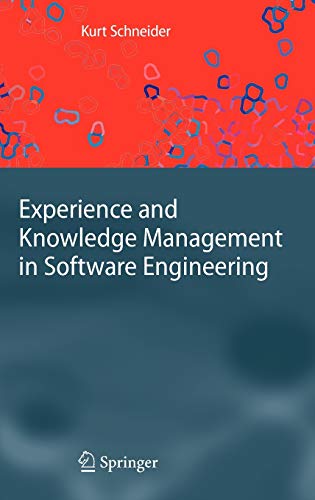
Experience And Knowledge Management In Software Engineering
Sprache: Englisch
Verlag: Springer-Verlag Berlin And Heidelberg Gmbh & Co. Kg, 2009
ISBN 10: 3540958797 ISBN 13: 9783540958796
Anbieter: Revaluation Books, Exeter, Vereinigtes Königreich
Verkäuferbewertung 5 von 5 Sternen
EUR 79,95
EUR 14,36 Versand
Versand von Vereinigtes Königreich nach USAAnzahl: 2 verfügbar
In den WarenkorbHardcover. Zustand: Brand New. 1st edition. 235 pages. 9.25x6.50x0.75 inches. In Stock.
-

Experience and Knowledge Management in Software Engineering
Sprache: Englisch
Verlag: Springer Berlin Heidelberg, Springer Berlin Heidelberg Jun 2009, 2009
ISBN 10: 3540958797 ISBN 13: 9783540958796
Anbieter: buchversandmimpf2000, Emtmannsberg, BAYE, Deutschland
Verkäuferbewertung 5 von 5 Sternen
Buch. Zustand: Neu. Neuware -Nowadays, there is software everywhere in our life. It controls cars, airplanes, factories, medical implants. Without software, banking, logistics and transportation, media, and even scientific research would not function in the accustomed way. Building and maintaining software is a knowledge-intensive endeavour and requires that specific experiences are handled successfully. However, neither knowledge nor experience can be collected, stored, and shipped like physical goods, instead these delicate resources require dedicated techniques. Knowledge and experience are often called company assets, yet this is only part of the truth: it is only software engineers and other creative employees who will effectively exploit an organisation's knowledge and experience.Kurt Schneider¿s textbook is written for those who want to make better use of their own knowledge and experience ¿ either personally or within their group or company. Everyone related to software development will benefit from his detailed explanations and case studies: project managers, software engineers, quality assurance responsibles, and knowledge managers. His presentation is based on years of both practical experience, with companies such as Boeing, Daimler, and Nokia, and research in renowned environments, such as the Fraunhofer Institute. Each chapter is self-contained, it clearly states its learning objectives, gives in-depth presentations, shows the techniques¿ practical relevance in application scenarios, lists detailed references for further reading, and is finally completed by exercises that review the material presented and also challenge further, critical examinations. The overall result is a textbook that is equally suitable as a personal resource for self-directed learning and as the basis for a one-semester course on software engineering and knowledge management.Springer Verlag GmbH, Tiergartenstr. 17, 69121 Heidelberg 252 pp. Englisch.
-

Experience and Knowledge Management in Software Engineering
Sprache: Englisch
Verlag: Springer Berlin Heidelberg, Springer Berlin Heidelberg, 2009
ISBN 10: 3540958797 ISBN 13: 9783540958796
Anbieter: AHA-BUCH GmbH, Einbeck, Deutschland
Verkäuferbewertung 5 von 5 Sternen
Buch. Zustand: Neu. Druck auf Anfrage Neuware - Printed after ordering - Nowadays, there is software everywhere in our life. It controls cars, airplanes, factories, medical implants. Without software, banking, logistics and transportation, media, and even scientific research would not function in the accustomed way. Building and maintaining software is a knowledge-intensive endeavour and requires that specific experiences are handled successfully. However, neither knowledge nor experience can be collected, stored, and shipped like physical goods, instead these delicate resources require dedicated techniques. Knowledge and experience are often called company assets, yet this is only part of the truth: it is only software engineers and other creative employees who will effectively exploit an organisation's knowledge and experience. Kurt Schneider's textbook is written for those who want to make better use of their own knowledge and experience - either personally or within their group or company. Everyone related to software development will benefit from his detailed explanations and case studies: project managers, software engineers, quality assurance responsibles, and knowledge managers. His presentation is based on years of both practical experience, with companies such as Boeing, Daimler, and Nokia, and research in renowned environments, such as the Fraunhofer Institute. Each chapter is self-contained, it clearly states its learning objectives, gives in-depth presentations, shows the techniques' practical relevance in application scenarios, lists detailed references for further reading, and is finally completed by exercises that review the material presented and also challenge further, critical examinations. The overall result is a textbook that is equally suitable as a personal resource for self-directed learning and as the basis for a one-semester course on software engineering and knowledge management.
-
Sonderangebot
EUR 21,45
EUR 105,00 Versand
Versand von Deutschland nach USAAnzahl: 1 verfügbar
In den WarenkorbZustand: Hervorragend. Zustand: Hervorragend | Sprache: Englisch | Produktart: Bücher | Nowadays, there is software everywhere in our life. It controls cars, airplanes, factories, medical implants. Without software, banking, logistics and transportation, media, and even scientific research would not function in the accustomed way. Building and maintaining software is a knowledge-intensive endeavour and requires that specific experiences are handled successfully. However, neither knowledge nor experience can be collected, stored, and shipped like physical goods, instead these delicate resources require dedicated techniques. Knowledge and experience are often called company assets, yet this is only part of the truth: it is only software engineers and other creative employees who will effectively exploit an organisation's knowledge and experience. Kurt Schneider¿s textbook is written for those who want to make better use of their own knowledge and experience ¿ either personally or within their group or company. Everyone related to software development will benefit from his detailed explanations and case studies: project managers, software engineers, quality assurance responsibles, and knowledge managers. His presentation is based on years of both practical experience, with companies such as Boeing, Daimler, and Nokia, and research in renowned environments, such as the Fraunhofer Institute. Each chapter is self-contained, it clearly states its learning objectives, gives in-depth presentations, shows the techniques¿ practical relevance in application scenarios, lists detailed references for further reading, and is finally completed by exercises that review the material presented and also challenge further, critical examinations. The overall result is a textbook that is equally suitable as a personal resource for self-directed learning and as the basis for a one-semester course on software engineering and knowledge management.
-
Sonderangebot
EUR 21,45
EUR 105,00 Versand
Versand von Deutschland nach USAAnzahl: 1 verfügbar
In den WarenkorbZustand: Sehr gut. Zustand: Sehr gut | Sprache: Englisch | Produktart: Bücher | Nowadays, there is software everywhere in our life. It controls cars, airplanes, factories, medical implants. Without software, banking, logistics and transportation, media, and even scientific research would not function in the accustomed way. Building and maintaining software is a knowledge-intensive endeavour and requires that specific experiences are handled successfully. However, neither knowledge nor experience can be collected, stored, and shipped like physical goods, instead these delicate resources require dedicated techniques. Knowledge and experience are often called company assets, yet this is only part of the truth: it is only software engineers and other creative employees who will effectively exploit an organisation's knowledge and experience. Kurt Schneider¿s textbook is written for those who want to make better use of their own knowledge and experience ¿ either personally or within their group or company. Everyone related to software development will benefit from his detailed explanations and case studies: project managers, software engineers, quality assurance responsibles, and knowledge managers. His presentation is based on years of both practical experience, with companies such as Boeing, Daimler, and Nokia, and research in renowned environments, such as the Fraunhofer Institute. Each chapter is self-contained, it clearly states its learning objectives, gives in-depth presentations, shows the techniques¿ practical relevance in application scenarios, lists detailed references for further reading, and is finally completed by exercises that review the material presented and also challenge further, critical examinations. The overall result is a textbook that is equally suitable as a personal resource for self-directed learning and as the basis for a one-semester course on software engineering and knowledge management.

