

Gesamtpreis (1 Artikel Artikel):
Versandziel:

9781984878427 - Breaking Bread with the Dead: A Reader's Guide to a More Tranquil Mind von Jacobs, Alan (7 Ergebnisse)
Direkt zu den wichtigsten Suchergebnissen
Suchfilter
Produktart
- Alle Product Types
- Bücher (7)
- Magazine & Zeitschriften (Keine weiteren Ergebnisse entsprechen dieser Verfeinerung)
- Comics (Keine weiteren Ergebnisse entsprechen dieser Verfeinerung)
- Noten (Keine weiteren Ergebnisse entsprechen dieser Verfeinerung)
- Kunst, Grafik & Poster (Keine weiteren Ergebnisse entsprechen dieser Verfeinerung)
- Fotografien (Keine weiteren Ergebnisse entsprechen dieser Verfeinerung)
- Karten (Keine weiteren Ergebnisse entsprechen dieser Verfeinerung)
- Manuskripte & Papierantiquitäten (Keine weiteren Ergebnisse entsprechen dieser Verfeinerung)
Zustand Mehr dazu
- Neu (5)
- Wie Neu, Sehr Gut oder Gut Bis Sehr Gut (Keine weiteren Ergebnisse entsprechen dieser Verfeinerung)
- Gut oder Befriedigend (1)
- Ausreichend oder Schlecht (Keine weiteren Ergebnisse entsprechen dieser Verfeinerung)
- Wie beschrieben (1)
Einband
- alle Einbände
- Hardcover (Keine weiteren Ergebnisse entsprechen dieser Verfeinerung)
- Softcover (7)
Weitere Eigenschaften
- Erstausgabe (Keine weiteren Ergebnisse entsprechen dieser Verfeinerung)
- Signiert (Keine weiteren Ergebnisse entsprechen dieser Verfeinerung)
- Schutzumschlag (1)
- Angebotsfoto (2)
Sprache (1)
Preis
- Beliebiger Preis
- Weniger als EUR 20
- EUR 20 bis EUR 40
- Mehr als EUR 40 (Keine weiteren Ergebnisse entsprechen dieser Verfeinerung)
Gratisversand
- Kostenloser Versand nach USA (Keine weiteren Ergebnisse entsprechen dieser Verfeinerung)
Land des Verkäufers
Verkäuferbewertung
-
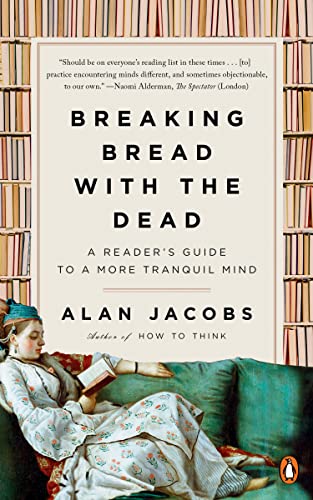
Breaking Bread With the Dead: A Reader's Guide to a More Tranquil Mind
Anbieter: BookOutlet, St. Catharines, ON, Kanada
Verkäuferbewertung 5 von 5 Sternen

Paperback. Zustand: New. Paperback. Publisher overstock, may contain remainder mark on edge.
-
Breaking Bread with the Dead: A Reader's Guide to a More Tranquil Mind
Sprache: Englisch
Verlag: Penguin Books September 2021, 2021
ISBN 10: 1984878425 ISBN 13: 9781984878427
Anbieter: The Book Garden, Bountiful, UT, USA
Verkäuferbewertung 3 von 5 Sternen

Trade Paperback. Zustand: Very Good - Cash. Minor rubbing and edge wear to cover, with light reader wear to pages. Still great condition. Text has underlining and/or notations. Secure pages, solid binding. Stock photos may not look exactly like the book.
-
Breaking Bread With the Dead: A Reader's Guide to a More Tranquil Mind
Anbieter: Revaluation Books, Exeter, Vereinigtes Königreich
Verkäuferbewertung 5 von 5 Sternen
EUR 16,73
EUR 11,45 Versand
Versand von Vereinigtes Königreich nach USAAnzahl: 2 verfügbar
In den WarenkorbPaperback. Zustand: Brand New. 192 pages. 8.00x5.00x0.37 inches. In Stock.
-
Breaking Bread with the Dead: A Reader s Guide to a More Tranquil Mind
Anbieter: Kennys Bookstore, Olney, MD, USA
Verkäuferbewertung 4 von 5 Sternen

Zustand: New. 2021. Paperback. . . . . . Books ship from the US and Ireland.
-
Breaking Bread with the Dead: A Reader's Guide to a More Tranquil Mind
Anbieter: Mooney's bookstore, Den Helder, Niederlande
Verkäuferbewertung 4 von 5 Sternen
Zustand: Very good.
-

Zustand: New. ALAN JACOBS is Distinguished Professor of Humanities in the Honors Program at Baylor University. He has published fifteen books and writes for publications such as The Atlantic, Harper s Magazine, The Christian Century, The New Yorker, and .
-

Breaking Bread with the Dead : A Reader's Guide to a More Tranquil Mind
Sprache: Englisch
Verlag: Penguin Publishing Group Sep 2021, 2021
ISBN 10: 1984878425 ISBN 13: 9781984878427
Anbieter: AHA-BUCH GmbH, Einbeck, Deutschland
Verkäuferbewertung 5 von 5 Sternen
Taschenbuch. Zustand: Neu. Neuware - From the author of HOW TO THINK and THE PLEASURES OF READING IN AN AGE OF DISTRACTION, a literary guide to engaging with the voices of the past to stay sane in the presentW. H. Auden once wrote that 'art is our chief means of breaking bread with the dead.' In his brilliant and compulsively readable new treatise, Breaking Bread with the Dead, Alan Jacobs shows us that engaging with the strange and wonderful writings of the past might help us live less anxiously in the present-and increase what Thomas Pynchon once called our 'personal density.'Today we are battling too much information in a society changing at lightning speed, with algorithms aimed at shaping our every thought-plus a sense that history offers no resources, only impediments to overcome or ignore. The modern solution to our problems is to surround ourselves only with what we know and what brings us instant comfort. Jacobs's answer is the opposite: to be in conversation with, and challenged by, those from the past who can tell us what we never thought we needed to know.What can Homer teach us about force How does Frederick Douglass deal with the massive blind spots of America's Founding Fathers And what can we learn from modern authors who engage passionately and profoundly with the past How can Ursula K. Le Guin show us truths about Virgil's female characters that Virgil himself could never have seen In Breaking Bread with the Dead, a gifted scholar draws us into close and sympathetic engagement with texts from across the ages, including the work of Anita Desai, Henrik Ibsen, Jean Rhys, Simone Weil, Edith Wharton, Amitav Ghosh, Claude Lévi-Strauss, Italo Calvino, and many more.By hearing the voices of the past, we can expand our consciousness, our sympathies, and our wisdom far beyond what our present moment can offer.


