

Gesamtpreis (1 Artikel Artikel):
Versandziel:

9781845113131 - Israeli Cinema East/West and the Politics of Representation (Library of Modern Middle East Studies, 78) von Shohat, Ella (6 Ergebnisse)
Direkt zu den wichtigsten Suchergebnissen
Suchfilter
Produktart
- Alle Product Types
- Bücher (6)
- Magazine & Zeitschriften (Keine weiteren Ergebnisse entsprechen dieser Verfeinerung)
- Comics (Keine weiteren Ergebnisse entsprechen dieser Verfeinerung)
- Noten (Keine weiteren Ergebnisse entsprechen dieser Verfeinerung)
- Kunst, Grafik & Poster (Keine weiteren Ergebnisse entsprechen dieser Verfeinerung)
- Fotografien (Keine weiteren Ergebnisse entsprechen dieser Verfeinerung)
- Karten (Keine weiteren Ergebnisse entsprechen dieser Verfeinerung)
- Manuskripte & Papierantiquitäten (Keine weiteren Ergebnisse entsprechen dieser Verfeinerung)
Zustand Mehr dazu
- Neu (4)
- Wie Neu, Sehr Gut oder Gut Bis Sehr Gut (Keine weiteren Ergebnisse entsprechen dieser Verfeinerung)
- Gut oder Befriedigend (2)
- Ausreichend oder Schlecht (Keine weiteren Ergebnisse entsprechen dieser Verfeinerung)
- Wie beschrieben (Keine weiteren Ergebnisse entsprechen dieser Verfeinerung)
Einband
- alle Einbände
- Hardcover (Keine weiteren Ergebnisse entsprechen dieser Verfeinerung)
- Softcover (6)
Weitere Eigenschaften
- Erstausgabe (Keine weiteren Ergebnisse entsprechen dieser Verfeinerung)
- Signiert (Keine weiteren Ergebnisse entsprechen dieser Verfeinerung)
- Schutzumschlag (Keine weiteren Ergebnisse entsprechen dieser Verfeinerung)
- Angebotsfoto (2)
Sprache (1)
Gratisversand
Land des Verkäufers
Verkäuferbewertung
-
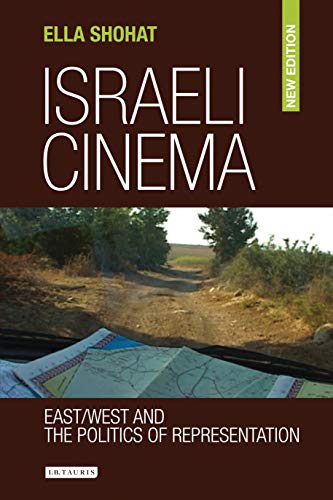
Israeli Cinema: East/West and the Politics of Representation
Anbieter: ThriftBooks-Dallas, Dallas, TX, USA
Verkäuferbewertung 5 von 5 Sternen

Paperback. Zustand: Good. No Jacket. Pages can have notes/highlighting. Spine may show signs of wear. ~ ThriftBooks: Read More, Spend Less.
-
Israeli Cinema: East/West and the Politics of Representation (Library of Modern Middle East Studies)
Anbieter: World of Books (was SecondSale), Montgomery, IL, USA
Verkäuferbewertung 5 von 5 Sternen
Zustand: Good. Item in good condition. Textbooks may not include supplemental items i.e. CDs, access codes etc.
-
Israeli Cinema: East/West and the Politics of Representation (Library of Modern Middle East Studies)
Anbieter: Ria Christie Collections, Uxbridge, Vereinigtes Königreich
Verkäuferbewertung 5 von 5 Sternen
EUR 39,87
EUR 13,89 Versand
Versand von Vereinigtes Königreich nach USAAnzahl: Mehr als 20 verfügbar
In den WarenkorbZustand: New. In.
-
Israeli Cinema: East/ West and the Politics of Representation
Anbieter: Revaluation Books, Exeter, Vereinigtes Königreich
Verkäuferbewertung 5 von 5 Sternen
EUR 63,45
EUR 14,49 Versand
Versand von Vereinigtes Königreich nach USAAnzahl: 2 verfügbar
In den WarenkorbPaperback. Zustand: Brand New. revised edition. 328 pages. 9.00x6.00x1.00 inches. In Stock.
-

EUR 46,22
EUR 48,99 Versand
Versand von Deutschland nach USAAnzahl: Mehr als 20 verfügbar
In den WarenkorbZustand: New. Explores the cinema as a productive site of national culture, dating back to the early Zionist films about turn-of-the-century Palestine. This book offers a deconstructionist reading of Zionism, viewing the cinema as itself participating in the invention .
-

Israeli Cinema East/West and the Politics of Representation
Sprache: Englisch
Verlag: Bloomsbury Publishing PLC Jul 2010, 2010
ISBN 10: 1845113136 ISBN 13: 9781845113131
Anbieter: AHA-BUCH GmbH, Einbeck, Deutschland
Verkäuferbewertung 5 von 5 Sternen
Taschenbuch. Zustand: Neu. Neuware - When the Hebrew edition of this groundbreaking book came out, it provoked a stormy public debate. The author has now up-dated 'Israeli Cinema', adding a substantial new postscript that reflects on the book's initial reception and points to exciting new trends in the cinematic representation of Israel and Palestine. Ella Shohat explores the cinema as a productive site of national culture, dating back to the early Zionist films about turn-of-the-century Palestine. She offers a deconstructionist reading of Zionism, viewing the cinema as itself participating in the 'invention' of the nation. Unthinking the Eurocentric imaginary of 'East versus West', Shohat highlights the paradoxes of an anomalous national/colonial project through a number of salient issues, including the Sabra figure as a negation of the 'Diaspora Jew', the iconography of the land of Israel as a denial of Palestine, and the narrative role of 'the good Arab'. The new postscript examines the emergence of a richly multiperspectival cinematic space that transcends earlier dichotomies through a palimpsestic and cross-border approach to Israel/Palestine.
