Gesamtpreis (1 Artikel Artikel):
Versandziel:

9781601270306 - Negotiating Arab-Israeli Peace: American Leadership in the Middle East von Kurtzer, Daniel C.; Lasensky, Scott B. (11 Ergebnisse)
Direkt zu den wichtigsten Suchergebnissen
Suchfilter
Produktart
- Alle Product Types
- Bücher (11)
- Magazine & Zeitschriften (Keine weiteren Ergebnisse entsprechen dieser Verfeinerung)
- Comics (Keine weiteren Ergebnisse entsprechen dieser Verfeinerung)
- Noten (Keine weiteren Ergebnisse entsprechen dieser Verfeinerung)
- Kunst, Grafik & Poster (Keine weiteren Ergebnisse entsprechen dieser Verfeinerung)
- Fotografien (Keine weiteren Ergebnisse entsprechen dieser Verfeinerung)
- Karten (Keine weiteren Ergebnisse entsprechen dieser Verfeinerung)
- Manuskripte & Papierantiquitäten (Keine weiteren Ergebnisse entsprechen dieser Verfeinerung)
Zustand Mehr dazu
- Neu (Keine weiteren Ergebnisse entsprechen dieser Verfeinerung)
- Wie Neu, Sehr Gut oder Gut Bis Sehr Gut (2)
- Gut oder Befriedigend (9)
- Ausreichend oder Schlecht (Keine weiteren Ergebnisse entsprechen dieser Verfeinerung)
- Wie beschrieben (Keine weiteren Ergebnisse entsprechen dieser Verfeinerung)
Einband
- alle Einbände
- Hardcover (Keine weiteren Ergebnisse entsprechen dieser Verfeinerung)
- Softcover (11)
Weitere Eigenschaften
- Erstausgabe (2)
- Signiert (Keine weiteren Ergebnisse entsprechen dieser Verfeinerung)
- Schutzumschlag (Keine weiteren Ergebnisse entsprechen dieser Verfeinerung)
- Angebotsfoto (1)
Sprache (1)
Preis
- Beliebiger Preis
- Weniger als EUR 20
- EUR 20 bis EUR 45
- Mehr als EUR 45 (Keine weiteren Ergebnisse entsprechen dieser Verfeinerung)
Gratisversand
Land des Verkäufers
Verkäuferbewertung
-
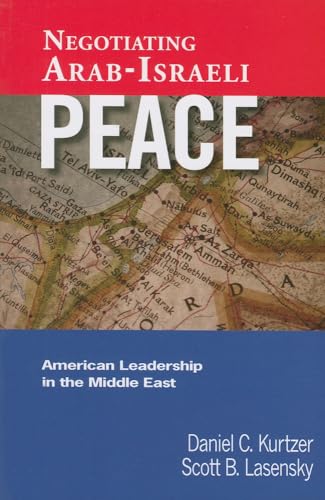
Negotiating Arab-Israeli Peace: American Leadership in the Middle East
Sprache: Englisch
Verlag: United States Institute of Peace Press, 2008
ISBN 10: 1601270305 ISBN 13: 9781601270306
Anbieter: World of Books (was SecondSale), Montgomery, IL, USA
Verkäuferbewertung 5 von 5 Sternen

Zustand: Good. Good condition ex-library book with usual library markings and stickers.
-
Negotiating Arab-Israeli Peace : American Leadership in the Middle East
Sprache: Englisch
Verlag: United States Institute of Peace Press (USIP Press), 2008
ISBN 10: 1601270305 ISBN 13: 9781601270306
Anbieter: Better World Books, Mishawaka, IN, USA
Verkäuferbewertung 5 von 5 Sternen
Zustand: Fine. Used book that is in almost brand-new condition. May contain a remainder mark. Better World Books: Buy Books. Do Good.
-
Negotiating Arab-Israeli Peace : American Leadership in the Middle East
Sprache: Englisch
Verlag: United States Institute of Peace Press (USIP Press), 2008
ISBN 10: 1601270305 ISBN 13: 9781601270306
Anbieter: Better World Books: West, Reno, NV, USA
Verkäuferbewertung 5 von 5 Sternen
Zustand: Very Good. Former library copy. Pages intact with possible writing/highlighting. Binding strong with minor wear. Dust jackets/supplements may not be included. Includes library markings. Stock photo provided. Product includes identifying sticker. Better World Books: Buy Books. Do Good.
-
Negotiating Arab-Israeli Peace : American Leadership in the Middle East
Sprache: Englisch
Verlag: United States Institute of Peace Press (USIP Press), 2008
ISBN 10: 1601270305 ISBN 13: 9781601270306
Anbieter: Better World Books, Mishawaka, IN, USA
Verkäuferbewertung 5 von 5 Sternen
Zustand: Very Good. Pages intact with possible writing/highlighting. Binding strong with minor wear. Dust jackets/supplements may not be included. Stock photo provided. Product includes identifying sticker. Better World Books: Buy Books. Do Good.
-
Negotiating Arab-Israeli Peace: American Leadership in the Middle East
Sprache: Englisch
Verlag: United States Institute of Peace, 2008
ISBN 10: 1601270305 ISBN 13: 9781601270306
Anbieter: A.C. Daniel's Collectable Books, South Paris, ME, USA
Verkäuferbewertung 5 von 5 Sternen
Erstausgabe
Soft cover. Zustand: Very Good. 1st Edition. like new softcover edition no damage seen.
-
Negotiating Arab-Israeli Peace: American Leadership in the Middle East
Sprache: Englisch
Verlag: United States Institute of Peace Press, 2008
ISBN 10: 1601270305 ISBN 13: 9781601270306
Anbieter: Wonder Book, Frederick, MD, USA
Verkäuferbewertung 5 von 5 Sternen
Zustand: As New. Like New condition. A near perfect copy that may have very minor cosmetic defects.
-
Negotiating Arab-Israeli Peace: American Leadership in the Middle East
Sprache: Englisch
Verlag: United States Institute of Peace Press, 2008
ISBN 10: 1601270305 ISBN 13: 9781601270306
Anbieter: Wonder Book, Frederick, MD, USA
Verkäuferbewertung 5 von 5 Sternen
Zustand: Very Good. Very Good condition. A copy that may have a few cosmetic defects. May also contain light spine creasing or a few markings such as an owner's name, short gifter's inscription or light stamp.
-
Negotiating Arab-Israeli Peace: American Leadership in the Middle East
Sprache: Englisch
Verlag: United States Institute of Peace Press, 2008
ISBN 10: 1601270305 ISBN 13: 9781601270306
Anbieter: ThriftBooks-Atlanta, AUSTELL, GA, USA
Verkäuferbewertung 5 von 5 Sternen
Paperback. Zustand: Very Good. No Jacket. Former library book; May have limited writing in cover pages. Pages are unmarked. ~ ThriftBooks: Read More, Spend Less.
-
Negotiating Arab-Israeli Peace : American Leadership in the Middle East
Sprache: Englisch
Verlag: United States Institute of Peace Press (USIP Press), 2008
ISBN 10: 1601270305 ISBN 13: 9781601270306
Anbieter: Better World Books Ltd, Dunfermline, Vereinigtes Königreich
Verkäuferbewertung 5 von 5 Sternen
EUR 6,62
EUR 5,78 Versand
Versand von Vereinigtes Königreich nach USAAnzahl: 1 verfügbar
In den WarenkorbZustand: Very Good. Former library copy. Pages intact with possible writing/highlighting. Binding strong with minor wear. Dust jackets/supplements may not be included. Includes library markings. Stock photo provided. Product includes identifying sticker. Better World Books: Buy Books. Do Good.
-
Negotiating Arab-Israeli Peace: American Leadership in the Middle East
Sprache: Englisch
Verlag: United States Institute of Peace Press, 2008
ISBN 10: 1601270305 ISBN 13: 9781601270306
Anbieter: WorldofBooks, Goring-By-Sea, WS, Vereinigtes Königreich
Verkäuferbewertung 5 von 5 Sternen
EUR 6,58
EUR 6,48 Versand
Versand von Vereinigtes Königreich nach USAAnzahl: 1 verfügbar
In den WarenkorbPaperback. Zustand: Very Good. The book has been read, but is in excellent condition. Pages are intact and not marred by notes or highlighting. The spine remains undamaged.
-
Negotiating Arab-Israeli Peace; American Leadership in the Middle East
Sprache: Englisch
Verlag: United States Institute of Peace Press, Washington DC, 2008
ISBN 10: 1601270305 ISBN 13: 9781601270306
Anbieter: Ground Zero Books, Ltd., Silver Spring, MD, USA
Verkäuferbewertung 5 von 5 Sternen
Erstausgabe
Trade paperback. Zustand: Very good. Presumed First Edition, First printing. xx, 191, [1] pages. Format is approximately 5.25 inches by 8 inches. Includes 5 full-color fold-out maps of the West Bank, the Golan Heights, Israel and its Neighbors, Jerusalem, and the Gaza strip at the end of the book. Also includes a Foreword, as well as chapters on The Study Group on Arab-Israeli Peacemaking, Interviews and Consultations, Acknowledgments, Lessons Learned, Opportunities Lost; The United States and Arab-Israeli Peacemaking: A Report Card; Making Peace among Arabs and Israelis: Lessons Learned and Relearned; and Recommendations for Future Administrations. Also includes Appendices on Timeline, 1967-2007; Selected Documents and Primary Sources; Online Documents and Primary Sources; and Recommended Readings. This book sets forth the definitive guidebook on how to broker peace in the Middle East. It is the product of the United States Institute of Peace's Study Group on Arab-Israeli Peacemaking, which brings together some of America's most respected and experienced authorities in the field, including William B. Quandt, Steven L. Spiegel, and Shibley I. Telhami. The book draws on months of groundbreaking consultations with over one hundred statesmen, political leaders, and civil society figures who have defined Middle East peacemaking in our times. Negotiating Arab-Israeli Peace sets forth a compelling, interests-based framework for American engagement in the peace process; provides a critical assessment of U.S. diplomacy since the end of the Cold War; and offers a set of ten core lessons to guide the efforts of future American negotiators. From a U.S. Institute of Peace statement when this book was first published: As Washington struggles to revive the Arab-Israeli peace process, Kurtzer and Lasensky offer the definitive guidebook on how to broker peace in the Middle East. President Bush's recent attempts to reinvigorate the Middle East peace process will fail unless his administration pays more attention to lessons learned in past negotiations, say Daniel C. Kurtzer, former U.S. ambassador to Egypt and Israel, and Scott B. Lasensky, Middle East expert at the United States Institute of Peace (USIP). The authors of the new book Negotiating Arab-Israeli Peace: American Leadership in the Middle East conclude that there can be no endgame, two-state solution to the Arab-Israeli conflict without the United States playing an active role in spurring the negotiations. "The absence of American leadership during this administration, combined with a blatant disregard for what worked in the past, has harmed American national interests and set back the quest for peace. Yet our research shows that no other third party has the kind of influence that the U.S. has in Arab-Israeli negotiations," says Kurtzer. "In fact, over the last 40 years, the peace process has never moved forward in a meaningful way in the absence of U.S. leadership." "No one can deny that the intensification of the conflict has destabilized the region and hamstrung America's position post-9/11," says Lasensky. "Without continuous, constructive engagement, the United States jeopardizes many of its own security and foreign policy goals. But the decline in American diplomacy has been a relatively recent phenomenon, and it can be reversed. Our country's influence remains substantial, and there are many past American achievements that can be the basis for a new starting point." With the clock running out on the Bush administration and its efforts to forge a Middle East peace, Kurtzer and Lasensky offer ten core lessons as well as policy recommendations to guide the current and, more likely, future administrations in future negotiations. The next president must establish the Middle East peace process as a priority early in the administration and must convince all parties that Washington is committed to resolving the conflict. "Winning back the hearts and minds of both Arabs and Israelis must be a top priority, but it can only be the beginning. If the United States.