

Gesamtpreis (1 Artikel Artikel):
Versandziel:

9781464815218 - Transition to Diagnosis-Related Group (DRG) Payments For Health: Lessons From Case Studies (International Development in Focus) (4 Ergebnisse)
Direkt zu den wichtigsten Suchergebnissen
Suchfilter
Produktart
- Alle Product Types
- Bücher (4)
- Magazine & Zeitschriften (Keine weiteren Ergebnisse entsprechen dieser Verfeinerung)
- Comics (Keine weiteren Ergebnisse entsprechen dieser Verfeinerung)
- Noten (Keine weiteren Ergebnisse entsprechen dieser Verfeinerung)
- Kunst, Grafik & Poster (Keine weiteren Ergebnisse entsprechen dieser Verfeinerung)
- Fotografien (Keine weiteren Ergebnisse entsprechen dieser Verfeinerung)
- Karten (Keine weiteren Ergebnisse entsprechen dieser Verfeinerung)
- Manuskripte & Papierantiquitäten (Keine weiteren Ergebnisse entsprechen dieser Verfeinerung)
Zustand Mehr dazu
- Neu (4)
- Wie Neu, Sehr Gut oder Gut Bis Sehr Gut (Keine weiteren Ergebnisse entsprechen dieser Verfeinerung)
- Gut oder Befriedigend (Keine weiteren Ergebnisse entsprechen dieser Verfeinerung)
- Ausreichend oder Schlecht (Keine weiteren Ergebnisse entsprechen dieser Verfeinerung)
- Wie beschrieben (Keine weiteren Ergebnisse entsprechen dieser Verfeinerung)
Einband
- alle Einbände
- Hardcover (Keine weiteren Ergebnisse entsprechen dieser Verfeinerung)
- Softcover (4)
Weitere Eigenschaften
- Erstausgabe (Keine weiteren Ergebnisse entsprechen dieser Verfeinerung)
- Signiert (Keine weiteren Ergebnisse entsprechen dieser Verfeinerung)
- Schutzumschlag (Keine weiteren Ergebnisse entsprechen dieser Verfeinerung)
- Angebotsfoto (2)
Sprache (1)
Preis
- Beliebiger Preis
- Weniger als EUR 20 (Keine weiteren Ergebnisse entsprechen dieser Verfeinerung)
- EUR 20 bis EUR 45
- Mehr als EUR 45
Gratisversand
- Kostenloser Versand nach USA (Keine weiteren Ergebnisse entsprechen dieser Verfeinerung)
Land des Verkäufers
Verkäuferbewertung
-
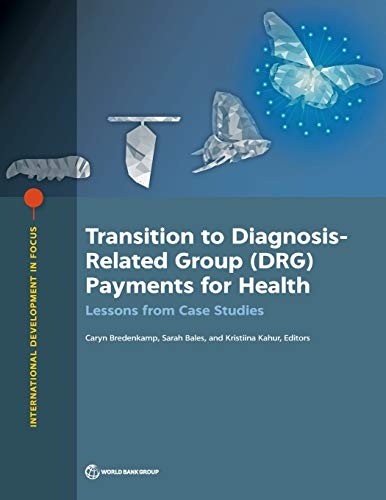
Transition to Diagnosis-Related Group (DRG) Payments for Health: Lessons from Case Studies (International Development in Focus)
Anbieter: Ria Christie Collections, Uxbridge, Vereinigtes Königreich
Verkäuferbewertung 5 von 5 Sternen

EUR 33,18
EUR 13,87 Versand
Versand von Vereinigtes Königreich nach USAAnzahl: Mehr als 20 verfügbar
In den WarenkorbZustand: New. In.
-
Transition to Payment by Diagnostic Related Groups Payment: How Did They Do It? a Volume of Case Studies
Anbieter: Revaluation Books, Exeter, Vereinigtes Königreich
Verkäuferbewertung 5 von 5 Sternen
EUR 51,62
EUR 11,58 Versand
Versand von Vereinigtes Königreich nach USAAnzahl: 2 verfügbar
In den WarenkorbPaperback. Zustand: Brand New. 1st edition. 56 pages. 10.75x8.50x0.25 inches. In Stock.
-
EUR 40,99
EUR 48,99 Versand
Versand von Deutschland nach USAAnzahl: Mehr als 20 verfügbar
In den WarenkorbZustand: New. Über den AutorThe World Bank came into formal existence in 1945 following the international ratification of the Bretton Woods agreements. It is a vital source of financial and technical assistance to developing countries around the .
-

Transition to Diagnosis-Related Group (DRG) Payments for Health : Lessons from Case Studies
Sprache: Englisch
Verlag: World Bank Publications Dez 2019, 2019
ISBN 10: 1464815216 ISBN 13: 9781464815218
Anbieter: AHA-BUCH GmbH, Einbeck, Deutschland
Verkäuferbewertung 5 von 5 Sternen
Taschenbuch. Zustand: Neu. Neuware - This book examines how nine different health systems--U.S. Medicare, Australia, Thailand, Kyrgyz Republic, Germany, Estonia, Croatia, China (Beijing) and the Russian Federation--have transitioned to using case-based payments, and especially diagnosis-related groups (DRGs), as part of their provider payment mix for hospital care. It sheds light on why particular technical design choices were made, what enabling investments were pertinent, and what broader political and institutional issues needed to be considered. The strategies used to phase in DRG payment receive special attention. These nine systems have been selected because they represent a variety of different approaches and experiences in DRG transition. They include the innovators who pioneered DRG payment systems (namely the United States and Australia), mature systems (such as Thailand, Germany, and Estonia), and countries where DRG payments were only introduced within the past decade (such as the Russian Federation and China). Each system is examined in detail as a separate case study, with a synthesis distilling the cross-cutting lessons learned. This book should be helpful to those working on health systems that are considering introducing, or are in the early stages of introducing, DRG-based payments into their provider payment mix. It will enhance the reader's understanding of how other countries (or systems) have made that transition, give a sense of the decisions that lie ahead, and offer options that can be considered. It will also be useful to those working in health systems that already include DRG payments in the payment mix but have not yet achieved the anticipated results.
