

Gesamtpreis (1 Artikel Artikel):
Versandziel:

9780879727994 - Paranoia, the Bomb, and 1950s Science Fiction Films von Hendershot, Cynthia; Hendershot, Cyndy (8 Ergebnisse)
Direkt zu den wichtigsten Suchergebnissen
Suchfilter
Produktart
- Alle Product Types
- Bücher (8)
- Magazine & Zeitschriften (Keine weiteren Ergebnisse entsprechen dieser Verfeinerung)
- Comics (Keine weiteren Ergebnisse entsprechen dieser Verfeinerung)
- Noten (Keine weiteren Ergebnisse entsprechen dieser Verfeinerung)
- Kunst, Grafik & Poster (Keine weiteren Ergebnisse entsprechen dieser Verfeinerung)
- Fotografien (Keine weiteren Ergebnisse entsprechen dieser Verfeinerung)
- Karten (Keine weiteren Ergebnisse entsprechen dieser Verfeinerung)
- Manuskripte & Papierantiquitäten (Keine weiteren Ergebnisse entsprechen dieser Verfeinerung)
Zustand Mehr dazu
- Neu (6)
- Wie Neu, Sehr Gut oder Gut Bis Sehr Gut (Keine weiteren Ergebnisse entsprechen dieser Verfeinerung)
- Gut oder Befriedigend (2)
- Ausreichend oder Schlecht (Keine weiteren Ergebnisse entsprechen dieser Verfeinerung)
- Wie beschrieben (Keine weiteren Ergebnisse entsprechen dieser Verfeinerung)
Einband
- alle Einbände
- Hardcover (8)
- Softcover (Keine weiteren Ergebnisse entsprechen dieser Verfeinerung)
Weitere Eigenschaften
- Erstausgabe (Keine weiteren Ergebnisse entsprechen dieser Verfeinerung)
- Signiert (Keine weiteren Ergebnisse entsprechen dieser Verfeinerung)
- Schutzumschlag (Keine weiteren Ergebnisse entsprechen dieser Verfeinerung)
- Angebotsfoto (2)
Sprache (1)
Preis
- Beliebiger Preis
- Weniger als EUR 20
- EUR 20 bis EUR 45
- Mehr als EUR 45 (Keine weiteren Ergebnisse entsprechen dieser Verfeinerung)
Gratisversand
Land des Verkäufers
Verkäuferbewertung
-
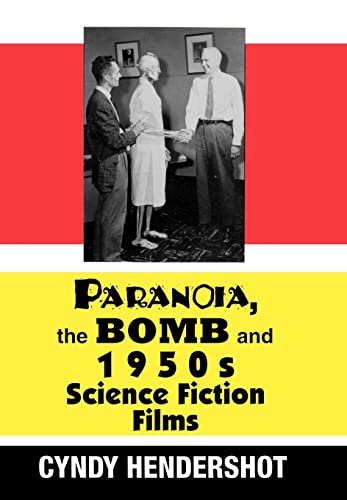
Paranoia, the Bomb, and 1950s Science Fiction Films
Sprache: Englisch
Verlag: Bowling Green State University Popular Press, 2005
ISBN 10: 0879727993 ISBN 13: 9780879727994
Anbieter: ThriftBooks-Atlanta, AUSTELL, GA, USA
Verkäuferbewertung 5 von 5 Sternen

Hardcover. Zustand: Very Good. No Jacket. May have limited writing in cover pages. Pages are unmarked. ~ ThriftBooks: Read More, Spend Less.
-
Paranoia the Bomb and 1950s Science Fiction Films
Anbieter: PBShop.store UK, Fairford, GLOS, Vereinigtes Königreich
Verkäuferbewertung 5 von 5 Sternen
EUR 21,09
EUR 5,89 Versand
Versand von Vereinigtes Königreich nach USAAnzahl: 1 verfügbar
In den WarenkorbHRD. Zustand: New. New Book. Shipped from UK. Established seller since 2000.
-
PARANOIA THE BOMB AND 1950S SCIENCE FICTION FILMS
Sprache: Englisch
Verlag: University of Wisconsin Press, 1999
ISBN 10: 0879727993 ISBN 13: 9780879727994
Anbieter: Revaluation Books, Exeter, Vereinigtes Königreich
Verkäuferbewertung 5 von 5 Sternen
EUR 26,35
EUR 11,73 Versand
Versand von Vereinigtes Königreich nach USAAnzahl: 2 verfügbar
In den WarenkorbHardcover. Zustand: Brand New. 163 pages. 9.53x6.50x0.75 inches. In Stock.
-
Paranoia, the Bomb, and 1950s Science Fiction Films
Anbieter: Ria Christie Collections, Uxbridge, Vereinigtes Königreich
Verkäuferbewertung 5 von 5 Sternen
EUR 26,73
EUR 14,05 Versand
Versand von Vereinigtes Königreich nach USAAnzahl: Mehr als 20 verfügbar
In den WarenkorbZustand: New. In.
-
Paranoia the Bomb and 1950s Science Fiction Films
Sprache: Englisch
Verlag: University of Wisconsin Press, 2005
ISBN 10: 0879727993 ISBN 13: 9780879727994
Anbieter: Kennys Bookstore, Olney, MD, USA
Verkäuferbewertung 5 von 5 Sternen
Zustand: New. 1999. hardcover. . . . . . Books ship from the US and Ireland.
-

EUR 31,89
EUR 48,99 Versand
Versand von Deutschland nach USAAnzahl: Mehr als 20 verfügbar
In den WarenkorbZustand: New. KlappentextIn this volume, Hendershot provides both theoretical discussion of paranoia and close readings of Sci-Fi films in order to construct her argument.
-
Paranoia, the Bomb, and 1950s Science Fiction Films
Anbieter: Studibuch, Stuttgart, Deutschland
Verkäuferbewertung 5 von 5 Sternen
hardcover. Zustand: Gut. 174 Seiten; 9780879727994.3 Gewicht in Gramm: 500.
-

Paranoia, the Bomb, and 1950s Science Fiction Films
Sprache: Englisch
Verlag: University Of Wisconsin Press Jan 1999, 1999
ISBN 10: 0879727993 ISBN 13: 9780879727994
Anbieter: AHA-BUCH GmbH, Einbeck, Deutschland
Verkäuferbewertung 5 von 5 Sternen
Buch. Zustand: Neu. Neuware - Cyndy Hendershot argues that 1950s science fiction films open a window on the cultural paranoia that characterized 1950s America, a phenomenon largely triggered by use of nuclear weapons during World War II. This study uses psychoanalytic theory to examine the various monsters that inhabit 1950s sci-fi movies--giant insects, prehistoric creatures, mutants, uncanny doubles, to name a few--which serve as metaphorical embodiments of a varied and complex cultural paranoia. Postwar paranoia may have stemmed from the bomb, but it came to correlate with a wider range of issues such as anti-communism, internal totalitarianism, scientific progress, domestic problems, gender roles, and sexuality.
