

Gesamtpreis (1 Artikel Artikel):
Versandziel:

9780865975545 - Government Failure & Over-Government (The collected Works of Arthur Seldon, 5) von Seldon, Arthur; Robinson, Colin (7 Ergebnisse)
Direkt zu den wichtigsten Suchergebnissen
Suchfilter
Produktart
- Alle Product Types
- Bücher (7)
- Magazine & Zeitschriften (Keine weiteren Ergebnisse entsprechen dieser Verfeinerung)
- Comics (Keine weiteren Ergebnisse entsprechen dieser Verfeinerung)
- Noten (Keine weiteren Ergebnisse entsprechen dieser Verfeinerung)
- Kunst, Grafik & Poster (Keine weiteren Ergebnisse entsprechen dieser Verfeinerung)
- Fotografien (Keine weiteren Ergebnisse entsprechen dieser Verfeinerung)
- Karten (Keine weiteren Ergebnisse entsprechen dieser Verfeinerung)
- Manuskripte & Papierantiquitäten (Keine weiteren Ergebnisse entsprechen dieser Verfeinerung)
Zustand Mehr dazu
- Neu (7)
- Wie Neu, Sehr Gut oder Gut Bis Sehr Gut (Keine weiteren Ergebnisse entsprechen dieser Verfeinerung)
- Gut oder Befriedigend (Keine weiteren Ergebnisse entsprechen dieser Verfeinerung)
- Ausreichend oder Schlecht (Keine weiteren Ergebnisse entsprechen dieser Verfeinerung)
- Wie beschrieben (Keine weiteren Ergebnisse entsprechen dieser Verfeinerung)
Einband
- alle Einbände
- Hardcover (Keine weiteren Ergebnisse entsprechen dieser Verfeinerung)
- Softcover (7)
Weitere Eigenschaften
- Erstausgabe (Keine weiteren Ergebnisse entsprechen dieser Verfeinerung)
- Signiert (Keine weiteren Ergebnisse entsprechen dieser Verfeinerung)
- Schutzumschlag (Keine weiteren Ergebnisse entsprechen dieser Verfeinerung)
- Angebotsfoto (2)
Sprache (1)
Preis
- Beliebiger Preis
- Weniger als EUR 20
- EUR 20 bis EUR 45
- Mehr als EUR 45 (Keine weiteren Ergebnisse entsprechen dieser Verfeinerung)
Gratisversand
Land des Verkäufers
Verkäuferbewertung
-
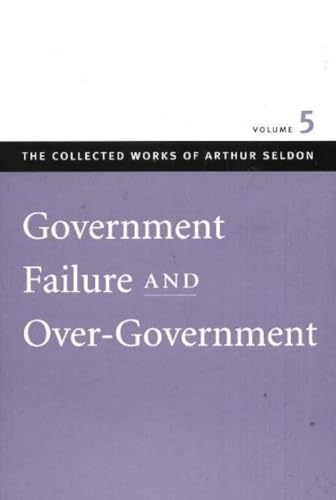
Government Failure and Over-Government
Anbieter: PBShop.store US, Wood Dale, IL, USA
Verkäuferbewertung 5 von 5 Sternen

PAP. Zustand: New. New Book. Shipped from UK. Established seller since 2000.
-
Government Failure and Over-Government
Anbieter: PBShop.store UK, Fairford, GLOS, Vereinigtes Königreich
Verkäuferbewertung 5 von 5 Sternen
EUR 14,58
EUR 4,81 Versand
Versand von Vereinigtes Königreich nach USAAnzahl: 5 verfügbar
In den WarenkorbPAP. Zustand: New. New Book. Shipped from UK. Established seller since 2000.
-
Government Failure and Over-Government
Sprache: Englisch
Verlag: Liberty Fund, Incorporated, 2005
ISBN 10: 086597554X ISBN 13: 9780865975545
Anbieter: Majestic Books, Hounslow, Vereinigtes Königreich
Verkäuferbewertung 4 von 5 Sternen

EUR 12,95
EUR 7,52 Versand
Versand von Vereinigtes Königreich nach USAAnzahl: 3 verfügbar
In den WarenkorbZustand: New. pp. 240.
-
Government Failure and Over-Government
Anbieter: Kennys Bookstore, Olney, MD, USA
Verkäuferbewertung 5 von 5 Sternen
Zustand: New. 2005. New Edition. Paperback. Editor(s): Robinson, Colin. Series: Collected Works of Arthur Seldon. Num Pages: 201 pages, illus. BIC Classification: JPHV. Category: (G) General (US: Trade). Dimension: 227 x 157 x 16. Weight in Grams: 376. . . . . . Books ship from the US and Ireland.
-
Government Failure and Over-Government (The Collected Works of Arthur Seldon)
Anbieter: Revaluation Books, Exeter, Vereinigtes Königreich
Verkäuferbewertung 5 von 5 Sternen
EUR 19,56
EUR 11,57 Versand
Versand von Vereinigtes Königreich nach USAAnzahl: 2 verfügbar
In den WarenkorbPaperback. Zustand: Brand New. new edition edition. 240 pages. 8.50x5.75x0.50 inches. In Stock.
-

Zustand: New. Über den AutorArthur Seldon Edited by Colin RobinsonInhaltsverzeichnisDemocracy at the Crossroads The Debilitating Disease of Over-Government The Escapes from Over-Government From Political Democracy .
-

Government Failure and Over-Government
Anbieter: AHA-BUCH GmbH, Einbeck, Deutschland
Verkäuferbewertung 5 von 5 Sternen
Taschenbuch. Zustand: Neu. Neuware - In the fifth volume of 'The Collected Works of Arthur Seldon', Arthur Seldon uses public choice economics research to support his theory of over-government. The term 'over-government' was coined by Seldon and is defined as the failure of governments to govern well, leading the public to avoid government programs in favour of markets. Seldon explains how the results of government programs are always at odds with what the people would have chosen for themselves, because governments seek to impose taxes and legislature based on their own agendas. This increasing control and restraint by the government will continue to force people to abandon those ineffective programs for more open markets and other countries that support them. Seldon argues that government bureaucrats rely too heavily on unions, labour groups, and lobbyists and act in their own interest instead of opening those options up to the people they serve. Seldon purports that any government that continues to force its own views and desires on the unwilling public will lead to its own demise as the public searches elsewhere for a more representative democracy.

