

Gesamtpreis (1 Artikel Artikel):
Versandziel:

9780822328698 - Constructing the Black Masculine: Identity and Ideality in African American Men?s Literature and Culture, 1775?1995 (John Hope Franklin Center Book) von Wallace, Ma... (5 Ergebnisse)
Direkt zu den wichtigsten Suchergebnissen
Suchfilter
Produktart
- Alle Product Types
- Bücher (5)
- Magazine & Zeitschriften (Keine weiteren Ergebnisse entsprechen dieser Verfeinerung)
- Comics (Keine weiteren Ergebnisse entsprechen dieser Verfeinerung)
- Noten (Keine weiteren Ergebnisse entsprechen dieser Verfeinerung)
- Kunst, Grafik & Poster (Keine weiteren Ergebnisse entsprechen dieser Verfeinerung)
- Fotografien (Keine weiteren Ergebnisse entsprechen dieser Verfeinerung)
- Karten (Keine weiteren Ergebnisse entsprechen dieser Verfeinerung)
- Manuskripte & Papierantiquitäten (Keine weiteren Ergebnisse entsprechen dieser Verfeinerung)
Zustand Mehr dazu
- Neu (5)
- Wie Neu, Sehr Gut oder Gut Bis Sehr Gut (Keine weiteren Ergebnisse entsprechen dieser Verfeinerung)
- Gut oder Befriedigend (Keine weiteren Ergebnisse entsprechen dieser Verfeinerung)
- Ausreichend oder Schlecht (Keine weiteren Ergebnisse entsprechen dieser Verfeinerung)
- Wie beschrieben (Keine weiteren Ergebnisse entsprechen dieser Verfeinerung)
Einband
- alle Einbände
- Hardcover (Keine weiteren Ergebnisse entsprechen dieser Verfeinerung)
- Softcover (5)
Weitere Eigenschaften
- Erstausgabe (Keine weiteren Ergebnisse entsprechen dieser Verfeinerung)
- Signiert (Keine weiteren Ergebnisse entsprechen dieser Verfeinerung)
- Schutzumschlag (Keine weiteren Ergebnisse entsprechen dieser Verfeinerung)
- Angebotsfoto (2)
Sprache (1)
Preis
- Beliebiger Preis
- Weniger als EUR 20 (Keine weiteren Ergebnisse entsprechen dieser Verfeinerung)
- EUR 20 bis EUR 45
- Mehr als EUR 45
Gratisversand
- Kostenloser Versand nach USA (Keine weiteren Ergebnisse entsprechen dieser Verfeinerung)
Land des Verkäufers
Verkäuferbewertung
-
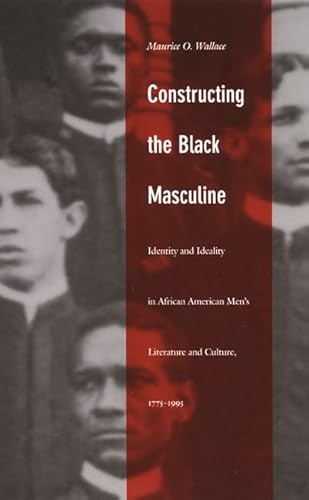
Constructing the Black Masculine - Identity and Ideality in African American Men`s Literature and Culture, 1775-1995
Buch 3 von 39: a John Hope Franklin Center BookSprache: Englisch
Verlag: MD - Duke University Press, 2002
ISBN 10: 0822328690 ISBN 13: 9780822328698
Anbieter: PBShop.store UK, Fairford, GLOS, Vereinigtes Königreich
Verkäuferbewertung 5 von 5 Sternen

EUR 37,36
EUR 4,81 Versand
Versand von Vereinigtes Königreich nach USAAnzahl: 1 verfügbar
In den WarenkorbPAP. Zustand: New. New Book. Shipped from UK. Established seller since 2000.
-
Constructing the Black Masculine: Identity and Ideality in African American Men?s Literature and Culture, 1775?1995
Buch 3 von 39: a John Hope Franklin Center BookAnbieter: Kennys Bookstore, Olney, MD, USA
Verkäuferbewertung 5 von 5 Sternen
Zustand: New. A major rethinking of the issues around African American masculinity, tracing its relation to images of construction, and applying ideas from Eve Sedgwick's 'Epistemology of the Closet'. Series: A John Hope Franklin Center Book. Num Pages: 256 pages, 17 b&w photos. BIC Classification: JFSJ2; JFSL3. Category: (P) Professional & Vocational. Dimension: 5969 x 3734 x 20. Weight in Grams: 413. . 2002. Illustrated. Paperback. . . . . Books ship from the US and Ireland.
-
Constructing the Black Masculine Identity and Ideality in African American Men's Literature and Culture, 17751995
Buch 3 von 39: a John Hope Franklin Center BookAnbieter: Revaluation Books, Exeter, Vereinigtes Königreich
Verkäuferbewertung 5 von 5 Sternen
EUR 51,54
EUR 11,56 Versand
Versand von Vereinigtes Königreich nach USAAnzahl: 2 verfügbar
In den WarenkorbPaperback. Zustand: Brand New. 236 pages. 9.25x5.75x0.75 inches. In Stock.
-

Constructing the Black Masculine: Identity and Ideality in African American Men\ s Literature and Culture, 1775-1995
Buch 3 von 39: a John Hope Franklin Center BookEUR 41,77
EUR 48,99 Versand
Versand von Deutschland nach USAAnzahl: Mehr als 20 verfügbar
In den WarenkorbKartoniert / Broschiert. Zustand: New. A major rethinking of the issues around African American masculinity, tracing its relation to images of construction, and applying ideas from Eve Sedgwick s Epistemology of the Closet .Über den AutorMaurice O. Wallace.
-

Constructing the Black Masculine : Identity and Ideality in African American Men's Literature and Culture, 1775-1995
Buch 3 von 39: a John Hope Franklin Center BookSprache: Englisch
Verlag: Duke University Press Jun 2002, 2002
ISBN 10: 0822328690 ISBN 13: 9780822328698
Anbieter: AHA-BUCH GmbH, Einbeck, Deutschland
Verkäuferbewertung 5 von 5 Sternen
Taschenbuch. Zustand: Neu. Neuware - In seven representative episodes of black masculine literary and cultural history-from the founding of the first African American Masonic lodge in 1775 to the 1990s choreographies of modern dance genius Bill T. Jones-Constructing the Black Masculine maps black men's historical efforts to negotiate the frequently discordant relationship between blackness and maleness in the cultural logic of American identity. Maurice O. Wallace draws on an impressive variety of material to investigate the survivalist strategies employed by black men who have had to endure the disjunction between race and masculinity in American culture. Highlighting their chronic objectification under the gaze of white eyes, Wallace argues that black men suffer a social and representational crisis in being at once seen and unseen, fetish and phantasm, spectacle and shadow in the American racial imagination. Invisible and disregarded on one hand, black men, perceived as potential threats to society, simultaneously face the reality of hypervisibility and perpetual surveillance. Paying significant attention to the sociotechnologies of vision and image production over two centuries, Wallace shows how African American men-as soldiers, Freemasons, and romantic heroes-have sought both to realize the ideal image of the American masculine subject and to deconstruct it in expressive mediums like modern dance, photography, and theatre. Throughout, he draws on the experiences and theories of such notable figures as Frederick Douglass, W. E. B. Du Bois, Booker T. Washington, and James Baldwin.
