

Gesamtpreis (1 Artikel Artikel):
Versandziel:

9780820333953 - Eighty-Eight Years: The Long Death of Slavery in the United States, 1777-1865 (Race in the Atlantic World, 1700-1900) von Rael, Patrick (5 Ergebnisse)
Direkt zu den wichtigsten Suchergebnissen
Suchfilter
Produktart
- Alle Product Types
- Bücher (5)
- Magazine & Zeitschriften (Keine weiteren Ergebnisse entsprechen dieser Verfeinerung)
- Comics (Keine weiteren Ergebnisse entsprechen dieser Verfeinerung)
- Noten (Keine weiteren Ergebnisse entsprechen dieser Verfeinerung)
- Kunst, Grafik & Poster (Keine weiteren Ergebnisse entsprechen dieser Verfeinerung)
- Fotografien (Keine weiteren Ergebnisse entsprechen dieser Verfeinerung)
- Karten (Keine weiteren Ergebnisse entsprechen dieser Verfeinerung)
- Manuskripte & Papierantiquitäten (Keine weiteren Ergebnisse entsprechen dieser Verfeinerung)
Zustand Mehr dazu
- Neu (5)
- Wie Neu, Sehr Gut oder Gut Bis Sehr Gut (Keine weiteren Ergebnisse entsprechen dieser Verfeinerung)
- Gut oder Befriedigend (Keine weiteren Ergebnisse entsprechen dieser Verfeinerung)
- Ausreichend oder Schlecht (Keine weiteren Ergebnisse entsprechen dieser Verfeinerung)
- Wie beschrieben (Keine weiteren Ergebnisse entsprechen dieser Verfeinerung)
Einband
- alle Einbände
- Hardcover (5)
- Softcover (Keine weiteren Ergebnisse entsprechen dieser Verfeinerung)
Weitere Eigenschaften
- Erstausgabe (Keine weiteren Ergebnisse entsprechen dieser Verfeinerung)
- Signiert (Keine weiteren Ergebnisse entsprechen dieser Verfeinerung)
- Schutzumschlag (Keine weiteren Ergebnisse entsprechen dieser Verfeinerung)
- Angebotsfoto (2)
Sprache (1)
Preis
- Beliebiger Preis
- Weniger als EUR 20 (Keine weiteren Ergebnisse entsprechen dieser Verfeinerung)
- EUR 20 bis EUR 45 (Keine weiteren Ergebnisse entsprechen dieser Verfeinerung)
- Mehr als EUR 45
Gratisversand
- Kostenloser Versand nach USA (Keine weiteren Ergebnisse entsprechen dieser Verfeinerung)
Land des Verkäufers
Verkäuferbewertung
-

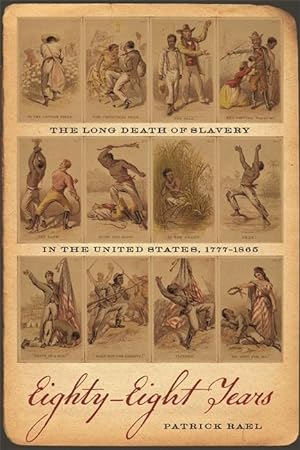
Eighty-Eight Years: The Long Death of Slavery in the United States, 1777-1865 (Race in the Atlantic World)
Buch 17 von 28: Race in the Atlantic World, 1700?1900 Ser.Sprache: Englisch
Verlag: University of Georgia Press, 2015
ISBN 10: 0820333956 ISBN 13: 9780820333953
Anbieter: Ria Christie Collections, Uxbridge, Vereinigtes Königreich
Verkäuferbewertung 5 von 5 Sternen

EUR 117,26
EUR 13,86 Versand
Versand von Vereinigtes Königreich nach USAAnzahl: Mehr als 20 verfügbar
In den WarenkorbZustand: New. In.
-
EUR 129,83
EUR 48,99 Versand
Versand von Deutschland nach USAAnzahl: Mehr als 20 verfügbar
In den WarenkorbGebunden. Zustand: New. Über den AutorPatrick Rael is a professor of history at Bowdoin College and one of the general editors of the Race in the Atlantic World, 1700-1900 series. His books include Black Identity and Black Protest in the Antebellum North .
-
Eighty-Eight Years
Buch 17 von 28: Race in the Atlantic World, 1700?1900 Ser.Sprache: Englisch
Verlag: University of Georgia Press, 2015
ISBN 10: 0820333956 ISBN 13: 9780820333953
Anbieter: Majestic Books, Hounslow, Vereinigtes Königreich
Verkäuferbewertung 4 von 5 Sternen

EUR 205,85
EUR 7,52 Versand
Versand von Vereinigtes Königreich nach USAAnzahl: 1 verfügbar
In den WarenkorbZustand: New. pp. 400.
-
EightyEight Years The Long Death of Slavery in the United States, 17771865
Buch 17 von 28: Race in the Atlantic World, 1700?1900 Ser.Anbieter: Revaluation Books, Exeter, Vereinigtes Königreich
Verkäuferbewertung 5 von 5 Sternen
EUR 203,38
EUR 14,46 Versand
Versand von Vereinigtes Königreich nach USAAnzahl: 2 verfügbar
In den WarenkorbHardcover. Zustand: Brand New. 392 pages. 9.25x6.25x1.25 inches. In Stock.
-

Eighty-Eight Years : The Long Death of Slavery in the United States, 1777-1865
Buch 17 von 28: Race in the Atlantic World, 1700?1900 Ser.Sprache: Englisch
Verlag: University Of Georgia Press Jun 2015, 2015
ISBN 10: 0820333956 ISBN 13: 9780820333953
Anbieter: AHA-BUCH GmbH, Einbeck, Deutschland
Verkäuferbewertung 5 von 5 Sternen
Buch. Zustand: Neu. Neuware - Why did it take so long to end slavery in the United States, and what did it mean that the nation existed eighty-eight years as a 'house divided against itself,' as Abraham Lincoln put it The decline of slavery throughout the Atlantic world was a protracted affair, says Patrick Rael, but no other nation endured anything like the United States. Here the process took from 1777, when Vermont wrote slavery out of its state constitution, to 1865, when the Thirteenth Amendment abolished slavery nationwide. Rael immerses readers in the mix of social, geographic, economic, and political factors that shaped this unique American experience. He not only takes a far longer view of slavery's demise than do those who date it to the rise of abolitionism in 1831, he also places it in a broader Atlantic context. We see how slavery ended variously by consent or force across time and place and how views on slavery evolved differently between the centers of European power and their colonial peripheries--some of which would become power centers themselves. Rael shows how African Americans played the central role in ending slavery in the United States. Fueled by new Revolutionary ideals of self-rule and universal equality--and on their own or alongside abolitionists--both slaves and free blacks slowly turned American opinion against the slave interests in the South. Secession followed, and then began the national bloodbath that would demand slavery's complete destruction.

