

Gesamtpreis (1 Artikel Artikel):
Versandziel:

9780813176703 - Subordinating Intelligence: The DoD/CIA Post-Cold War Relationship von Oakley, David P. (4 Ergebnisse)
Direkt zu den wichtigsten Suchergebnissen
Suchfilter
Produktart
- Alle Product Types
- Bücher (4)
- Magazine & Zeitschriften (Keine weiteren Ergebnisse entsprechen dieser Verfeinerung)
- Comics (Keine weiteren Ergebnisse entsprechen dieser Verfeinerung)
- Noten (Keine weiteren Ergebnisse entsprechen dieser Verfeinerung)
- Kunst, Grafik & Poster (Keine weiteren Ergebnisse entsprechen dieser Verfeinerung)
- Fotografien (Keine weiteren Ergebnisse entsprechen dieser Verfeinerung)
- Karten (Keine weiteren Ergebnisse entsprechen dieser Verfeinerung)
- Manuskripte & Papierantiquitäten (Keine weiteren Ergebnisse entsprechen dieser Verfeinerung)
Zustand Mehr dazu
- Neu (3)
- Wie Neu, Sehr Gut oder Gut Bis Sehr Gut (Keine weiteren Ergebnisse entsprechen dieser Verfeinerung)
- Gut oder Befriedigend (1)
- Ausreichend oder Schlecht (Keine weiteren Ergebnisse entsprechen dieser Verfeinerung)
- Wie beschrieben (Keine weiteren Ergebnisse entsprechen dieser Verfeinerung)
Einband
- alle Einbände
- Hardcover (4)
- Softcover (Keine weiteren Ergebnisse entsprechen dieser Verfeinerung)
Weitere Eigenschaften
- Erstausgabe (Keine weiteren Ergebnisse entsprechen dieser Verfeinerung)
- Signiert (Keine weiteren Ergebnisse entsprechen dieser Verfeinerung)
- Schutzumschlag (Keine weiteren Ergebnisse entsprechen dieser Verfeinerung)
- Angebotsfoto (2)
Sprache (1)
Gratisversand
Land des Verkäufers
Verkäuferbewertung
-

Subordinating Intelligence: The DoD/CIA Post-Cold War Relationship
Sprache: Englisch
Verlag: University Press of Kentucky (edition ), 2019
ISBN 10: 0813176700 ISBN 13: 9780813176703
Hardcover. Zustand: Very Good. It's a well-cared-for item that has seen limited use. The item may show minor signs of wear. All the text is legible, with all pages included. It may have slight markings and/or highlighting.
-
Subordinating Intelligence: The Dod/CIA Post-Cold War Relationship
Sprache: Englisch
Verlag: University Press of Kentucky, 2019
ISBN 10: 0813176700 ISBN 13: 9780813176703
Anbieter: Kennys Bookstore, Olney, MD, USA
Verkäuferbewertung 5 von 5 Sternen

Zustand: New.
-
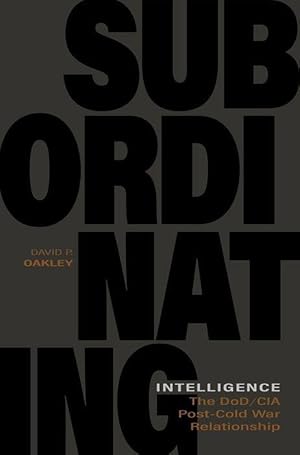
Subordinating Intelligence: The Dod/CIA Post-Cold War Relationship
Sprache: Englisch
Verlag: University Press of Kentucky, 2019
ISBN 10: 0813176700 ISBN 13: 9780813176703
EUR 62,62
EUR 48,99 Versand
Versand von Deutschland nach USAAnzahl: Mehr als 20 verfügbar
In den WarenkorbZustand: New. Driven by the post--Cold War environment and lessons learned during military operations, policy makers made intelligence support to the military the Intelligence Community s top priority.KlappentextrnrnSince September 11, 2001, the CIA and D.
-

Subordinating Intelligence : The DoD/CIA Post-Cold War Relationship
Sprache: Englisch
Verlag: The University Press Of Kentucky Mär 2019, 2019
ISBN 10: 0813176700 ISBN 13: 9780813176703
Anbieter: AHA-BUCH GmbH, Einbeck, Deutschland
Verkäuferbewertung 5 von 5 Sternen
Buch. Zustand: Neu. Neuware - Since September 11, 2001, the CIA and DoD have operated together in Afghanistan, Iraq, and during counterterrorism operations. Although the global war on terrorism gave the CIA and DoD a common purpose, it was actions taken in the late eighties and early nineties that set the foundation for their current relationship. Driven by the post--Cold War environment and lessons learned during military operations, policy makers made intelligence support to the military the Intelligence Community's top priority. In response to this demand, the CIA/DoD instituted policy and organizational changes that altered the CIA/DoD relationship. While debates over the future of the Intelligence Community were occurring on Capitol Hill, the CIA and DoD were expanding their relationship in peacekeeping and nation-building operations in Somalia and the Balkans. By the late 1990s, some policy makers and national security professionals became concerned that intelligence support to military operations had gone too far, weakening the long-term analysis required for strategy and policy development. In Subordinating Intelligence: The DoD/CIA Post--Cold War Relationship, David P. Oakley reveals that, despite these concerns, no major changes to either national intelligence organization or its priorities were implemented. These concerns were forgotten after 9/11, as the United States fought two wars and policy makers increasingly focused on tactical and operational actions. As policy makers became fixated with terrorism and the United States fought in Iraq and Afghanistan, the CIA directed a significant amount of its resources toward global counterterrorism efforts and in support of military operations.
