

Gesamtpreis (1 Artikel Artikel):
Versandziel:

9780809433414 - America in the Air War (Epic of Flight) von Jablonski, Edward (15 Ergebnisse)
Direkt zu den wichtigsten Suchergebnissen
Suchfilter
Produktart
- Alle Product Types
- Bücher (15)
- Magazine & Zeitschriften (Keine weiteren Ergebnisse entsprechen dieser Verfeinerung)
- Comics (Keine weiteren Ergebnisse entsprechen dieser Verfeinerung)
- Noten (Keine weiteren Ergebnisse entsprechen dieser Verfeinerung)
- Kunst, Grafik & Poster (Keine weiteren Ergebnisse entsprechen dieser Verfeinerung)
- Fotografien (Keine weiteren Ergebnisse entsprechen dieser Verfeinerung)
- Karten (Keine weiteren Ergebnisse entsprechen dieser Verfeinerung)
- Manuskripte & Papierantiquitäten (Keine weiteren Ergebnisse entsprechen dieser Verfeinerung)
Zustand Mehr dazu
- Neu (Keine weiteren Ergebnisse entsprechen dieser Verfeinerung)
- Wie Neu, Sehr Gut oder Gut Bis Sehr Gut (5)
- Gut oder Befriedigend (9)
- Ausreichend oder Schlecht (1)
- Wie beschrieben (Keine weiteren Ergebnisse entsprechen dieser Verfeinerung)
Einband
- alle Einbände
- Hardcover (15)
- Softcover (Keine weiteren Ergebnisse entsprechen dieser Verfeinerung)
Weitere Eigenschaften
- Erstausgabe (3)
- Signiert (Keine weiteren Ergebnisse entsprechen dieser Verfeinerung)
- Schutzumschlag (1)
- Angebotsfoto (1)
Sprache (1)
Preis
- Beliebiger Preis
- Weniger als EUR 20
- EUR 20 bis EUR 45
- Mehr als EUR 45 (Keine weiteren Ergebnisse entsprechen dieser Verfeinerung)
Gratisversand
Land des Verkäufers
Verkäuferbewertung
-
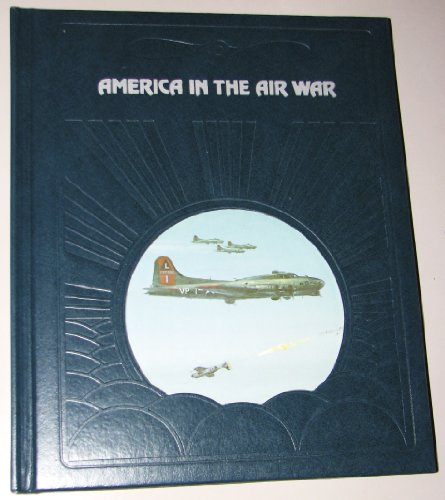
America in the Air War (Epic of Flight)
Anbieter: World of Books (was SecondSale), Montgomery, IL, USA
Verkäuferbewertung 5 von 5 Sternen

Zustand: Good. Item in good condition. Textbooks may not include supplemental items i.e. CDs, access codes etc.
-
America in the Air War (Epic of Flight)
Anbieter: World of Books (was SecondSale), Montgomery, IL, USA
Verkäuferbewertung 5 von 5 Sternen
Zustand: Acceptable. Item in acceptable condition! Textbooks may not include supplemental items i.e. CDs, access codes etc.
-
America in the Air War (Epic of Flight)
Anbieter: ThriftBooks-Phoenix, Phoenix, AZ, USA
Verkäuferbewertung 5 von 5 Sternen
Hardcover. Zustand: As New. No Jacket. Pages are clean and are not marred by notes or folds of any kind. ~ ThriftBooks: Read More, Spend Less.
-
Hardcover. Zustand: As New. No Jacket. Pages are clean and are not marred by notes or folds of any kind. ~ ThriftBooks: Read More, Spend Less.
-
America in the Air War (Epic of Flight)
Anbieter: ThriftBooks-Dallas, Dallas, TX, USA
Verkäuferbewertung 5 von 5 Sternen
Hardcover. Zustand: As New. No Jacket. Pages are clean and are not marred by notes or folds of any kind. ~ ThriftBooks: Read More, Spend Less.
-
America in the Air War (Epic of Flight)
Anbieter: ThriftBooks-Atlanta, AUSTELL, GA, USA
Verkäuferbewertung 5 von 5 Sternen
Hardcover. Zustand: As New. No Jacket. Pages are clean and are not marred by notes or folds of any kind. ~ ThriftBooks: Read More, Spend Less.
-
America in the Air War
Anbieter: Better World Books, Mishawaka, IN, USA
Verkäuferbewertung 5 von 5 Sternen
Erstausgabe
Zustand: Very Good. 1st. Pages intact with possible writing/highlighting. Binding strong with minor wear. Dust jackets/supplements may not be included. Stock photo provided. Product includes identifying sticker. Better World Books: Buy Books. Do Good.
-
America in the Air War
Anbieter: Better World Books, Mishawaka, IN, USA
Verkäuferbewertung 5 von 5 Sternen
Erstausgabe
Zustand: Good. 1st. Pages intact with minimal writing/highlighting. The binding may be loose and creased. Dust jackets/supplements are not included. Stock photo provided. Product includes identifying sticker. Better World Books: Buy Books. Do Good.
-
America in the Air War (Epic of Flight)
Anbieter: Wonder Book, Frederick, MD, USA
Verkäuferbewertung 5 von 5 Sternen
Zustand: Very Good. Very Good condition. A copy that may have a few cosmetic defects. May also contain light spine creasing or a few markings such as an owner's name, short gifter's inscription or light stamp.
-
America in the Air War (Epic of Flight)
Anbieter: Wonder Book, Frederick, MD, USA
Verkäuferbewertung 5 von 5 Sternen
Zustand: As New. Like New condition. A near perfect copy that may have very minor cosmetic defects.
-
America in the Air War (Epic of Flight)
Anbieter: WorldofBooks, Goring-By-Sea, WS, Vereinigtes Königreich
Verkäuferbewertung 5 von 5 Sternen
EUR 6,05
EUR 6,57 Versand
Versand von Vereinigtes Königreich nach USAAnzahl: 1 verfügbar
In den WarenkorbHardback. Zustand: Good. The book has been read but remains in clean condition. All pages are intact and the cover is intact. Some minor wear to the spine.
-
America in the Air War (Epic of Flight S.)
Anbieter: WorldofBooks, Goring-By-Sea, WS, Vereinigtes Königreich
Verkäuferbewertung 5 von 5 Sternen
EUR 6,05
EUR 6,57 Versand
Versand von Vereinigtes Königreich nach USAAnzahl: 1 verfügbar
In den WarenkorbHardback. Zustand: Very Good. The book has been read, but is in excellent condition. Pages are intact and not marred by notes or highlighting. The spine remains undamaged.
-
America in the Air War (Epic of Flight)
Anbieter: Anybook.com, Lincoln, Vereinigtes Königreich
Verkäuferbewertung 5 von 5 Sternen
EUR 9,38
EUR 15,96 Versand
Versand von Vereinigtes Königreich nach USAAnzahl: 1 verfügbar
In den WarenkorbZustand: Good. This is an ex-library book and may have the usual library/used-book markings inside.This book has hardback covers. With owner's name and inscription inside cover. In good all round condition. No dust jacket. Please note the Image in this listing is a stock photo and may not match the covers of the actual item,950grams, ISBN:0809433419.
-

America in the Air War (the Epic of Flight)
Anbieter: Book Express (NZ), Shannon, Neuseeland
Verkäuferbewertung 4 von 5 Sternen

Hardcover. Zustand: Very Good. 176 pages. When the Japanese attacked Pearl Harbor on December 7, 1941, the Army Air For ces had only 1,100 combat-ready planes. No one could have imagined then that wit hin the next four years the AAF would become the mighty weapon commemorated in t.
-
America in the Air War
Sprache: Englisch
Verlag: Time-Life Books, Alexandria, VA, 1982
ISBN 10: 0809433419 ISBN 13: 9780809433414
Anbieter: Ground Zero Books, Ltd., Silver Spring, MD, USA
Verkäuferbewertung 5 von 5 Sternen
Erstausgabe
Leatherette. Zustand: Very good. Zustand des Schutzumschlags: No dust jacket issued. First Printing [Stated]. 176 pages. Color endpapers. Map. Illustrations (some with color). Bibliography. Index. Decorative front cover. This is one of The Epic of Flight series, edited by Jim Hicks. Traces United States aerial operations in World War II and recounts the training and combat experiences of pilots and flight crews. Edward Jablonski (March 1, 1922 - February 10, 2004) was the author of several biographies on American cultural personalities, such as George Gershwin, Harold Arlen, Alan Jay Lerner, and Irving Berlin, as well as books on aviation history. He served in the United States Army Field Artillery in New Guinea during World War II. For his actions in New Guinea, he was awarded the Silver Star. After leaving the army, he attended college in Bay City as a pre-journalism major. He continued his studies at the New School for Social Research, receiving his bachelor's in 1950. He also completed postgraduate work in anthropology at Columbia. While working for the March of Dimes charity in New York, Jablonski wrote articles and music reviews for a number of small magazines as well as liner notes for albums; this was the beginning of a fifty-year freelance career. The editors of Time-Life Books have produced another exciting series: The Epic of Flight. Air warfare was a major component in all theaters of World War II and, together with anti-aircraft warfare, consumed a large fraction of the industrial output of the major powers. Germany and Japan depended on air forces that were closely integrated with land and naval forces; the Axis powers downplayed the advantage of fleets of strategic bombers and were late in appreciating the need to defend against Allied strategic bombing. By contrast, Britain and the United States took an approach that greatly emphasized strategic bombing and (to a lesser degree) tactical control of the battlefield by air as well as adequate air defenses. Both Britain and the U.S. built substantially larger strategic forces of large, long-range bombers. Simultaneously, they built tactical air forces that could win air superiority over the battlefields, thereby giving vital assistance to ground troops. The U.S. and Royal Navy also built a powerful naval-air component based on aircraft carriers, as did the Japanese; these played the central role in the war at sea. Before the attack on Pearl Harbor and during the period within which the predecessor U.S. Army Air Corps became the Army Air Forces in late June 1941, President Franklin D. Roosevelt gave command of the Navy to an aviator, Admiral Ernest King, with a mandate for an aviation-oriented war in the Pacific. FDR allowed King to build up land-based naval and Marine aviation, and seize control of the long-range bombers used in antisubmarine patrols in the Atlantic. American theatre commanders became air power enthusiasts and built their strategies around the need for tactical air supremacy. MacArthur had been badly defeated in the Philippines in 1941-42 primarily because the Japanese controlled the sky. His planes were outnumbered and outclassed, his airfields shot up, his radar destroyed, and his supply lines cut. His infantry never had a chance. MacArthur vowed never again. His island-hopping campaign was based on the strategy of isolating Japanese strongholds while leaping past them. Each leap was determined by the range of his 5th Air Force, and the first task on securing an objective was to build an airfield to prepare for the next leap. Eisenhower's deputy at SHAEF was Air Chief Marshal Arthur Tedder, who had been commander of the Allied Mediterranean Air Command when Eisenhower was in charge of Allied operations in the Mediterranean. The Allies won battlefield air supremacy in the Pacific in 1943, and in Europe in 1944. That meant that Allied supplies and reinforcements would get through to the battlefront, but not the enemy's. It meant the Allies could concentrate their strike forces wherever they pleased, and overwhelm the enemy with a preponderance of firepower.

