

Gesamtpreis (1 Artikel Artikel):
Versandziel:

9780804722131 - A Home Divided: Women and Income in the Third World von Dwyer, Daisy (8 Ergebnisse)
Direkt zu den wichtigsten Suchergebnissen
Suchfilter
Produktart
- Alle Product Types
- Bücher (8)
- Magazine & Zeitschriften (Keine weiteren Ergebnisse entsprechen dieser Verfeinerung)
- Comics (Keine weiteren Ergebnisse entsprechen dieser Verfeinerung)
- Noten (Keine weiteren Ergebnisse entsprechen dieser Verfeinerung)
- Kunst, Grafik & Poster (Keine weiteren Ergebnisse entsprechen dieser Verfeinerung)
- Fotografien (Keine weiteren Ergebnisse entsprechen dieser Verfeinerung)
- Karten (Keine weiteren Ergebnisse entsprechen dieser Verfeinerung)
- Manuskripte & Papierantiquitäten (Keine weiteren Ergebnisse entsprechen dieser Verfeinerung)
Zustand Mehr dazu
- Neu (6)
- Wie Neu, Sehr Gut oder Gut Bis Sehr Gut (Keine weiteren Ergebnisse entsprechen dieser Verfeinerung)
- Gut oder Befriedigend (1)
- Ausreichend oder Schlecht (Keine weiteren Ergebnisse entsprechen dieser Verfeinerung)
- Wie beschrieben (1)
Einband
- alle Einbände
- Hardcover (Keine weiteren Ergebnisse entsprechen dieser Verfeinerung)
- Softcover (8)
Weitere Eigenschaften
- Erstausgabe (Keine weiteren Ergebnisse entsprechen dieser Verfeinerung)
- Signiert (Keine weiteren Ergebnisse entsprechen dieser Verfeinerung)
- Schutzumschlag (Keine weiteren Ergebnisse entsprechen dieser Verfeinerung)
- Angebotsfoto (3)
Sprache (1)
Gratisversand
Land des Verkäufers
Verkäuferbewertung
-

A Home Divided: Women and Income in the Third World
Sprache: Englisch
Verlag: Stanford University Press, 1993
ISBN 10: 0804722137 ISBN 13: 9780804722131
Anbieter: Rosario Beach Rare Books, Lake Stevens, WA, USA
Verbandsmitglied: CBA ESA IOBA
Verkäuferbewertung 5 von 5 Sternen

Soft cover. Zustand: Very Good. *Veteran-Owned, Family-Run, Small Book Store in the Pacific Northwest*.
-
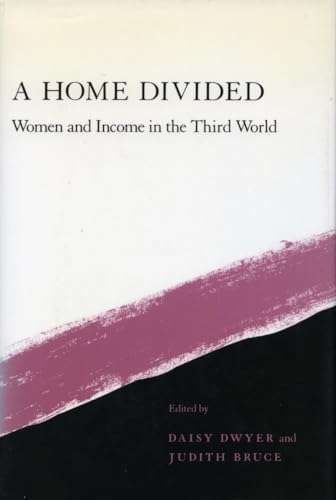
A Home Divided: Women and Income in the Third Worl
Sprache: Englisch
Verlag: Stanford University Press, 1988
ISBN 10: 0804722137 ISBN 13: 9780804722131
Anbieter: N. Fagin Books, Chicago, IL, USA
Verkäuferbewertung 5 von 5 Sternen
1988. Anthropological theory, development. Stanford University Press. Very good - fine wrappers/paperback 289p.
-
A Home Divided - Women and Income in the Third World
Sprache: Englisch
Verlag: MK - Stanford University Press, 1993
ISBN 10: 0804722137 ISBN 13: 9780804722131
Anbieter: PBShop.store UK, Fairford, GLOS, Vereinigtes Königreich
Verkäuferbewertung 4 von 5 Sternen

EUR 29,66
EUR 4,75 Versand
Versand von Vereinigtes Königreich nach USAAnzahl: 15 verfügbar
In den WarenkorbPAP. Zustand: New. New Book. Shipped from UK. Established seller since 2000.
-
A Home Divided
Sprache: Englisch
Verlag: Stanford University Press, 1988
ISBN 10: 0804722137 ISBN 13: 9780804722131
Anbieter: Majestic Books, Hounslow, Vereinigtes Königreich
Verkäuferbewertung 4 von 5 Sternen
EUR 38,74
EUR 7,42 Versand
Versand von Vereinigtes Königreich nach USAAnzahl: 3 verfügbar
In den WarenkorbZustand: New. pp. 303.
-
A Home Divided Women and Income in the Third World
Anbieter: Revaluation Books, Exeter, Vereinigtes Königreich
Verkäuferbewertung 5 von 5 Sternen
EUR 40,51
EUR 14,26 Versand
Versand von Vereinigtes Königreich nach USAAnzahl: 2 verfügbar
In den WarenkorbPaperback. Zustand: Brand New. reissue edition. 304 pages. 9.25x6.25x1.00 inches. In Stock.
-
A Home Divided: Women and Income in the Third World
Sprache: Englisch
Verlag: Stanford University Press, 1988
ISBN 10: 0804722137 ISBN 13: 9780804722131
Anbieter: Kennys Bookstore, Olney, MD, USA
Verkäuferbewertung 4 von 5 Sternen
Zustand: New. 1993. Reissue. Paperback. . . . . . Books ship from the US and Ireland.
-
EUR 34,12
EUR 48,99 Versand
Versand von Deutschland nach USAAnzahl: Mehr als 20 verfügbar
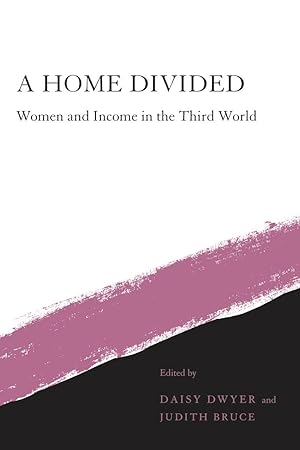
In den WarenkorbZustand: New. A challenge to economic theories that view the household as a harmonious unit with a single decision-maker, this book shows that in the Third World the household is an arena of conflict marked by inequality and negotiation over income and expenditures.
-

A Home Divided : Women and Income in the Third World
Sprache: Englisch
Verlag: Stanford University Press Dez 1993, 1993
ISBN 10: 0804722137 ISBN 13: 9780804722131
Anbieter: AHA-BUCH GmbH, Einbeck, Deutschland
Verkäuferbewertung 5 von 5 Sternen
Taschenbuch. Zustand: Neu. Neuware - A challenge to economic theories that view the household as a harmonious unit with a single decision-maker, this book shows that in the Third World the household is an arena of conflict marked by inequality and negotiation over income and expenditures. Dwyer and Bruce's introduction is followed by eleven field studies: four in Asia, four in Africa and the Middle East, and three in the Caribbean and Central America. These twelve essays, by economists, sociologists, anthropologists and demographers provide a cogent analysis of household structure dynamics and women's bargaining context. This book will be of interest not only to specialists in gender studies but also to ethnologists and other social scientists.

