
9780717807208 - the peasant war in germany von engels, friedrich (4 Ergebnisse)
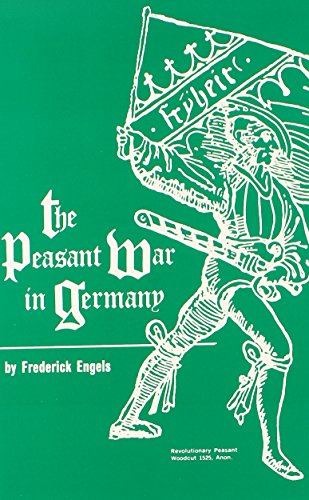
- Softcover
Anbieter: AwesomeBooks, Wallingford, Vereinigtes KönigreichAwesomeBooks
Verkäufer/-in kontaktierenVerkäufer/-in mit 5 SternenZustand: Gebraucht - Gut
EUR 16,10
EUR 4,82 VersandVersand von Vereinigtes Königreich nach USAAnzahl: 1 verfügbar
paperback. Zustand: Very Good. The Peasant War in Germany This book is in very good condition and will be shipped within 24 hours of ordering. The cover may have some limited signs of wear but the pages are clean, intact and the spine remains undamaged. This book has clearly been well maintained and looked after thus far. Money…back guarantee if you are not satisfied. See all our books here, order more than 1 book and get discounted shipping. .
- Softcover
Anbieter: Bahamut Media, Reading, Vereinigtes KönigreichBahamut Media
Verkäufer/-in kontaktierenVerkäufer/-in mit 5 SternenZustand: Gebraucht - Gut
EUR 16,10
EUR 8,17 VersandVersand von Vereinigtes Königreich nach USAAnzahl: 1 verfügbar
paperback. Zustand: Very Good. Shipped within 24 hours from our UK warehouse. Clean, undamaged book with no damage to pages and minimal wear to the cover. Spine still tight, in very good condition. Remember if you are not happy, you are covered by our 100% money back guarantee.
 Weitere Bilder
- Softcover
Anbieter: SPHINX LIBRARY, CHONBURI, ThailandSPHINX LIBRARY
Verkäufer/-in kontaktierenVerkäufer/-in mit 5 SternenZustand: Gebraucht - Wie neu
EUR 9,00
EUR 21,85 VersandVersand von Thailand nach USAAnzahl: 1 verfügbar
Soft cover. Zustand: As New. 3rd Edition. Book Condition: As New. Third Edition, 2006. Friedrich Engels analyzes thoroughly the peasant wars in Germany in the 16th century, their aims, the various classes involved and the social (anti feudalism) and religious (Lutheran) upheavals. The parties involved were the upper and the lowe…r classes, the peasants. The upper classes consisted of the princes (almost independent, with standing armies and the power to levy taxes) and the clerical feudal hierarchy (directly subject to the Emperor or Rome). Above those classes stood the Emperor who collected imperial taxes and the Pope who received the universal church taxes (tithes and annates).\nThe lower classes consisted of the plebeian part of the clergy, the patriciate which administered and exploited the town community (through usury and monopolies), the burghers (well-to-do people) and, at the bottom, the plebs (day labourers etc.) without civil rights. However, the bulk of the population was formed by the peasants, the beasts of burden. They had to work on their lord¿s estate and out of what they earned in their few free hours, they had to pay all kind of taxes (tithes, tributes, the quitrent, road tolls together with princely and imperial taxes). The aims: The peasants organized themselves into different, poorly disciplined armies and also formed conspiracies (the Bundschuh, Poor Konrad) to fight against their masters, the princes and the clerical hierarchy, and for the abolition of taxes, tolls and serfdom, for the confiscation of the church estates, for a united German monarchy and for a drastic cut in the power of the churches limiting it to only religious matters. One of their main leaders, Thomas Müntzer, went a lot further by pleading for a society without class differences, no private property and no independent (from the population) State authority. The wars, Martin Luther against Thomas Müntzer, the victors: The only chance for the peasants of winning the war was an alliance with other parties. But, they got only the plebs on their side. Moreover, they were betrayed by some of their leaders (Götz von Berlichingen), armistices were violated and concessions were all the time overruled. The coalitions of the princes, the clergy, the patriciate and the burghers with Martin Luther as their mouthpiece (the peasants ¿must be knocked to pieces, strangled and stabbed, covertly and openly, just as one must kill a mad dog¿) slaughtered the peasant hordes. The ultimate victors were the princes, who carried off the main spoils of all the other estates and consolidated their power through provincial centralization. Friedrich Engels brushed a brutal and barbarous sketch of class struggles for a slightly better life above the starvation level. His book is a sharp reminder for all those who regret the ¿better¿ older days of the ¿Ancien Régime¿, a harrowing struggle for survival of the vast majority of the population.
- Softcover
Anbieter: Revaluation Books, Exeter, Vereinigtes KönigreichRevaluation Books
Verkäufer/-in kontaktierenVerkäufer/-in mit 5 SternenZustand: Neu
EUR 29,36
EUR 11,71 VersandVersand von Vereinigtes Königreich nach USAAnzahl: 1 verfügbar
Paperback. Zustand: Brand New. 3rd edition. 107 pages. 8.25x5.25x0.50 inches. In Stock.

