
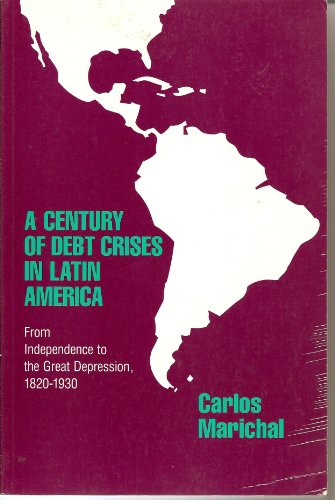
9780691022994 - a century of debt crises in latin america: from independence to the great depression, 1820-1930 von marichal, carlos (5 Ergebnisse)
- Softcover
Anbieter: Better World Books, Mishawaka, IN, USABetter World Books
Verkäufer/-in kontaktierenVerkäufer/-in mit 5 SternenZustand: Gebraucht - Gut
EUR 14,15
Versand nach gratisVersand innerhalb von USAAnzahl: 1 verfügbar
Zustand: Very Good. Former library copy. Pages intact with possible writing/highlighting. Binding strong with minor wear. Dust jackets/supplements may not be included. Includes library markings. Stock photo provided. Product includes identifying sticker. Better World Books: Buy Books. Do Good.
- Softcover
Anbieter: ThriftBooks-Dallas, Dallas, TX, USAThriftBooks-Dallas
Verkäufer/-in kontaktierenVerkäufer/-in mit 5 SternenZustand: Gebraucht - Wie neu
EUR 18,22
Versand nach gratisVersand innerhalb von USAAnzahl: 1 verfügbar
Paperback. Zustand: As New. No Jacket. Pages are clean and are not marred by notes or folds of any kind. ~ ThriftBooks: Read More, Spend Less.
- Softcover
Anbieter: ThriftBooks-Dallas, Dallas, TX, USAThriftBooks-Dallas
Verkäufer/-in kontaktierenVerkäufer/-in mit 5 SternenZustand: Gebraucht - Befriedigend
EUR 18,22
Versand nach gratisVersand innerhalb von USAAnzahl: 1 verfügbar
Paperback. Zustand: Good. No Jacket. Pages can have notes/highlighting. Spine may show signs of wear. ~ ThriftBooks: Read More, Spend Less.
- Softcover
Anbieter: ThriftBooks-Atlanta, AUSTELL, GA, USAThriftBooks-Atlanta
Verkäufer/-in kontaktierenVerkäufer/-in mit 5 SternenZustand: Gebraucht - Befriedigend
EUR 18,22
Versand nach gratisVersand innerhalb von USAAnzahl: 1 verfügbar
Paperback. Zustand: Good. No Jacket. Pages can have notes/highlighting. Spine may show signs of wear. ~ ThriftBooks: Read More, Spend Less.
 Weitere Bilder
- Softcover
- Erstausgabe
Anbieter: Palimpsest Scholarly Books & Services, Brooktondale, NY, USAPalimpsest Scholarly Books & Services
Verkäufer/-in kontaktierenVerkäufer/-in mit 5 SternenZustand: Gebraucht - Gut
EUR 45,02
EUR 5,68 VersandVersand innerhalb von USAAnzahl: 1 verfügbar
Soft cover. Zustand: Very Good. 1st Edition. Softcover volume, measuring approximately 6.25" x 9.5", exhibits very light shelfwear. Binding is sound. Pages are clean and bright. xiv/283 pages. "Carlos Marichal contends that the boom-and-bust cycles of Latin American foreign loans result mainly from the fluctuations of the world…economy, rather than from errors made in Latin America itself. Marichal shows that the present debt crisis is only a part of an overall pattern in Latin American history--cycles of loan boom and subsequent debt crisis that are heavily influenced by fluctuations of international trade and capital flows. He also reveals the significant role played by those who implement debt policies. Examining the strategies of both lenders and borrowers, he makes it clear that foreign loan negotiations are not only financial tools but also political instruments with broad economic and social consequences. The book analyzes in detail the four major debt crises that took place in Latin America during the nineteenth and early twentieth centuries. Marichal's focus is comparative, since the contracting of foreign loans and their repayment were problems common to virtually all nations of the region. He devotes special attention to explaining the links of these debt crises to the international financial panics of 1825, 1873, 1890, and 1929. The epilogue compares the debt crises of the past with the contemporary Latin American debt crisis.".

