

Gesamtpreis (1 Artikel Artikel):
Versandziel:

9780674168763 - Contraception and Abortion from the Ancient World to the Renaissance von Riddle, John (9 Ergebnisse)
Direkt zu den wichtigsten Suchergebnissen
Suchfilter
Produktart
- Alle Product Types
- Bücher (9)
- Magazine & Zeitschriften (Keine weiteren Ergebnisse entsprechen dieser Verfeinerung)
- Comics (Keine weiteren Ergebnisse entsprechen dieser Verfeinerung)
- Noten (Keine weiteren Ergebnisse entsprechen dieser Verfeinerung)
- Kunst, Grafik & Poster (Keine weiteren Ergebnisse entsprechen dieser Verfeinerung)
- Fotografien (Keine weiteren Ergebnisse entsprechen dieser Verfeinerung)
- Karten (Keine weiteren Ergebnisse entsprechen dieser Verfeinerung)
- Manuskripte & Papierantiquitäten (Keine weiteren Ergebnisse entsprechen dieser Verfeinerung)
Zustand Mehr dazu
- Neu (7)
- Wie Neu, Sehr Gut oder Gut Bis Sehr Gut (Keine weiteren Ergebnisse entsprechen dieser Verfeinerung)
- Gut oder Befriedigend (2)
- Ausreichend oder Schlecht (Keine weiteren Ergebnisse entsprechen dieser Verfeinerung)
- Wie beschrieben (Keine weiteren Ergebnisse entsprechen dieser Verfeinerung)
Einband
- alle Einbände
- Hardcover (Keine weiteren Ergebnisse entsprechen dieser Verfeinerung)
- Softcover (9)
Weitere Eigenschaften
- Erstausgabe (Keine weiteren Ergebnisse entsprechen dieser Verfeinerung)
- Signiert (Keine weiteren Ergebnisse entsprechen dieser Verfeinerung)
- Schutzumschlag (Keine weiteren Ergebnisse entsprechen dieser Verfeinerung)
- Angebotsfoto (2)
Sprache (1)
Preis
- Beliebiger Preis
- Weniger als EUR 20 (Keine weiteren Ergebnisse entsprechen dieser Verfeinerung)
- EUR 20 bis EUR 45
- Mehr als EUR 45
Gratisversand
Land des Verkäufers
Verkäuferbewertung
-
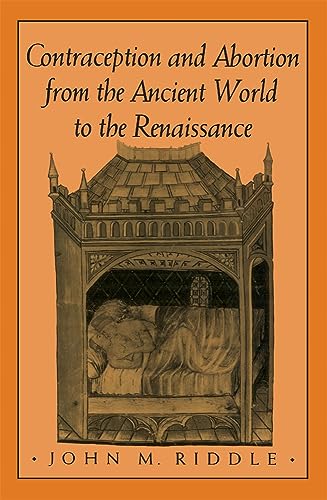
Contraception and Abortion fro
Anbieter: World of Books (was SecondSale), Montgomery, IL, USA
Verkäuferbewertung 5 von 5 Sternen

Zustand: Good. Item in good condition. Textbooks may not include supplemental items i.e. CDs, access codes etc.
-
Contraception and Abortion from the Ancient World to the Renaissance
Anbieter: Better World Books, Mishawaka, IN, USA
Verkäuferbewertung 5 von 5 Sternen
Zustand: Very Good. Pages intact with possible writing/highlighting. Binding strong with minor wear. Dust jackets/supplements may not be included. Stock photo provided. Product includes identifying sticker. Better World Books: Buy Books. Do Good.
-
Contraception and Abortion from the Ancient World to the Renaissance
Anbieter: PBShop.store US, Wood Dale, IL, USA
Verkäuferbewertung 5 von 5 Sternen
PAP. Zustand: New. New Book. Shipped from UK. Established seller since 2000.
-
Contraception and Abortion from the Ancient World to the Renaissance
Anbieter: PBShop.store UK, Fairford, GLOS, Vereinigtes Königreich
Verkäuferbewertung 5 von 5 Sternen
EUR 40,05
EUR 4,89 Versand
Versand von Vereinigtes Königreich nach USAAnzahl: 15 verfügbar
In den WarenkorbPAP. Zustand: New. New Book. Shipped from UK. Established seller since 2000.
-
Contraception and Abortion from the Ancient World to the Renaissance
Anbieter: Majestic Books, Hounslow, Vereinigtes Königreich
Verkäuferbewertung 4 von 5 Sternen

EUR 42,71
EUR 7,64 Versand
Versand von Vereinigtes Königreich nach USAAnzahl: 3 verfügbar
In den WarenkorbZustand: New. pp. 256.
-
Contraception and Abortion from the Ancient World to the Renaissance
Anbieter: Kennys Bookstore, Olney, MD, USA
Verkäuferbewertung 5 von 5 Sternen
Zustand: New. This text traces the history of contraception and abortifacients from ancient Egypt to the 17th century, and discusses the scientific merit of the ancient remedies and why this knowledge about fertility control was gradually lost over the course of the Middle Ages. Num Pages: 256 pages, 3 tables, 6 halftones, 1 line illustration. BIC Classification: HBTB; JFMA; JHBD; MBNH4; MBX. Category: (P) Professional & Vocational; (UP) Postgraduate, Research & Scholarly; (UU) Undergraduate. Dimension: 235 x 156 x 16. Weight in Grams: 372. . 1994. Paperback. . . . . Books ship from the US and Ireland.
-
Contraception & Abortion from the Ancient World to the Renaissance (Paper)
Anbieter: Revaluation Books, Exeter, Vereinigtes Königreich
Verkäuferbewertung 5 von 5 Sternen
EUR 55,49
EUR 11,76 Versand
Versand von Vereinigtes Königreich nach USAAnzahl: 2 verfügbar
In den WarenkorbPaperback. Zustand: Brand New. reprint edition. 256 pages. 9.50x6.25x0.75 inches. In Stock.
-

EUR 44,82
EUR 48,99 Versand
Versand von Deutschland nach USAAnzahl: Mehr als 20 verfügbar
In den WarenkorbKartoniert / Broschiert. Zustand: New. Riddle uncovers the obscure history of contraception and abortifacients from ancient Egypt to the 17th century with forays into Victorian England. He explores whether it was possible for premodern people to regulate their reproduction without resorting to d.
-

Contraception and Abortion from the Ancient World to the Ren
Sprache: Englisch
Verlag: HARVARD UNIVERSITY PRESS Apr 1994, 1994
ISBN 10: 0674168763 ISBN 13: 9780674168763
Anbieter: AHA-BUCH GmbH, Einbeck, Deutschland
Verkäuferbewertung 5 von 5 Sternen
Taschenbuch. Zustand: Neu. Neuware - John Riddle uncovers the obscure history of contraception and abortifacients from ancient Egypt to the seventeenth century with forays into Victorian England-a topic that until now has evaded the pens of able historians.Riddle's thesis is, quite simply, that the ancient world did indeed possess effective (and safe) contraceptives and abortifacients. The author maintains that this rich body of knowledge about fertility control-widely held in the ancient world-was gradually lost over the course of the Middle Ages, becoming nearly extinct by the early modern period. The reasons for this he suggests, stemmed from changes in the organization of medicine. As university medical training became increasingly important, physicians' ties with folk traditions were broken. The study of birth control methods was just not part of the curriculum.In an especially telling passage, Riddle reveals how Renaissance humanists were ill equipped to provide accurate translations of ancient texts concerning abortifacients due to their limited experience with women's ailments. Much of the knowledge about contraception belonged to an oral culture-a distinctively female-centered culture. From ancient times until the seventeenth century, women held a monopoly on birthing and the treatment of related matters; information passed from midwife to mother, from mother to daughter. Riddle reflects on the difficulty of finding traces of oral culture and the fact that the little existing evidence is drawn from male writers who knew that culture only from a distance. Nevertheless, through extraordinary scholarly sleuthing, the author pieces together the clues and evaluates the scientific merit of these ancient remedies in language that is easily understood by the general reader. His findings will be useful to anyone interested in learning whether it was possible for premodern people to regulate their reproduction without resorting to the extremities of dangerous surgical abortions, the killing of infants, or the denial of biological urges.

