

Gesamtpreis (1 Artikel Artikel):
Versandziel:

9780670869893 - Brave New Worlds von Appleyard, Bryan (5 Ergebnisse)
Direkt zu den wichtigsten Suchergebnissen
Suchfilter
Produktart
- Alle Product Types
- Bücher (5)
- Magazine & Zeitschriften (Keine weiteren Ergebnisse entsprechen dieser Verfeinerung)
- Comics (Keine weiteren Ergebnisse entsprechen dieser Verfeinerung)
- Noten (Keine weiteren Ergebnisse entsprechen dieser Verfeinerung)
- Kunst, Grafik & Poster (Keine weiteren Ergebnisse entsprechen dieser Verfeinerung)
- Fotografien (Keine weiteren Ergebnisse entsprechen dieser Verfeinerung)
- Karten (Keine weiteren Ergebnisse entsprechen dieser Verfeinerung)
- Manuskripte & Papierantiquitäten (Keine weiteren Ergebnisse entsprechen dieser Verfeinerung)
Zustand Mehr dazu
- Neu (Keine weiteren Ergebnisse entsprechen dieser Verfeinerung)
- Wie Neu, Sehr Gut oder Gut Bis Sehr Gut (1)
- Gut oder Befriedigend (3)
- Ausreichend oder Schlecht (Keine weiteren Ergebnisse entsprechen dieser Verfeinerung)
- Wie beschrieben (1)
Einband
- alle Einbände
- Hardcover (5)
- Softcover (Keine weiteren Ergebnisse entsprechen dieser Verfeinerung)
Weitere Eigenschaften
- Erstausgabe (Keine weiteren Ergebnisse entsprechen dieser Verfeinerung)
- Signiert (Keine weiteren Ergebnisse entsprechen dieser Verfeinerung)
- Schutzumschlag (1)
- Angebotsfoto (1)
Sprache (1)
Preis
- Beliebiger Preis
- Weniger als EUR 20
- EUR 20 bis EUR 45 (Keine weiteren Ergebnisse entsprechen dieser Verfeinerung)
- Mehr als EUR 45 (Keine weiteren Ergebnisse entsprechen dieser Verfeinerung)
Gratisversand
Land des Verkäufers
Verkäuferbewertung
-
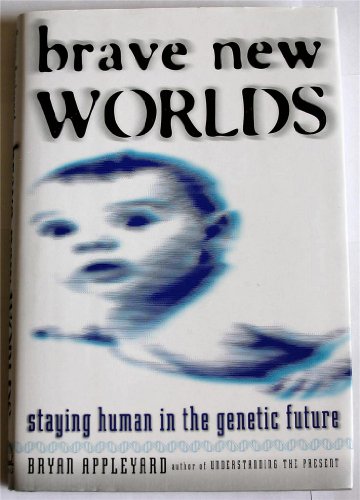
Brave New Worlds : Staying Human in the Genetic Future
Anbieter: Better World Books, Mishawaka, IN, USA
Verkäuferbewertung 5 von 5 Sternen

Zustand: Fine. Used book that is in almost brand-new condition. May contain a remainder mark. Better World Books: Buy Books. Do Good.
-
Brave New Worlds : Staying Human in the Genetic Future
Anbieter: Better World Books, Mishawaka, IN, USA
Verkäuferbewertung 5 von 5 Sternen
Zustand: Good. Former library copy. Pages intact with minimal writing/highlighting. The binding may be loose and creased. Dust jackets/supplements are not included. Includes library markings. Stock photo provided. Product includes identifying sticker. Better World Books: Buy Books. Do Good.
-
Brave New Worlds: Staying Human in the Genetic Future
Anbieter: ThriftBooks-Dallas, Dallas, TX, USA
Verkäuferbewertung 5 von 5 Sternen
Hardcover. Zustand: Very Good. No Jacket. May have limited writing in cover pages. Pages are unmarked. ~ ThriftBooks: Read More, Spend Less.
-
Brave New Worlds : Staying Human in the Genetic Future
Anbieter: Better World Books Ltd, Dunfermline, Vereinigtes Königreich
Verkäuferbewertung 5 von 5 Sternen
EUR 5,57
EUR 5,78 Versand
Versand von Vereinigtes Königreich nach USAAnzahl: 1 verfügbar
In den WarenkorbZustand: Good. Former library copy. Pages intact with minimal writing/highlighting. The binding may be loose and creased. Dust jackets/supplements are not included. Includes library markings. Stock photo provided. Product includes identifying sticker. Better World Books: Buy Books. Do Good.
-
Brave New Worlds: Staying Human in the Genetic Future.
Anbieter: Jeff Weber Rare Books, Neuchatel, NEUCH, Schweiz
Verkäuferbewertung 4 von 5 Sternen

8vo. x, 198 pp. Index. Quarter slate cloth, gray boards, dust jacket. Very good. ISBN: 0670869899 "In a less-than-subtle anti-science polemic, London Times columnist Appleyard (Understanding the Present) addresses some of the myriad ramifications of our expanding knowledge of genetics. "Concealed within the knowledge we are now acquiring are insights that may be profoundly socially divisive and which could overthrow the basis on which the wealth and stability of Western democracies are constructed," is one of his many pronouncements. Appleyard adequately explores some of the obvious ethical implications sure to be present in a future in which our genetic makeups are known to all and possibly open to manipulation: selective abortion of fetuses not to the liking of prospective parents; the refusal of insurance companies to cover individuals with genetic predispositions for certain disorders; the inevitable quagmire in the criminal justice system when criminals argue that their genes forced them to act in an antisocial manner. His main point, however, is that the social implications of science are far too important to be left solely to the scientists. But try as he might to whip this thesis into a controversy, most readers will find it a straw man, as few scientists disagree with Appleyard's view. There are many, however, who would argue strenuously with his overly simplified attacks on scientists and the scientific method--for example, that "[i]n order to become scientific, we must become inhuman." Try telling that to Einstein, Tagore or Bohm. (Aug.)" â" Publisher's Weekly. CONTENTS: Women's health / Adele E. Clarke --Pathways of health and death / Lois M. Verbrugge --Sexuality and woman's sexual nature / Nancy Sahli --Childbirth in America, 1650-1990 / Janet Carlisle Bogdan --Race as a factor in health / Edward H. Beardsley --Historical perspectives on women and mental illness / Nancy Tomes --Surgical gynecology / Judith M. Roy --Professionalization of obstetrics / Charlotte G. Borst --Women's reproductive health / Suzanne Poirier --Institutionalizing women's health care in nineteenth- and twentieth-century America / Joan E. Lynaugh --Women and sectarian medicine / Naomi Rogers --Self-help and the patent medicine business / Susan E. Cayleff --Charismatic women and health / Jonathan M. Butler, Rennie B. Schoepflin --Knowledge and power / Martha H. Verbrugge --Women's health and public policy / Molly Ladd-Taylor --Women's toxic experience / Anthony Bale --Midwives and history / Judy Barrett Litoff --Nurses / Ellen D. Baer --Physicians / Regina Morantz-Sanchez --Pharmacists / Gregory J. Higby.


