Gesamtpreis (1 Artikel Artikel):
Versandziel:

9780571094431 - Private Press von Cave, Roderick (7 Ergebnisse)
Direkt zu den wichtigsten Suchergebnissen
Suchfilter
Produktart
- Alle Product Types
- Bücher (7)
- Magazine & Zeitschriften (Keine weiteren Ergebnisse entsprechen dieser Verfeinerung)
- Comics (Keine weiteren Ergebnisse entsprechen dieser Verfeinerung)
- Noten (Keine weiteren Ergebnisse entsprechen dieser Verfeinerung)
- Kunst, Grafik & Poster (Keine weiteren Ergebnisse entsprechen dieser Verfeinerung)
- Fotografien (Keine weiteren Ergebnisse entsprechen dieser Verfeinerung)
- Karten (Keine weiteren Ergebnisse entsprechen dieser Verfeinerung)
- Manuskripte & Papierantiquitäten (Keine weiteren Ergebnisse entsprechen dieser Verfeinerung)
Zustand Mehr dazu
- Neu (Keine weiteren Ergebnisse entsprechen dieser Verfeinerung)
- Wie Neu, Sehr Gut oder Gut Bis Sehr Gut (3)
- Gut oder Befriedigend (3)
- Ausreichend oder Schlecht (Keine weiteren Ergebnisse entsprechen dieser Verfeinerung)
- Wie beschrieben (1)
Einband
- alle Einbände
- Hardcover (7)
- Softcover (Keine weiteren Ergebnisse entsprechen dieser Verfeinerung)
Weitere Eigenschaften
- Erstausgabe (3)
- Signiert (Keine weiteren Ergebnisse entsprechen dieser Verfeinerung)
- Schutzumschlag (4)
- Angebotsfoto (6)
Sprache (1)
Gratisversand
- Kostenloser Versand nach USA (Keine weiteren Ergebnisse entsprechen dieser Verfeinerung)
Land des Verkäufers
Verkäuferbewertung
-
Private Press :
Anbieter: avelibro OHG, Dinkelscherben, Deutschland
Verbandsmitglied: BOEV
Verkäuferbewertung 5 von 5 Sternen

Erstausgabe
4°, Leinen. Zustand: Sehr gut. Auflage: First Edition :. 376 Seiten : Altersgemäß angedunkelt, leichte Gebrauchsspuren B08-02-06J Sprache: Englisch Gewicht in Gramm: 1357.
-

The Private Press
Anbieter: St Philip's Books, P.B.F.A., B.A., Oxford, Vereinigtes Königreich
Verbandsmitglied: PBFA
Verkäuferbewertung 5 von 5 Sternen
EUR 21,46
EUR 15,05 Versand
Versand von Vereinigtes Königreich nach USAAnzahl: 1 verfügbar
In den WarenkorbBinding sound, text unmarked. Zustand: Very Good+. Zustand des Schutzumschlags: Very Good+. Dustwrapper price clipped but protected in a removable clear plastic sleeve. Boards slightly bowed. Page edges slightly toned. Robust packaging. Tracking is always added to USA orders. It can be added to other overseas orders on request. Used books are exempt from USA tariffs. No ownership marks. Size: 376pp., 72 plates, 83 figures, 25 x 20 cm. No ownership marks.
-
THE PRIVATE PRESS
Sprache: Englisch
Verlag: Faber and Faber, 1971. 0571094430, 1971
ISBN 10: 0571094430 ISBN 13: 9780571094431
Anbieter: Rothwell & Dunworth (ABA, ILAB), Dulverton, Vereinigtes Königreich
Verkäuferbewertung 5 von 5 Sternen
Erstausgabe
EUR 23,84
EUR 14,47 Versand
Versand von Vereinigtes Königreich nach USAAnzahl: 1 verfügbar
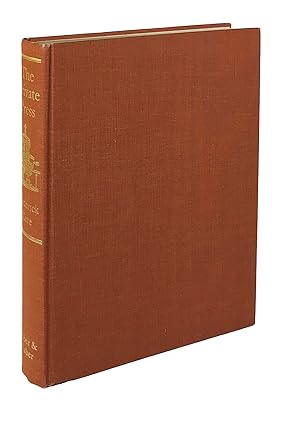
In den Warenkorb1st edn. Tall 8vo. Original gilt decorated brown cloth (near Fine), dustwrapper (VG in protective cover, not price clipped). Pp. 376, illus with b&w plates and drawings in text (no inscriptions).
-

The Private Press
Anbieter: Eastleach Books, Newbury, BER, Vereinigtes Königreich
Verkäuferbewertung 5 von 5 Sternen
Erstausgabe
EUR 41,72
EUR 15,96 Versand
Versand von Vereinigtes Königreich nach USAAnzahl: 1 verfügbar
In den WarenkorbZustand: Very Good. 1st edition. Cloth, dj, F/VG. 376pp, b/w frontis, 60pp b/w plates showing 72 illustrations, 83 text figs, index, dustjacket a little rubbed & grubby, internally a fine copy. A history of the amateur printer & publisher who , with their own printing press have been fascinated by producing their own books & broadsides. From the early days of moveable type when scholars such as Tycho Brae printed their own theories to the modern private press which produces finely printed works. 1400 grams.
-

The Private Press
Anbieter: The Private Library, London, Vereinigtes Königreich
Verkäuferbewertung 5 von 5 Sternen
EUR 38,15
EUR 23,15 Versand
Versand von Vereinigtes Königreich nach USAAnzahl: 1 verfügbar
In den WarenkorbHardcover. Zustand: Good. From the Library of John Russell Taylor.
-
Hardcover. Zustand: Near Fine. 4to (25.5 cm), front., 376 pp, 72 plates. Publisher's cloth and dust jacket (dj defective, part of spine missing). From the library of Marianne Delvaux-Diercxsens (bookplate mounted on front free endpaper). "Ever since Gutenberg's invention of printing from movable types five hundred years ago, as well as commercial printers there have been amateurs who have been fascinated by the authority which printing confers on the written word. Previous studies have in the main been limited to those private presses which from William Morris's Kelmscott onwards have been concerned with the production of fine books. Roderick Cave examines the earlier presses as well, from those set up by penurious scholars to print their own books to those of aristocrats like Horace Walpole or Frederick the Great who had presses as playthings; from the presses which have operated secretly to avoid censorship to those which regarded printing as a fine art. He describes representative presses of these different kinds, examining the equipment they used and the books they produced. Particular attention is paid to the growth of printing as a middle-class hobby in Victorian England, and to the postwar revival of printing for pleasure. As editor of the Private Libraries Association's annual bibliography Private Press Books, the author is particularly well qualified to describe and assess the work of contemporary private presses in Britain and the United States." (from the blurb).
-
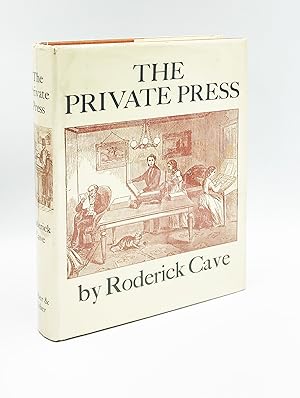
Hardcover. Zustand: Near Fine. 4to (25.5 cm), front., 376 pp, 72 plates. Publisher's cloth and dust jacket (dj slightly rubbed at extremities). "Ever since Gutenberg's invention of printing from movable types five hundred years ago, as well as commercial printers there have been amateurs who have been fascinated by the authority which printing confers on the written word. Previous studies have in the main been limited to those private presses which from William Morris's Kelmscott onwards have been concerned with the production of fine books. Roderick Cave examines the earlier presses as well, from those set up by penurious scholars to print their own books to those of aristocrats like Horace Walpole or Frederick the Great who had presses as playthings; from the presses which have operated secretly to avoid censorship to those which regarded printing as a fine art. He describes representative presses of these different kinds, examining the equipment they used and the books they produced. Particular attention is paid to the growth of printing as a middle-class hobby in Victorian England, and to the postwar revival of printing for pleasure. As editor of the Private Libraries Association's annual bibliography Private Press Books, the author is particularly well qualified to describe and assess the work of contemporary private presses in Britain and the United States." (from the blurb).