

Gesamtpreis (1 Artikel Artikel):
Versandziel:

9780521832786 - Sight and Spirituality in Early Netherlandish Painting (Studies in Netherlandish Visual Culture) von Bret L. Rothstein (5 Ergebnisse)
Direkt zu den wichtigsten Suchergebnissen
Suchfilter
Produktart
- Alle Product Types
- Bücher (5)
- Magazine & Zeitschriften (Keine weiteren Ergebnisse entsprechen dieser Verfeinerung)
- Comics (Keine weiteren Ergebnisse entsprechen dieser Verfeinerung)
- Noten (Keine weiteren Ergebnisse entsprechen dieser Verfeinerung)
- Kunst, Grafik & Poster (Keine weiteren Ergebnisse entsprechen dieser Verfeinerung)
- Fotografien (Keine weiteren Ergebnisse entsprechen dieser Verfeinerung)
- Karten (Keine weiteren Ergebnisse entsprechen dieser Verfeinerung)
- Manuskripte & Papierantiquitäten (Keine weiteren Ergebnisse entsprechen dieser Verfeinerung)
Zustand Mehr dazu
- Neu (2)
- Wie Neu, Sehr Gut oder Gut Bis Sehr Gut (1)
- Gut oder Befriedigend (1)
- Ausreichend oder Schlecht (Keine weiteren Ergebnisse entsprechen dieser Verfeinerung)
- Wie beschrieben (1)
Einband
- alle Einbände
- Hardcover (5)
- Softcover (Keine weiteren Ergebnisse entsprechen dieser Verfeinerung)
Weitere Eigenschaften
- Erstausgabe (1)
- Signiert (Keine weiteren Ergebnisse entsprechen dieser Verfeinerung)
- Schutzumschlag (1)
- Angebotsfoto (2)
Sprache (1)
Preis
- Beliebiger Preis
- Weniger als EUR 20 (Keine weiteren Ergebnisse entsprechen dieser Verfeinerung)
- EUR 20 bis EUR 40
- Mehr als EUR 40
Gratisversand
Land des Verkäufers
Verkäuferbewertung
-
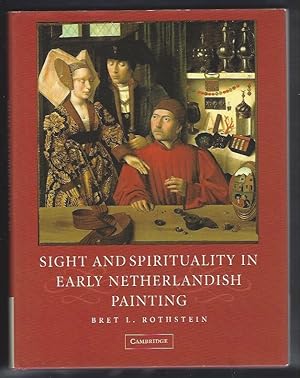
Sight and Spirituality in Early Netherlandish Painting
Sprache: Englisch
Verlag: Cambridge University Press, New York, 2005
ISBN 10: 0521832780 ISBN 13: 9780521832786
Anbieter: Warwick Books, member IOBA, South Pasadena, CA, USA
Verbandsmitglied: IOBA
Verkäuferbewertung 5 von 5 Sternen

Erstausgabe
Hardcover. Zustand: Near Fine. Zustand des Schutzumschlags: Near Fine. First Edition. Hardcover in dust jacket. First edition. Book and jacket are in near fine condition. There is a small dent on the spine that affects both. The book Examines the importance of vision as a narrative and thematic concern in works by Netherlandish artists of the 15th century, including van Eyck, van der Weyden, and Petrus Christus. Black-and-white plates throughout. Small 4to. 262 pp. including notes, bibliography, and index.
-

Sight and Spirituality in Early Netherlandish Painting
Sprache: Englisch
Verlag: Cambridge University Press, 2005
ISBN 10: 0521832780 ISBN 13: 9780521832786
Anbieter: Better World Books, Mishawaka, IN, USA
Verkäuferbewertung 5 von 5 Sternen
Zustand: Good. Former library copy. Pages intact with minimal writing/highlighting. The binding may be loose and creased. Dust jackets/supplements are not included. Includes library markings. Stock photo provided. Product includes identifying sticker. Better World Books: Buy Books. Do Good.
-
Sight and Spirituality in Early Netherlandish Painting
Sprache: Englisch
Verlag: Cambridge University Press, Cambridge, 2005
ISBN 10: 0521832780 ISBN 13: 9780521832786
Hard cover. 274 p. Studies in Netherlandish Visual Culture. Audience: Professional and scholarly. Very good in very good dust jacket.
-
Sight and Spirituality in Early Netherlandish Painting
Anbieter: Revaluation Books, Exeter, Vereinigtes Königreich
Verkäuferbewertung 5 von 5 Sternen
EUR 198,64
EUR 14,33 Versand
Versand von Vereinigtes Königreich nach USAAnzahl: 2 verfügbar
In den WarenkorbHardcover. Zustand: Brand New. new title edition. 274 pages. 9.50x7.50x0.75 inches. In Stock.
-
Sight and Spirituality in Early Netherlandish Painting
Sprache: Englisch
Verlag: Cambridge University Press, 2005
ISBN 10: 0521832780 ISBN 13: 9780521832786
Anbieter: AHA-BUCH GmbH, Einbeck, Deutschland
Verkäuferbewertung 5 von 5 Sternen
Buch. Zustand: Neu. Druck auf Anfrage Neuware - Printed after ordering - Sight and Spirituality in Early Netherlandish Painting examines the importance of vision as a narrative and thematic concern in works by artists such as Jan van Eyck, Petrus Christus, and Roger van der Weyden. Bret Rothstein argues that their paintings invited the viewer to demonstrate a variety of mental skills. Depicting religious visual experience, these works alluded to the imperceptibility of the divine and implicated the viewer's own experience as part of a larger spiritual and intellectual process. Rothstein demonstrates how and why the act of seeing became a highly valued skill, one to be refined and displayed, as well as a source of competition among both artists and patrons.
