

Gesamtpreis (1 Artikel Artikel):
Versandziel:

9780521817608 - Collective Guilt: International Perspective (Studies in Emotion & Social Interaction) von Edited By Nyla R. Branscombe , Bertjan Doosje (6 Ergebnisse)
Direkt zu den wichtigsten Suchergebnissen
Suchfilter
Produktart
- Alle Product Types
- Bücher (6)
- Magazine & Zeitschriften (Keine weiteren Ergebnisse entsprechen dieser Verfeinerung)
- Comics (Keine weiteren Ergebnisse entsprechen dieser Verfeinerung)
- Noten (Keine weiteren Ergebnisse entsprechen dieser Verfeinerung)
- Kunst, Grafik & Poster (Keine weiteren Ergebnisse entsprechen dieser Verfeinerung)
- Fotografien (Keine weiteren Ergebnisse entsprechen dieser Verfeinerung)
- Karten (Keine weiteren Ergebnisse entsprechen dieser Verfeinerung)
- Manuskripte & Papierantiquitäten (Keine weiteren Ergebnisse entsprechen dieser Verfeinerung)
Zustand Mehr dazu
- Neu (4)
- Wie Neu, Sehr Gut oder Gut Bis Sehr Gut (1)
- Gut oder Befriedigend (Keine weiteren Ergebnisse entsprechen dieser Verfeinerung)
- Ausreichend oder Schlecht (1)
- Wie beschrieben (Keine weiteren Ergebnisse entsprechen dieser Verfeinerung)
Einband
- alle Einbände
- Hardcover (6)
- Softcover (Keine weiteren Ergebnisse entsprechen dieser Verfeinerung)
Weitere Eigenschaften
- Erstausgabe (1)
- Signiert (Keine weiteren Ergebnisse entsprechen dieser Verfeinerung)
- Schutzumschlag (Keine weiteren Ergebnisse entsprechen dieser Verfeinerung)
- Angebotsfoto (3)
Sprache (1)
Preis
- Beliebiger Preis
- Weniger als EUR 20 (Keine weiteren Ergebnisse entsprechen dieser Verfeinerung)
- EUR 20 bis EUR 45 (Keine weiteren Ergebnisse entsprechen dieser Verfeinerung)
- Mehr als EUR 45
Gratisversand
- Kostenloser Versand nach USA (Keine weiteren Ergebnisse entsprechen dieser Verfeinerung)
Land des Verkäufers
Verkäuferbewertung
-

Collective Guilt: International Perspectives
Sprache: Englisch
Verlag: Cambridge University Press, 2004
ISBN 10: 0521817609 ISBN 13: 9780521817608
Anbieter: Optimon Books, Gravesend, KENT, Vereinigtes Königreich
Verkäuferbewertung 5 von 5 Sternen

EUR 94,11
EUR 17,35 Versand
Versand von Vereinigtes Königreich nach USAAnzahl: 1 verfügbar
In den WarenkorbHardcover. Zustand: Fair. THERE ARE NO TARIFFS OR CUSTOMS DUTIES ON BOOKS. Fairly good condition for year.
-
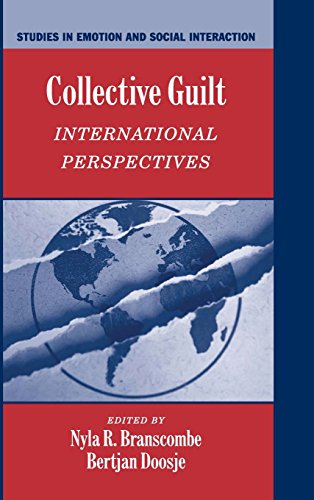
Collective Guilt: International Perspectives (Studies in Emotion and Social Interaction)
Sprache: Englisch
Verlag: Cambridge University Press, 2004
ISBN 10: 0521817609 ISBN 13: 9780521817608
Anbieter: Ria Christie Collections, Uxbridge, Vereinigtes Königreich
Verkäuferbewertung 5 von 5 Sternen
EUR 139,84
EUR 13,86 Versand
Versand von Vereinigtes Königreich nach USAAnzahl: Mehr als 20 verfügbar
In den WarenkorbZustand: New. In.
-
Collective Guilt: International Perspectives (=Studies in Emotion and Social Interaction, Second Series)
Sprache: Englisch
Verlag: Cambridge: Cambridge University Press, 2004
ISBN 10: 0521817609 ISBN 13: 9780521817608
Anbieter: Antiquariat Wilder - Preise inkl. MwSt., Salzhemmendorf, Deutschland
Verbandsmitglied: GIAQ
Verkäuferbewertung 5 von 5 Sternen
Erstausgabe
Zustand: Sehr gut. 1. Aufl. 339 S., 23cm x 15cm OPpbd o. SU, dieser mit minimalsten Gebrauchsspuren, ansonsten tadelloses Ex. Sprache: Englisch Gewicht in Gramm: 1000.
-
Collective Guilt: International Perspectives
Anbieter: Revaluation Books, Exeter, Vereinigtes Königreich
Verkäuferbewertung 5 von 5 Sternen
EUR 192,67
EUR 14,46 Versand
Versand von Vereinigtes Königreich nach USAAnzahl: 2 verfügbar
In den WarenkorbHardcover. Zustand: Brand New. 339 pages. 9.25x6.25x1.00 inches. In Stock.
-
Collective Guilt: International Perspectives (Studies in Emotion and Social Interaction)
Sprache: Englisch
Verlag: Cambridge University Press, 2004
ISBN 10: 0521817609 ISBN 13: 9780521817608
Anbieter: Kennys Bookstore, Olney, MD, USA
Verkäuferbewertung 5 von 5 Sternen
EUR 198,45
EUR 9,02 Versand
Versand innerhalb von USAAnzahl: Mehr als 20 verfügbar
In den WarenkorbZustand: New. This book considers the nature of collective guilt, and the antecedent conditions necessary for it to be experienced. Editor(s): Branscombe, Nyla R.; Doosje, Bertjan. Series: Studies in Emotion and Social Interaction. Num Pages: 356 pages, 24 b/w illus. 11 tables. BIC Classification: JMH. Category: (P) Professional & Vocational. Dimension: 228 x 152 x 24. Weight in Grams: 610. . 2004. Illustrated. hardcover. . . . . Books ship from the US and Ireland.
-

Collective Guilt
Sprache: Englisch
Verlag: Cambridge University Press, 2004
ISBN 10: 0521817609 ISBN 13: 9780521817608
Anbieter: AHA-BUCH GmbH, Einbeck, Deutschland
Verkäuferbewertung 5 von 5 Sternen
Buch. Zustand: Neu. Druck auf Anfrage Neuware - Printed after ordering - Emotion can result from interpreting group actions as reflecting on the self due to an association between the two. This volume considers the nature of collective guilt, the antecedent conditions necessary for it to be experienced, how it can be measured, as well as how collective guilt differs from other group based emotions. Research from Australia, Canada, Germany, Israel, the Netherlands, Northern Ireland, and the USA addresses critical questions concerning the who, when, and why of the experience of collective guilt. The political implications of collective guilt and forgiveness for the past are considered, and how those might depend on the national context. How collective guilt can be harnessed and used to create a more peaceful future for groups with a history of violence between then is emphasized.
