

Gesamtpreis (1 Artikel Artikel):
Versandziel:

9780521775793 - Responsibility and Control: A Theory of Moral Responsibility (Cambridge Studies in Philosophy and Law) von Fischer, John Martin (6 Ergebnisse)
Direkt zu den wichtigsten Suchergebnissen
Suchfilter
Produktart
- Alle Product Types
- Bücher (6)
- Magazine & Zeitschriften (Keine weiteren Ergebnisse entsprechen dieser Verfeinerung)
- Comics (Keine weiteren Ergebnisse entsprechen dieser Verfeinerung)
- Noten (Keine weiteren Ergebnisse entsprechen dieser Verfeinerung)
- Kunst, Grafik & Poster (Keine weiteren Ergebnisse entsprechen dieser Verfeinerung)
- Fotografien (Keine weiteren Ergebnisse entsprechen dieser Verfeinerung)
- Karten (Keine weiteren Ergebnisse entsprechen dieser Verfeinerung)
- Manuskripte & Papierantiquitäten (Keine weiteren Ergebnisse entsprechen dieser Verfeinerung)
Zustand Mehr dazu
- Neu (4)
- Wie Neu, Sehr Gut oder Gut Bis Sehr Gut (Keine weiteren Ergebnisse entsprechen dieser Verfeinerung)
- Gut oder Befriedigend (2)
- Ausreichend oder Schlecht (Keine weiteren Ergebnisse entsprechen dieser Verfeinerung)
- Wie beschrieben (Keine weiteren Ergebnisse entsprechen dieser Verfeinerung)
Einband
- alle Einbände
- Hardcover (Keine weiteren Ergebnisse entsprechen dieser Verfeinerung)
- Softcover (6)
Weitere Eigenschaften
- Erstausgabe (Keine weiteren Ergebnisse entsprechen dieser Verfeinerung)
- Signiert (Keine weiteren Ergebnisse entsprechen dieser Verfeinerung)
- Schutzumschlag (Keine weiteren Ergebnisse entsprechen dieser Verfeinerung)
- Angebotsfoto (1)
Sprache (1)
Preis
- Beliebiger Preis
- Weniger als EUR 20 (Keine weiteren Ergebnisse entsprechen dieser Verfeinerung)
- EUR 20 bis EUR 45
- Mehr als EUR 45
Gratisversand
Land des Verkäufers
Verkäuferbewertung
-
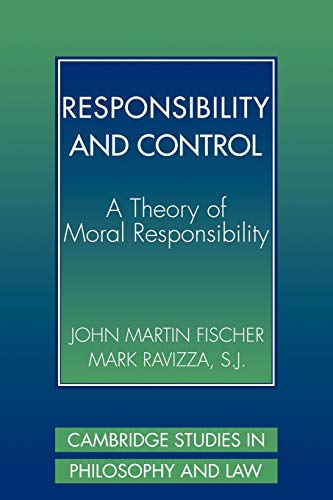
Responsibility and Control: A Theory of Moral Responsibility (Cambridge Studies in Philosophy and Law)
Buch 2 von 13: Cambridge Studies in Philosophy and LawSprache: Englisch
Verlag: Cambridge University Press, 1998
ISBN 10: 0521775795 ISBN 13: 9780521775793
Anbieter: World of Books (was SecondSale), Montgomery, IL, USA
Verkäuferbewertung 5 von 5 Sternen

Zustand: Good. Item in good condition. Textbooks may not include supplemental items i.e. CDs, access codes etc.
-
Responsibility and Control: A Theory of Moral Responsibility (Cambridge Studies in Philosophy and Law)
Buch 2 von 13: Cambridge Studies in Philosophy and LawSprache: Englisch
Verlag: Cambridge University Press, 1998
ISBN 10: 0521775795 ISBN 13: 9780521775793
Anbieter: WorldofBooks, Goring-By-Sea, WS, Vereinigtes Königreich
Verkäuferbewertung 5 von 5 Sternen
EUR 39,18
EUR 6,59 Versand
Versand von Vereinigtes Königreich nach USAAnzahl: 1 verfügbar
In den WarenkorbPaperback. Zustand: Very Good. The book has been read, but is in excellent condition. Pages are intact and not marred by notes or highlighting. The spine remains undamaged.
-
Responsibility and Control: A Theory of Moral Responsibility (Cambridge Studies in Philosophy and Law) (Volume 0)
Buch 2 von 13: Cambridge Studies in Philosophy and LawSprache: Englisch
Verlag: Cambridge University Press, 1998
ISBN 10: 0521775795 ISBN 13: 9780521775793
Anbieter: Ria Christie Collections, Uxbridge, Vereinigtes Königreich
Verkäuferbewertung 5 von 5 Sternen
EUR 52,93
EUR 14,11 Versand
Versand von Vereinigtes Königreich nach USAAnzahl: Mehr als 20 verfügbar
In den WarenkorbZustand: New. In.
-
Responsibility and Control: A Theory of Moral Responsibility (Cambridge Studies in Philosophy and Law)
Buch 2 von 13: Cambridge Studies in Philosophy and LawSprache: Englisch
Verlag: Cambridge University Press, 1998
ISBN 10: 0521775795 ISBN 13: 9780521775793
Anbieter: Kennys Bookstore, Olney, MD, USA
Verkäuferbewertung 5 von 5 Sternen
Zustand: New. This book provides a comprehensive, systematic theory of moral responsibility. Series: Cambridge Studies in Philosophy & Law. Num Pages: 288 pages, bibliography. BIC Classification: HPS; LAB. Category: (P) Professional & Vocational; (U) Tertiary Education (US: College). Dimension: 228 x 154 x 17. Weight in Grams: 442. . 2008. Revised ed. paperback. . . . . Books ship from the US and Ireland.
-
Responsibility and Control: A Theory of Moral Responsibility
Buch 2 von 13: Cambridge Studies in Philosophy and LawAnbieter: Revaluation Books, Exeter, Vereinigtes Königreich
Verkäuferbewertung 5 von 5 Sternen
EUR 91,89
EUR 11,78 Versand
Versand von Vereinigtes Königreich nach USAAnzahl: 2 verfügbar
In den WarenkorbPaperback. Zustand: Brand New. 287 pages. 9.50x6.00x0.75 inches. In Stock.
-

Responsibility and Control : A Theory of Moral Responsibility
Buch 2 von 13: Cambridge Studies in Philosophy and LawSprache: Englisch
Verlag: Cambridge University Press, 1998
ISBN 10: 0521775795 ISBN 13: 9780521775793
Anbieter: AHA-BUCH GmbH, Einbeck, Deutschland
Verkäuferbewertung 5 von 5 Sternen
Taschenbuch. Zustand: Neu. Druck auf Anfrage Neuware - Printed after ordering - This book provides a comprehensive, systematic theory of moral responsibility. The authors explore the conditions under which individuals are morally responsible for actions, omissions, consequences, and emotions. The leading idea in the book is that moral responsibility is based on 'guidance control'. This control has two components: the mechanism that issues in the relevant behavior must be the agent's own mechanism, and it must be appropriately responsive to reasons. The book develops an account of both components. The authors go on to offer a sustained defense of the thesis that moral responsibility is compatible with causal determinism.
