

Gesamtpreis (1 Artikel Artikel):
Versandziel:

9780521030038 - Staging Domesticity: Household Work and English Identity in Early Modern Drama (Cambridge Studies in Renaissance Literature And Culture, 41, Band 41) von Wall (3 Ergebnisse)
Direkt zu den wichtigsten Suchergebnissen
Suchfilter
Produktart
- Alle Product Types
- Bücher (3)
- Magazine & Zeitschriften (Keine weiteren Ergebnisse entsprechen dieser Verfeinerung)
- Comics (Keine weiteren Ergebnisse entsprechen dieser Verfeinerung)
- Noten (Keine weiteren Ergebnisse entsprechen dieser Verfeinerung)
- Kunst, Grafik & Poster (Keine weiteren Ergebnisse entsprechen dieser Verfeinerung)
- Fotografien (Keine weiteren Ergebnisse entsprechen dieser Verfeinerung)
- Karten (Keine weiteren Ergebnisse entsprechen dieser Verfeinerung)
- Manuskripte & Papierantiquitäten (Keine weiteren Ergebnisse entsprechen dieser Verfeinerung)
Zustand Mehr dazu
- Neu (3)
- Wie Neu, Sehr Gut oder Gut Bis Sehr Gut (Keine weiteren Ergebnisse entsprechen dieser Verfeinerung)
- Gut oder Befriedigend (Keine weiteren Ergebnisse entsprechen dieser Verfeinerung)
- Ausreichend oder Schlecht (Keine weiteren Ergebnisse entsprechen dieser Verfeinerung)
- Wie beschrieben (Keine weiteren Ergebnisse entsprechen dieser Verfeinerung)
Einband
- alle Einbände
- Hardcover (Keine weiteren Ergebnisse entsprechen dieser Verfeinerung)
- Softcover (3)
Weitere Eigenschaften
- Erstausgabe (Keine weiteren Ergebnisse entsprechen dieser Verfeinerung)
- Signiert (Keine weiteren Ergebnisse entsprechen dieser Verfeinerung)
- Schutzumschlag (Keine weiteren Ergebnisse entsprechen dieser Verfeinerung)
- Angebotsfoto (1)
Sprache (1)
Preis
- Beliebiger Preis
- Weniger als EUR 20 (Keine weiteren Ergebnisse entsprechen dieser Verfeinerung)
- EUR 20 bis EUR 45
- Mehr als EUR 45
Gratisversand
- Kostenloser Versand nach USA (Keine weiteren Ergebnisse entsprechen dieser Verfeinerung)
Land des Verkäufers
Verkäuferbewertung
-
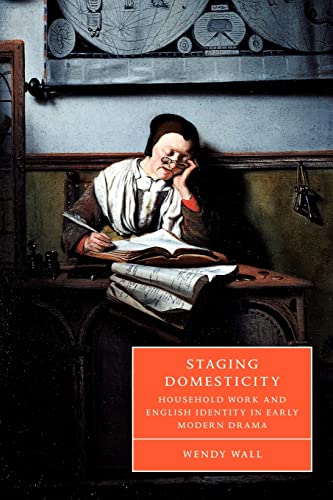
Staging Domesticity: Household Work and English Identity in Early Modern Drama (Cambridge Studies in Renaissance Literature and Culture, Series Number 41) (Volume 0)
Sprache: Englisch
Verlag: Cambridge University Press, 2006
ISBN 10: 052103003X ISBN 13: 9780521030038
Anbieter: Ria Christie Collections, Uxbridge, Vereinigtes Königreich
Verkäuferbewertung 5 von 5 Sternen

EUR 44,78
EUR 13,89 Versand
Versand von Vereinigtes Königreich nach USAAnzahl: Mehr als 20 verfügbar
In den WarenkorbZustand: New. In.
-
Staging Domesticity: Household Work and English Identity in Early Modern Drama: 41 (Cambridge Studies in Renaissance Literature and Culture, Series Number 41)
Sprache: Englisch
Verlag: Cambridge University Press, 2006
ISBN 10: 052103003X ISBN 13: 9780521030038
Anbieter: Kennys Bookstore, Olney, MD, USA
Verkäuferbewertung 5 von 5 Sternen
Zustand: New. Interprets plays in light of their representations of domestic life in the early modern period. Series Editor(s): Orgel, Stephen; Barton, Anne; Dollimore, Jonathan; Garber, Marjorie; Goldberg, Jonathan; Vickers, Nancy; Holland, Peter; McLuskie, Kate. Series: Cambridge Studies in Renaissance Literature & Culture. Num Pages: 308 pages, 15 b/w illus. BIC Classification: 2AB; AN; DSBD; DSG. Category: (P) Professional & Vocational. Dimension: 228 x 152 x 18. Weight in Grams: 460. . 2008. Illustrated. paperback. . . . . Books ship from the US and Ireland.
-

Staging Domesticity : Household Work and English Identity in Early Modern Drama
Sprache: Englisch
Verlag: Cambridge University Press, 2006
ISBN 10: 052103003X ISBN 13: 9780521030038
Anbieter: AHA-BUCH GmbH, Einbeck, Deutschland
Verkäuferbewertung 5 von 5 Sternen
Taschenbuch. Zustand: Neu. Druck auf Anfrage Neuware - Printed after ordering - What role does food and cooking play in how people imagine themselves and their communities In this book Wendy Wall argues that representations of housework in the early modern period helped to forge crucial conceptions of national identity. Rich with a detailed account of household practices in the period, Staging Domesticity reads plays on the London stage in the light of the first printed cookbooks in England. Working from original historical sources on wetnursing, laundering, sewing, medical care and butchery, Wall shows that domesticity was represented as deeply familiar but also enticingly alien. Wall analyses a wide range of the repertoire, including some now little-known plays, as well as key works in the period by Shakespeare and others. Wall concludes that, rather than dramatizations of only court-based and aristocratic domestic life, literature of the period drew on work from the more common household.
