
9780295989488 - a moveable empire: ottoman nomads, migrants, and refugees (studies in modernity and national identity) von kasaba, resat (6 Ergebnisse)
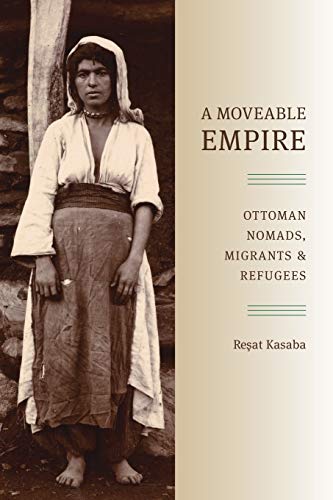
- Softcover
Anbieter: A Squared Books (Don Dewhirst), South Lyon, MI, USAA Squared Books (Don Dewhirst)
Verkäufer/-in kontaktierenVerkäufer/-in mit 5 SternenZustand: Gebraucht - Gut
EUR 27,74
EUR 5,67 VersandVersand innerhalb von USAAnzahl: 1 verfügbar
paperback. Zustand: Very Good. Matte paper covers; mild edge wear; front cover lifts; 8vo, 7 3/4" to 9 3/4" tall; interior is clean and unmarked; 194 pages.
- Softcover
Anbieter: GridFreed, San Diego, CA, USAGridFreed
Verkäufer/-in kontaktierenVerkäufer/-in mit 5 SternenZustand: Neu
EUR 31,09
EUR 6,07 VersandVersand innerhalb von USAAnzahl: 1 verfügbar
Paperback. Zustand: New. In shrink wrap.
- Softcover
Anbieter: Revaluation Books, Exeter, Vereinigtes KönigreichRevaluation Books
Verkäufer/-in kontaktierenVerkäufer/-in mit 5 SternenZustand: Neu
EUR 53,91
EUR 11,71 VersandVersand von Vereinigtes Königreich nach USAAnzahl: 2 verfügbar
Paperback. Zustand: Brand New. 194 pages. 8.75x5.75x0.50 inches. In Stock.
- Softcover
Anbieter: Kennys Bookstore, Olney, MD, USAKennys Bookstore
Verkäufer/-in kontaktierenVerkäufer/-in mit 5 SternenZustand: Neu
EUR 56,63
EUR 9,18 VersandVersand innerhalb von USAAnzahl: 19 verfügbar
Zustand: New. Examines the history of the Ottoman Empire by focusing on the migrant groups that lived within its bounds and their changing relationship to the state's central authorities. Series: Studies in Modernity and National Identity. Num Pages: 216 pages, 2 maps. BIC Classification: 1DVT; 1QDT; HBJD. Category: (P) Professi…onal & Vocational. Dimension: 228 x 151 x 13. Weight in Grams: 290. . 2009. Paperback. . . . . Books ship from the US and Ireland.
- Softcover
Anbieter: moluna, Greven, Deutschlandmoluna
Verkäufer/-in kontaktierenVerkäufer/-in mit 5 SternenZustand: Neu
EUR 42,93
EUR 48,99 VersandVersand von Deutschland nach USAAnzahl: Mehr als 20 verfügbar
Kartoniert / Broschiert. Zustand: New. Examines the history of the Ottoman Empire by focusing on the migrant groups that lived within its bounds and their changing relationship to the state s central authorities.Über den AutorResat KasabaInhaltsverzeichni.

- Softcover
Anbieter: AHA-BUCH GmbH, Einbeck, DeutschlandAHA-BUCH GmbH
Verkäufer/-in kontaktierenVerkäufer/-in mit 5 SternenZustand: Neu
EUR 55,66
EUR 61,47 VersandVersand von Deutschland nach USAAnzahl: 1 verfügbar
Taschenbuch. Zustand: Neu. Neuware - A Moveable Empire examines the history of the Ottoman Empire through a new lens, focusing on the migrant groups that lived within its bounds and their changing relationship to the state's central authorities. Unlike earlier studies that take an evolutionary view of tribe-state relations -- ca…sting the development of a state as a story in which nomadic tribes give way to settled populations -- this book argues that mobile groups played an important role in shaping Ottoman institutions and, ultimately, the early republican structures of modern Turkey.Over much of the empire's long history, local interests influenced the development of the Ottoman state as authorities sought to enlist and accommodate the various nomadic groups in the region. In the early years of the empire, maintaining a nomadic presence, especially in frontier regions, was an important source of strength. Cooperation between the imperial center and tribal leaders provided the center with an effective way of reaching distant parts of the empire, while allowing tribal leaders to perpetuate their own authority and guarantee the tribes' survival as bearers of distinct cultures and identities. This relationship changed in the eighteenth and nineteenth centuries, as indigenous communities discovered new possibilities for expanding their own economic and political power by pursuing local, regional, and even global opportunities, independent of the Ottoman center.The loose, flexible relationship between the Ottoman center and migrant communities became a liability under these changing conditions, and the Ottoman state took its first steps toward settling tribes and controlling migrations. Finally, in the early twentieth century, mobility took another form entirely as ethnicity-based notions of nationality led to forced migrations.


