
Gesamtpreis (1 Artikel Artikel):
Versandziel:

9780271035147 - Harnessing Globalization: The Promotion of Nontraditional Foreign Direct Investment in Latin America von Nelson, Roy C. (6 Ergebnisse)
Direkt zu den wichtigsten Suchergebnissen
Suchfilter
Produktart
- Alle Product Types
- Bücher (6)
- Magazine & Zeitschriften (Keine weiteren Ergebnisse entsprechen dieser Verfeinerung)
- Comics (Keine weiteren Ergebnisse entsprechen dieser Verfeinerung)
- Noten (Keine weiteren Ergebnisse entsprechen dieser Verfeinerung)
- Kunst, Grafik & Poster (Keine weiteren Ergebnisse entsprechen dieser Verfeinerung)
- Fotografien (Keine weiteren Ergebnisse entsprechen dieser Verfeinerung)
- Karten (Keine weiteren Ergebnisse entsprechen dieser Verfeinerung)
- Manuskripte & Papierantiquitäten (Keine weiteren Ergebnisse entsprechen dieser Verfeinerung)
Zustand Mehr dazu
- Neu (4)
- Wie Neu, Sehr Gut oder Gut Bis Sehr Gut (Keine weiteren Ergebnisse entsprechen dieser Verfeinerung)
- Gut oder Befriedigend (2)
- Ausreichend oder Schlecht (Keine weiteren Ergebnisse entsprechen dieser Verfeinerung)
- Wie beschrieben (Keine weiteren Ergebnisse entsprechen dieser Verfeinerung)
Einband
- alle Einbände
- Hardcover (Keine weiteren Ergebnisse entsprechen dieser Verfeinerung)
- Softcover (6)
Weitere Eigenschaften
- Erstausgabe (Keine weiteren Ergebnisse entsprechen dieser Verfeinerung)
- Signiert (Keine weiteren Ergebnisse entsprechen dieser Verfeinerung)
- Schutzumschlag (Keine weiteren Ergebnisse entsprechen dieser Verfeinerung)
- Angebotsfoto (2)
Sprache (1)
Gratisversand
Land des Verkäufers
Verkäuferbewertung
-
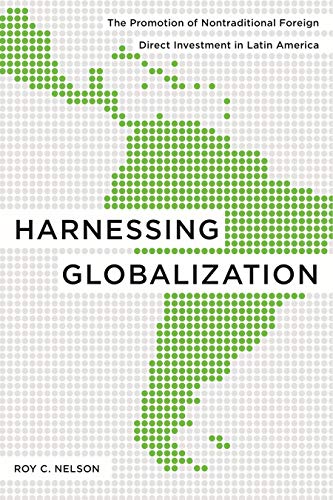
Harnessing Globalization: The Promotion of Nontraditional Foreign Direct Investment in Latin America
Sprache: Englisch
Verlag: Penn State University Press, 2009
ISBN 10: 0271035145 ISBN 13: 9780271035147
Anbieter: ThriftBooks-Atlanta, AUSTELL, GA, USA
Verkäuferbewertung 5 von 5 Sternen

Paperback. Zustand: Very Good. No Jacket. May have limited writing in cover pages. Pages are unmarked. ~ ThriftBooks: Read More, Spend Less.
-
Harnessing Globalization : The Promotion of Nontraditional Foreign Direct Investment in Latin America
Sprache: Englisch
Verlag: Pennsylvania State University Press, 2010
ISBN 10: 0271035145 ISBN 13: 9780271035147
Anbieter: Better World Books, Mishawaka, IN, USA
Verkäuferbewertung 5 von 5 Sternen
Zustand: Good. Former library copy. Pages intact with minimal writing/highlighting. The binding may be loose and creased. Dust jackets/supplements are not included. Includes library markings. Stock photo provided. Product includes identifying sticker. Better World Books: Buy Books. Do Good.
-
Harnessing Globalization
Sprache: Englisch
Verlag: Penn State University Press, 2010
ISBN 10: 0271035145 ISBN 13: 9780271035147
Anbieter: PBShop.store UK, Fairford, GLOS, Vereinigtes Königreich
Verkäuferbewertung 4 von 5 Sternen

EUR 36,70
EUR 5,76 Versand
Versand von Vereinigtes Königreich nach USAAnzahl: 3 verfügbar
In den WarenkorbPAP. Zustand: New. New Book. Shipped from UK. Established seller since 2000.
-
Harnessing Globalization The Promotion of Nontraditional Foreign Direct Investment in Latin America
Sprache: Englisch
Verlag: The Pennsylvania State University Press, 2009
ISBN 10: 0271035145 ISBN 13: 9780271035147
Anbieter: Revaluation Books, Exeter, Vereinigtes Königreich
Verkäuferbewertung 5 von 5 Sternen
EUR 50,19
EUR 11,48 Versand
Versand von Vereinigtes Königreich nach USAAnzahl: 2 verfügbar
In den WarenkorbPaperback. Zustand: Brand New. 262 pages. 8.75x6.00x0.75 inches. In Stock.
-

Harnessing Globalization
Sprache: Englisch
Verlag: Penn State University Press, 2010
ISBN 10: 0271035145 ISBN 13: 9780271035147
EUR 43,66
EUR 48,99 Versand
Versand von Deutschland nach USAAnzahl: Mehr als 20 verfügbar
In den WarenkorbZustand: New. An analysis of recent government efforts to promote nontraditional foreign direct investment (FDI) in Costa Rica the state of Rio Grande do Sul, Brazil and Chile. For comparative purposes, the book also examines the highly successful cases of Ireland and .
-

Harnessing Globalization
Sprache: Englisch
Verlag: BERTRAMS PRINT ON DEMAND Sep 2007, 2007
ISBN 10: 0271035145 ISBN 13: 9780271035147
Anbieter: AHA-BUCH GmbH, Einbeck, Deutschland
Verkäuferbewertung 5 von 5 Sternen
Taschenbuch. Zustand: Neu. Neuware - How can countries in the underdeveloped world position themselves to take best advantage of the positive economic benefits of globalization One avenue to success is the harnessing of foreign direct investment (FDI) in the 'nontraditional' forms of the high-technology and service sectors, where an educated workforce is essential and the spillover effects to other sectors are potentially very beneficial. In this book, Roy Nelson compares efforts in three Latin American countries-Brazil, Chile, and Costa Rica-to attract nontraditional FDI and analyzes the reasons for their relative success or failure. As a further comparison, he uses the successes of FDI promotion in Ireland and Singapore to help refine the analysis. His study shows that two factors, in particular, are critical. First is the government's autonomy from special interest groups, both domestic and foreign, arising from the level of political security enjoyed by government leaders. The second factor is the government's ability to learn about prospective investors and the inducements that are most important to them-what he calls 'transnational learning capacity.' Nelson draws lessons from his analysis for how governments might develop more effective strategies for attracting nontraditional FDI.

