
Gesamtpreis (1 Artikel Artikel):
Versandziel:

worby eric (4 Ergebnisse)
Direkt zu den wichtigsten Suchergebnissen
Suchfilter
Produktart
- Alle Product Types
- Bücher (4)
- Magazine & Zeitschriften (Keine weiteren Ergebnisse entsprechen dieser Verfeinerung)
- Comics (Keine weiteren Ergebnisse entsprechen dieser Verfeinerung)
- Noten (Keine weiteren Ergebnisse entsprechen dieser Verfeinerung)
- Kunst, Grafik & Poster (Keine weiteren Ergebnisse entsprechen dieser Verfeinerung)
- Fotografien (Keine weiteren Ergebnisse entsprechen dieser Verfeinerung)
- Karten (Keine weiteren Ergebnisse entsprechen dieser Verfeinerung)
- Manuskripte & Papierantiquitäten (Keine weiteren Ergebnisse entsprechen dieser Verfeinerung)
Zustand Mehr dazu
- Neu (Keine weiteren Ergebnisse entsprechen dieser Verfeinerung)
- Wie Neu, Sehr Gut oder Gut Bis Sehr Gut (1)
- Gut oder Befriedigend (2)
- Ausreichend oder Schlecht (1)
- Wie beschrieben (Keine weiteren Ergebnisse entsprechen dieser Verfeinerung)
Einband
- alle Einbände
- Hardcover (Keine weiteren Ergebnisse entsprechen dieser Verfeinerung)
- Softcover (4)
Weitere Eigenschaften
- Erstausgabe (2)
- Signiert (Keine weiteren Ergebnisse entsprechen dieser Verfeinerung)
- Schutzumschlag (Keine weiteren Ergebnisse entsprechen dieser Verfeinerung)
- Angebotsfoto (3)
Sprache (2)
Preis
- Beliebiger Preis
- Weniger als EUR 20
- EUR 20 bis EUR 40
- Mehr als EUR 40 (Keine weiteren Ergebnisse entsprechen dieser Verfeinerung)
Gratisversand
- Kostenloser Versand nach USA (Keine weiteren Ergebnisse entsprechen dieser Verfeinerung)
Land des Verkäufers
Verkäuferbewertung
-
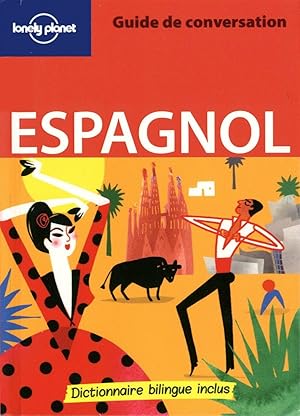
Guide de conversation espagnol
Anbieter: Démons & Merveilles, Joinville, Frankreich
Verkäuferbewertung 5 von 5 Sternen

Zustand: Very Good. Très bon état - légères marques de lecture et/ou de stockage mais du reste en très bon état- expédié soigneusement depuis la France. 10x1 4x13 8cm. 2012. Broché. Very Good.
-

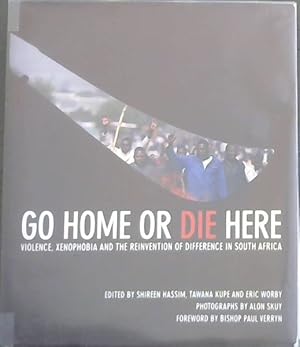
Go Home Or Die Here: Violence, Xenophobia and the Reinvention of Difference in South Africa
Anbieter: Chapter 1, Johannesburg, GAU, Südafrika
Verkäuferbewertung 5 von 5 Sternen
Erstausgabe
Paperback. Zustand: Fair. First Edition. Photographs by Alon Skuy. Foreword by Bishop Paul Verryn. Heavy book may require extra postage unless posted within South Africa. The wraps are shelf rubbed and edge worn. Damp marks. The binding has been repaired. Fair copy. GK. Our orders are shipped using tracked courier delivery services.
-
Go Home or Die Here: Violence, Xenophobia and the Reinvention of Difference in South Africa
Anbieter: Chapter 1, Johannesburg, GAU, Südafrika
Verkäuferbewertung 5 von 5 Sternen
Erstausgabe
Softcover. Zustand: Very Good. First Edition. 1st edition. Heavy, extra postage may be required if posted outside South Africa. The wraps are a bit edge worn and marked. Minor handling marks on page edges. Still in a very good condition, excellent binding and internally clean. MK. Our orders are shipped using tracked courier delivery services.
-
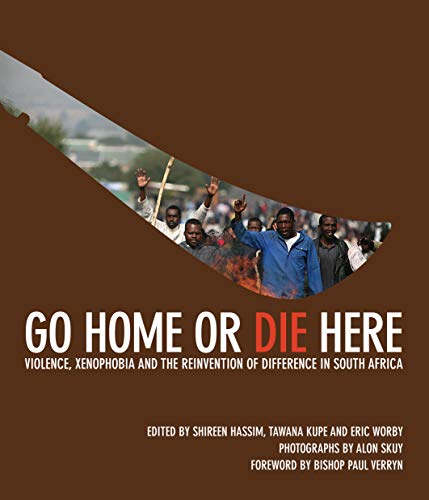
Zustand: Sehr gut. Zustand: Sehr gut | Seiten: 272 | Sprache: Englisch | Produktart: Bücher | The xenophobic attacks that started in Alexandra, Johannesburg in May 2008 before quickly spreading around the country caused an outcry across the world and raised many fundamental questions: Of what profound social malaise is xenophobia - and the violence that it inspires - a symptom? Have our economic and political choices created new forms of exclusion that fuel anger and distrust? What consequences does the emergence of xenophobia hold for the idea of an equal, non-racial society as symbolised by a democratic South Africa? On 28 May 2008 the Faculty of Humanities in the University of the Witwatersrand, Johannesburg convened an urgent colloquium that focused on searching for short and long-term solutions. Nearly twenty individuals - mostly Wits academics from a variety of disciplines, but also two student leaders, a journalist and a bishop - addressed the unfolding violence in ways that were conversant with the moment, yet rooted in scholarship and ongoing research. Go Home or Die Here emanates directly from the colloquium. It hopes to make sense of the nuances and trajectories of building a democratic society out of a deeply divided and conflictual past, in the conditions of global recession, heightening inequalities and future uncertainty. The authors hoped to pose questions that would lead both to research and to more informed, reflective forms of public action. With extensive photographs by award-winning photographer Alon Skuy, who covered the violence for The Times newspaper, the volume is passionate and engaged, and aims to stimulate reflection, debate and activism among concerned members of a broad public.
