

Gesamtpreis (1 Artikel Artikel):
Versandziel:

w stanley taft (13 Ergebnisse)
Direkt zu den wichtigsten Suchergebnissen
Suchfilter
Produktart
- Alle Product Types
- Bücher (13)
- Magazine & Zeitschriften (Keine weiteren Ergebnisse entsprechen dieser Verfeinerung)
- Comics (Keine weiteren Ergebnisse entsprechen dieser Verfeinerung)
- Noten (Keine weiteren Ergebnisse entsprechen dieser Verfeinerung)
- Kunst, Grafik & Poster (Keine weiteren Ergebnisse entsprechen dieser Verfeinerung)
- Fotografien (Keine weiteren Ergebnisse entsprechen dieser Verfeinerung)
- Karten (Keine weiteren Ergebnisse entsprechen dieser Verfeinerung)
- Manuskripte & Papierantiquitäten (Keine weiteren Ergebnisse entsprechen dieser Verfeinerung)
Zustand Mehr dazu
- Neu (6)
- Wie Neu, Sehr Gut oder Gut Bis Sehr Gut (1)
- Gut oder Befriedigend (5)
- Ausreichend oder Schlecht (1)
- Wie beschrieben (Keine weiteren Ergebnisse entsprechen dieser Verfeinerung)
Einband
Weitere Eigenschaften
- Erstausgabe (Keine weiteren Ergebnisse entsprechen dieser Verfeinerung)
- Signiert (Keine weiteren Ergebnisse entsprechen dieser Verfeinerung)
- Schutzumschlag (Keine weiteren Ergebnisse entsprechen dieser Verfeinerung)
- Angebotsfoto (4)
Sprache (1)
Gratisversand
Land des Verkäufers
Verkäuferbewertung
-
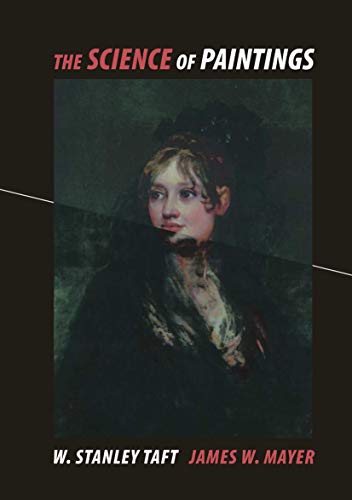
The Science of Paintings
Anbieter: ThriftBooks-Dallas, Dallas, TX, USA
Verkäuferbewertung 5 von 5 Sternen

Hardcover. Zustand: Fair. No Jacket. Missing dust jacket; Readable copy. Pages may have considerable notes/highlighting. ~ ThriftBooks: Read More, Spend Less.
-
The Science of Paintings
Anbieter: ThriftBooks-Atlanta, AUSTELL, GA, USA
Verkäuferbewertung 5 von 5 Sternen
Hardcover. Zustand: Very Good. No Jacket. May have limited writing in cover pages. Pages are unmarked. ~ ThriftBooks: Read More, Spend Less.
-
The Science of Paintings
Anbieter: ThriftBooks-Dallas, Dallas, TX, USA
Verkäuferbewertung 5 von 5 Sternen
Hardcover. Zustand: Good. No Jacket. Pages can have notes/highlighting. Spine may show signs of wear. ~ ThriftBooks: Read More, Spend Less.
-
The Science of Paintings
Anbieter: ThriftBooks-Atlanta, AUSTELL, GA, USA
Verkäuferbewertung 5 von 5 Sternen
Hardcover. Zustand: Good. No Jacket. Pages can have notes/highlighting. Spine may show signs of wear. ~ ThriftBooks: Read More, Spend Less.
-
The Science of Paintings
Anbieter: Anybook.com, Lincoln, Vereinigtes Königreich
Verkäuferbewertung 5 von 5 Sternen
EUR 19,37
EUR 15,72 Versand
Versand von Vereinigtes Königreich nach USAAnzahl: 1 verfügbar
In den WarenkorbZustand: Good. This is an ex-library book and may have the usual library/used-book markings inside.This book has hardback covers. In good all round condition. No dust jacket. Please note the Image in this listing is a stock photo and may not match the covers of the actual item,800grams, ISBN:9780387987224.
-
The Science of Paintings
Anbieter: Books From California, Simi Valley, CA, USA
Verkäuferbewertung 4 von 5 Sternen

Hardcover. Zustand: Very Good.
-
The Science of Paintings
Anbieter: Books From California, Simi Valley, CA, USA
Verkäuferbewertung 4 von 5 Sternen
Hardcover. Zustand: Fine.
-

The Science of Paintings
Anbieter: Agapea Libros, Malaga, MA, Spanien
Verkäuferbewertung 5 von 5 Sternen
Zustand: New. Idioma/Language: Inglés. The physics and materials science behind paintings: the pigments, binders, canvas, and varnish that go into making a painting appear the way it does. The text discusses the physical principles behind the colors seen and how these change with illumination, the various types of paint and binders used in both old and modern paintings, and the optics and microscopic structure of paint films. Chapters on dating, binders, and dendochronology have been contributed by experts in the respective fields. *** Nota: Los envíos a España peninsular, Baleares y Canarias se realizan a través de mensajería urgente. No aceptamos pedidos con destino a Ceuta y Melilla.
-

The Science of Paintings
Anbieter: Revaluation Books, Exeter, Vereinigtes Königreich
Verkäuferbewertung 5 von 5 Sternen
EUR 110,56
EUR 11,56 Versand
Versand von Vereinigtes Königreich nach USAAnzahl: 1 verfügbar
In den WarenkorbPaperback. Zustand: Brand New. 247 pages. 10.00x7.01x0.62 inches. In Stock.
-
Taschenbuch. Zustand: Neu. The Science of Paintings | W. Stanley Jr. Taft (u. a.) | Taschenbuch | xi | Englisch | 2013 | Springer | EAN 9781475773880 | Verantwortliche Person für die EU: Springer Verlag GmbH, Tiergartenstr. 17, 69121 Heidelberg, juergen[dot]hartmann[at]springer[dot]com | Anbieter: preigu.
-

The Science of Paintings
Anbieter: AHA-BUCH GmbH, Einbeck, Deutschland
Verkäuferbewertung 5 von 5 Sternen
Taschenbuch. Zustand: Neu. Druck auf Anfrage Neuware - Printed after ordering - The beauty, mystery, joy, and inspired observation of the human spirit that paintings evoke result from a complex of intuitive and cognitive choices made by the artist. An understanding of the genesis of these choices can be as elusive as the resulting imagery, but great paintings seem to initiate in us a curiosity about the ideas, methods, and mate- als used by their creators. In the twentieth century connoisseurship has been enriched by the application of methods of scientific analysis. The results of these investigations into the physical properties of paintings have shed new light on their authenticity and individual histories as well as on the craft in general. Developments in the fields of physics and chemistry have allowed us to understand still more about how we p- ceive and interact with paintings. This book is intended for those both inside and outside the field of art who wish to gain insight into the making of paintings. It is directed toward students, teachers, and scientists in engineering, physics, and chemistry as well as those in art, art history, and art conservation. This book grew out of the interdisciplinary undergraduate-level course Art, Isotopes, and Ana- sis taught at Cornell University by the two authors and supported in l- tures and seminars by three of the contributing authors: Dr. Richard Newman, of the Museum of Fine Arts, Boston; Dr. Dusan Stulik, of the Getty Conservation Institute; and Prof.
-
The Science of Paintings
Anbieter: Revaluation Books, Exeter, Vereinigtes Königreich
Verkäuferbewertung 5 von 5 Sternen
EUR 120,13
EUR 14,45 Versand
Versand von Vereinigtes Königreich nach USAAnzahl: 1 verfügbar
In den WarenkorbHardcover. Zustand: Brand New. 236 pages. 10.00x7.50x0.75 inches. In Stock.
-

The Science of Paintings
Anbieter: AHA-BUCH GmbH, Einbeck, Deutschland
Verkäuferbewertung 5 von 5 Sternen
Buch. Zustand: Neu. Druck auf Anfrage Neuware - Printed after ordering - The beauty, mystery, joy, and inspired observation of the human spirit that paintings evoke result from a complex of intuitive and cognitive choices made by the artist. An understanding of the genesis of these choices can be as elusive as the resulting imagery, but great paintings seem to initiate in us a curiosity about the ideas, methods, and mate- als used by their creators. In the twentieth century connoisseurship has been enriched by the application of methods of scientific analysis. The results of these investigations into the physical properties of paintings have shed new light on their authenticity and individual histories as well as on the craft in general. Developments in the fields of physics and chemistry have allowed us to understand still more about how we p- ceive and interact with paintings. This book is intended for those both inside and outside the field of art who wish to gain insight into the making of paintings. It is directed toward students, teachers, and scientists in engineering, physics, and chemistry as well as those in art, art history, and art conservation. This book grew out of the interdisciplinary undergraduate-level course Art, Isotopes, and Ana- sis taught at Cornell University by the two authors and supported in l- tures and seminars by three of the contributing authors: Dr. Richard Newman, of the Museum of Fine Arts, Boston; Dr. Dusan Stulik, of the Getty Conservation Institute; and Prof.


