

Gesamtpreis (1 Artikel Artikel):
Versandziel:

tuscany florence (3 Ergebnisse)
Direkt zu den wichtigsten Suchergebnissen
Suchfilter
Produktart
- Alle Product Types
- Bücher (2)
- Magazine & Zeitschriften (Keine weiteren Ergebnisse entsprechen dieser Verfeinerung)
- Comics (Keine weiteren Ergebnisse entsprechen dieser Verfeinerung)
- Noten (Keine weiteren Ergebnisse entsprechen dieser Verfeinerung)
- Kunst, Grafik & Poster (Keine weiteren Ergebnisse entsprechen dieser Verfeinerung)
- Fotografien (Keine weiteren Ergebnisse entsprechen dieser Verfeinerung)
- Karten (1)
- Manuskripte & Papierantiquitäten (Keine weiteren Ergebnisse entsprechen dieser Verfeinerung)
Zustand Mehr dazu
- Neu (Keine weiteren Ergebnisse entsprechen dieser Verfeinerung)
- Wie Neu, Sehr Gut oder Gut Bis Sehr Gut (Keine weiteren Ergebnisse entsprechen dieser Verfeinerung)
- Gut oder Befriedigend (1)
- Ausreichend oder Schlecht (Keine weiteren Ergebnisse entsprechen dieser Verfeinerung)
- Wie beschrieben (2)
Einband
Weitere Eigenschaften
- Erstausgabe (1)
- Signiert (Keine weiteren Ergebnisse entsprechen dieser Verfeinerung)
- Schutzumschlag (Keine weiteren Ergebnisse entsprechen dieser Verfeinerung)
- Angebotsfoto (1)
Sprache (2)
Gratisversand
- Kostenloser Versand nach USA (Keine weiteren Ergebnisse entsprechen dieser Verfeinerung)
Land des Verkäufers
Verkäuferbewertung
-
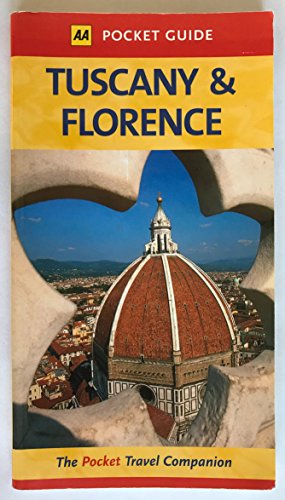
Pocket Guide
Anbieter: MusicMagpie, Stockport, Vereinigtes Königreich
Verkäuferbewertung 5 von 5 Sternen

EUR 3,46
EUR 6,31 Versand
Versand von Vereinigtes Königreich nach USAAnzahl: 1 verfügbar
In den WarenkorbZustand: Very Good. 1756814614. 9/2/2025 12:03:34 PM.
-

DIRECTORIUM SUPERIORUM REGULARIUM, & ECCLESIASTICORUM, CONTINENS CENTUM SEPTEM SERMONES DOCTRINALES AC SPIRITUALES, VARIA THEMATA PRO VISITATIONIBUS, INVESTITIONIBUS, PROFESSIONIBUS, c. Authore R. P. F. Evangelista de Momigno Ord. FF. Minorum S. Francisci de observantia quondam Vicario Generali, Provinciae Tusciae SS. Theol. Lectore Jubilato, & Praedicatore Famosissimo, post tres editiones Italicas, nunc latinitate donatum Opera, studio R. P. Fr. Brunonis Neusser eiusdem Ord. FF. Minorum Recollectorum Provinciae Coloniae SS. Theologiae Lectoris. Cum Indicibus necessariis ac Tabula Sermonum, Editio secunda correctior, Aucta cum quatuor decim novis Concionibus ex italico Translatis. - Coloniae Aggrippinae Apud Joannem Busaeum, Bibliopolam sub Monocerote. Anno M. DC. LXV. Cum Privilegio Casareo[!]. [Nonaginta Tres Sermones Spirituales, . . ., & Praedicatore Clarißimo, . . .; Regvlarium ecclesiasticorvm centvm Avthore Brvnonis Nevsser]
Verlag: Cologne Aggrippina, Johann Busaeus, 1665., 1665
Anbieter: C O - L I B R I , Bremen - Berlin ; Deutschland / Germany ., Berlin, Deutschland
Verkäuferbewertung 5 von 5 Sternen
Titlepage in red and black with larger allegoric woodcut, (18) 428 (until 'Sermo LXXXI'), 156 (Sermo LXXXI CVII), (31; 'Index Locorum sacrae Scripturae . . .', 'Index Rerum et Verborum notabilium, .:', 'Elenchus ad Conciones formandas pro Dominices et Festis totius Anni.'). - Full vellum binding of the period with manuscript title at top-of-spine, long woolen string clasps and blank endpapers; 4to.(ca. 20 x 18 x 5 cm.). *** [Letztmalig verlängerter, ERWEITERTER FRÜHLINGS-VERKAUF bis Montag, den 20.04.2026 / Ongoing, ultimately EXPANDED SPRING-SALE until Monday, April 20, 2026: um über 35% REDUZIERTER PREIS / PRICE-REDUCTION of over 35%; ehemaliger Preis / previously EUR 265,-] --- FIRST REVISED AND AUGMENTED EDITION, VELLUM-BOUND ORIGINAL; COMPLETE. - Binding somewhat spotty, endpapers slightly sunned; A VERY GOOD COPY.
-

Status Ecclesiastici Magnique Ducatus Florentini Nova Exhibitio.
Erscheinungsdatum: 1710
Anbieter: Geographicus Rare Antique Maps, Brooklyn, NY, USA
Verbandsmitglied: ABAA ESA ILAB
Verkäuferbewertung 4 von 5 Sternen

Karte Erstausgabe
Very good. Strong impressions with rich original color. Minor soiling towards bottom, mostly confined to margin. Repaired tear at bottom near centerfold. Size 20.5 x 23.5 Inches. A striking first edition example of Johann Baptist Homann's c. 1710 map of the Papal States of central Italy, including Rome, Florence, and the other grand cities of Tuscany and nearby regions. It was produced during the War of the Spanish Succession (1701 - 1714), which reshaped the political landscape of much of Italy. A Closer Look Coverage ranges from Mantova and the Po River at the top to Gaeta at the bottom, taking in Tuscany, Rome, and nearby regions. Cities and towns are recorded in detail, with fortified cities illustrated with walls. Mountains, waterways, forests, and administrative boundaries are likewise meticulously documented. Rome is situated towards the bottom right, and Florence is near the center on the Arno River. Additional cities such as Pisa, Ravenna, Bologna, and Ferrara are easily identifiable. An elaborate title cartouche includes multiple symbols of the Papacy, including the Papal Cross and Papal Mitre. The Lago di Celano, also known as the Lago Fucino, east of Rome, was once the third largest lake in Italy but no longer exists, having been drained in 1878. Since Roman times, when the settlement of Marruvium was founded on its eastern shore, the lake had posed risks of floods and disease as the waters had no natural outflow. Thus, after years of planning and construction, a canal was built, and the lake drained, leaving behind an extremely fertile plain (Piana del Fùcino) ideal for farming (since the 1960s, the dried lakebed also hosts a large satellite telecommunications center). Similar drainage projects were employed in the 19th century on other ancient lakes present here, such as the Lago di Sesto near Bientina, east of Pisa. Conversely, the Valli di Comacchio east of Ferrara and Bologna at the top was a relatively recent development, forming in the tenth century due to silting and erosion and filling with seawater beginning in the 16th century. Though the wetlands have been gradually reduced from their considerable extent seen here, they are today a largely protected wildlife preserve and remain one of the largest wetlands in Italy. The War of the Spanish Succession During the War of Spanish Succession (1701 - 1714), different regions of Italy served as a battleground contested by major European powers. The war, prompted by the death of Spanish King Charles II without an heir, led to a wide-ranging struggle between the Habsburgs and Bourbons and drew in neighboring powers. Since Spain controlled the duchies of Milan and Mantua, these became points of contention in the struggle. France quickly moved to occupy the formerly Spanish possessions in northern Italy. Austrian troops drove the French out of Italy after breaking the French Siege of Turin in 1706, leaving the Habsburgs and Savoys as the major powers in northern Italy and throughout Italy writ large until the rise of Napoleon. As for the Papal States, although they had origins in the era of the Roman Empire, the pope's 'rule' over these lands was mostly nominal. However, a series of popes in the late 15th - 17th centuries fought to expand their temporal powers, becoming entangled in European geopolitics and warfare in the process. In addition to more closely controlling territories under their domain, the popes of this era also conquered or reclaimed territories that had once theoretically been part of the Papal States, including Ferrara and Urbino. Publication History and Census This map was prepared by Johann Baptist Homann between 1707 and 1710 for inclusion in the 1710 edition of his Neuer Atlas . The present example can be compared to the following state of the map from c. 1716 (also offered by us: StatusEcclesiastici-homann-1716), which though superficially similar, was, in fact, an entirely new plate, adding Homann's royal Privilege, modifying the title cart.


