

Gesamtpreis (1 Artikel Artikel):
Versandziel:

table contents (3 Ergebnisse)
Direkt zu den wichtigsten Suchergebnissen
Suchfilter
Produktart
- Alle Product Types
- Bücher (3)
- Magazine & Zeitschriften (Keine weiteren Ergebnisse entsprechen dieser Verfeinerung)
- Comics (Keine weiteren Ergebnisse entsprechen dieser Verfeinerung)
- Noten (Keine weiteren Ergebnisse entsprechen dieser Verfeinerung)
- Kunst, Grafik & Poster (Keine weiteren Ergebnisse entsprechen dieser Verfeinerung)
- Fotografien (Keine weiteren Ergebnisse entsprechen dieser Verfeinerung)
- Karten (Keine weiteren Ergebnisse entsprechen dieser Verfeinerung)
- Manuskripte & Papierantiquitäten (Keine weiteren Ergebnisse entsprechen dieser Verfeinerung)
Zustand Mehr dazu
- Neu (2)
- Wie Neu, Sehr Gut oder Gut Bis Sehr Gut (Keine weiteren Ergebnisse entsprechen dieser Verfeinerung)
- Gut oder Befriedigend (1)
- Ausreichend oder Schlecht (Keine weiteren Ergebnisse entsprechen dieser Verfeinerung)
- Wie beschrieben (Keine weiteren Ergebnisse entsprechen dieser Verfeinerung)
Einband
Weitere Eigenschaften
- Erstausgabe (1)
- Signiert (1)
- Schutzumschlag (Keine weiteren Ergebnisse entsprechen dieser Verfeinerung)
- Angebotsfoto (Keine weiteren Ergebnisse entsprechen dieser Verfeinerung)
Sprache (1)
Preis
- Beliebiger Preis
- Weniger als EUR 20 (Keine weiteren Ergebnisse entsprechen dieser Verfeinerung)
- EUR 20 bis EUR 45
- Mehr als EUR 45
Gratisversand
Land des Verkäufers
Verkäuferbewertung
-

The Harleian Miscellany, or a Collection of Scarce, Curious, and Entertaining Pamphlets and Tracts, as Well in Manuscript as in Print, Found in the Political, and Critical Notes With
Anbieter: PBShop.store US, Wood Dale, IL, USA
Verkäuferbewertung 5 von 5 Sternen

PAP. Zustand: New. New Book. Shipped from UK. Established seller since 2000.
-
The Harleian Miscellany, or a Collection of Scarce, Curious, and Entertaining Pamphlets and Tracts, as Well in Manuscript as in Print, Found in the Political, and Critical Notes With
Anbieter: PBShop.store UK, Fairford, GLOS, Vereinigtes Königreich
Verkäuferbewertung 4 von 5 Sternen

EUR 28,88
EUR 6,80 Versand
Versand von Vereinigtes Königreich nach USAAnzahl: 15 verfügbar
In den WarenkorbPAP. Zustand: New. New Book. Shipped from UK. Established seller since 2000.
-
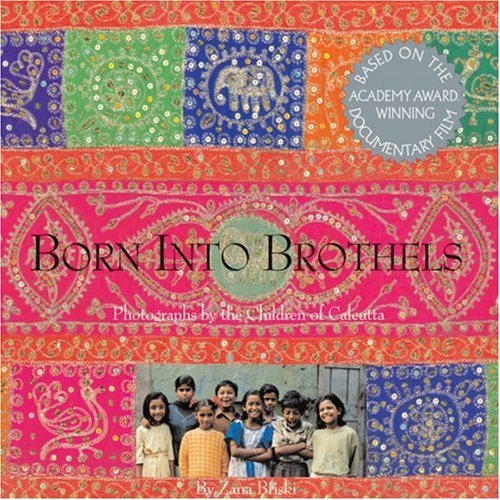
Born into Brothels; Photographs by the Children of Calcutta
Sprache: Englisch
Verlag: Umbrage Editions, New York, 2005
ISBN 10: 1884167454 ISBN 13: 9781884167454
Anbieter: Ground Zero Books, Ltd., Silver Spring, MD, USA
Verkäuferbewertung 4 von 5 Sternen
Erstausgabe Signiert
Hardcover. Zustand: Very good. Avijit (photograph at Table of Contents--one examp (illustrator). The format is approximately 9.25 inches by 9.25 inches. 102, [2] pages. Illustrations (some in color). Inscribed by the author on the title page. The inscription reads For Gabi, Thank you! Love Zana & the kids xxx. Decorative covers. Cover notation states "Based on the Academy Award Winning Documentary Film." No dust jacket present. Post card of Kids with Camera laid in. The children and their photographs are featured in the film. A powerful story that unfolds in the red-light district of Calcutta: a photographer that becomes a teacher and the extraordinary children she meets who learn to dream with cameras in their hands. The Table of Contents contains About the Film, Director's Statements, Kids the Cameras, The Kids [Avijit, Gour, Kochi, Manik, Puja, Shanti, Suchitra, Tapes], and Acknowledgments. Zana Briski (born 25 October 1966) is a British photographer and filmmaker, best known for Born into Brothels, the 2004 Oscar winner of the Academy Award for Best Documentary Feature, which she directed. She founded Kids with Cameras, a non-profit organization that teaches the art of photography to marginalized children in communities throughout the world. Her interest in photography began at age 10. After earning a master's degree at the University of Cambridge, she studied documentary photography at International Center of Photography in New York. In 1995, she made her first trip to India, producing a story on female infanticide. In 1997, Briski began her project on the prostitutes of Calcutta's red-light district, which led to her work with the children of prostitutes. Briski has won numerous awards and fellowships including the Open Society Institute Fellowship, the Alicia Patterson Journalism Fellowship in 2000 to research and photograph in the Brothels of India, a New York Foundation for the Arts Fellowship, the Howard Chapnick Grant and 1st Prize in 1999 in the World Press Photo foundation competition in the category "Daily Life stories". Briski and co-director Ross Kauffman were awarded grants from the Sundance Institute, the Jerome Foundation, and the New York State Council on the Arts for Born into Brothels. From a Publishers Weekly article: Eight children, all raised in brothels in Calcutta's red light district, display their work-colorful photographs of the family members and strangers who populate their lives and of the streets and homes which they inhabit-in this companion volume to the Academy Award nominated documentary Born into Brothels. While the poverty that these children experience is always present in the images, the photographs diverge from the expected sordid scenes; instead they capture a wide variety of moods and circumstances. The images-from a shot of a young girl apathetically stretched out on a car to a sweeping panorama of the rooftops of Calcutta to a close-up self-portrait of an exuberant girl yelling at the camera at dusk-appear impressively professional. The children capture the textures surrounding them beautifully, often with a seemingly intuitive sense of composition. The film the book accompanies follows the story of Briski's attempts to teach photography to these children, who, she says, have "little possibility of escaping their mother's fate or for creating another type of life," and this volume includes writing by both Briski and the film's co-director, as well as stills from the documentary. Demonstrating the way in which photography can be a means of hope and an "immensely liberating and empowering force," the book gives these children, the "most stigmatized people in Calcutta's red light district," a means to share their often ignored perspectives, while also allowing readers a glimpse into the emotional depths of their lives. Second Edition [stated]. Presumed first printing thus.

