

Gesamtpreis (1 Artikel Artikel):
Versandziel:

stephanie talbot (10 Ergebnisse)
Direkt zu den wichtigsten Suchergebnissen
Suchfilter
Produktart
- Alle Product Types
- Bücher (10)
- Magazine & Zeitschriften (Keine weiteren Ergebnisse entsprechen dieser Verfeinerung)
- Comics (Keine weiteren Ergebnisse entsprechen dieser Verfeinerung)
- Noten (Keine weiteren Ergebnisse entsprechen dieser Verfeinerung)
- Kunst, Grafik & Poster (Keine weiteren Ergebnisse entsprechen dieser Verfeinerung)
- Fotografien (Keine weiteren Ergebnisse entsprechen dieser Verfeinerung)
- Karten (Keine weiteren Ergebnisse entsprechen dieser Verfeinerung)
- Manuskripte & Papierantiquitäten (Keine weiteren Ergebnisse entsprechen dieser Verfeinerung)
Zustand Mehr dazu
- Neu (7)
- Wie Neu, Sehr Gut oder Gut Bis Sehr Gut (1)
- Gut oder Befriedigend (1)
- Ausreichend oder Schlecht (1)
- Wie beschrieben (Keine weiteren Ergebnisse entsprechen dieser Verfeinerung)
Einband
Weitere Eigenschaften
- Erstausgabe (1)
- Signiert (Keine weiteren Ergebnisse entsprechen dieser Verfeinerung)
- Schutzumschlag (1)
- Angebotsfoto (3)
Sprache (2)
Gratisversand
Land des Verkäufers
Verkäuferbewertung
-
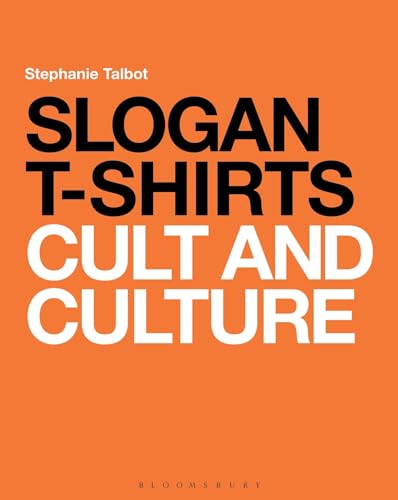
Slogan T-Shirts: Cult and Culture
Anbieter: Reuseabook, Gloucester, GLOS, Vereinigtes Königreich
Verkäuferbewertung 5 von 5 Sternen

EUR 8,43
EUR 6,34 Versand
Versand von Vereinigtes Königreich nach USAAnzahl: 1 verfügbar
In den Warenkorbpaperback. Zustand: Used; Good. Dispatched, from the UK, within 48 hours of ordering. This book is in good condition but will show signs of previous ownership. Please expect some creasing to the spine and/or minor damage to the cover.
-
Slogan T-Shirts: Cult and Culture
Anbieter: Sell Books, Elland, YORKS, Vereinigtes Königreich
Verkäuferbewertung 5 von 5 Sternen
EUR 5,66
EUR 14,00 Versand
Versand von Vereinigtes Königreich nach USAAnzahl: 1 verfügbar
In den Warenkorbpaperback. Zustand: Acceptable. Please see the condition note after this for details, if this is missing please consider Acceptable to mean poor quality that could include major staining, water damage, writing, missing dustjacket, etc etc. Our books are dispatched from a Yorkshire former cotton mill. We list via barcode/ISBN so please note that the images are stock images and may not be the exact copy you receive, furthermore the details about edition and year might not be accurate as many publishers reuse the same ISBN for multiple editions and as we simply scan a barcode or enter an ISBN we do not check the validity of the edition data when listing. If you're looking for an exact edition please don't order (at least not without checking with us first, although we don't always have time to check). We aim to dispatch prompty, the service used will depend on order value and book size. We can ship to most countries, see our shipping policies. Payment is via Abe only.
-
Slogan T-Shirts
Sprache: Englisch
Verlag: Bloomsbury Publishing PLC, 2013
ISBN 10: 1408157543 ISBN 13: 9781408157541
Anbieter: PBShop.store US, Wood Dale, IL, USA
Verkäuferbewertung 5 von 5 Sternen
PAP. Zustand: New. New Book. Shipped from UK. Established seller since 2000.
-
Slogan T-Shirts
Sprache: Englisch
Verlag: Bloomsbury Publishing PLC, 2013
ISBN 10: 1408157543 ISBN 13: 9781408157541
Anbieter: PBShop.store UK, Fairford, GLOS, Vereinigtes Königreich
Verkäuferbewertung 4 von 5 Sternen

EUR 38,05
EUR 6,76 Versand
Versand von Vereinigtes Königreich nach USAAnzahl: 1 verfügbar
In den WarenkorbPAP. Zustand: New. New Book. Shipped from UK. Established seller since 2000.
-
Slogan T-Shirts
Anbieter: Majestic Books, Hounslow, Vereinigtes Königreich
Verkäuferbewertung 4 von 5 Sternen
EUR 41,90
EUR 7,49 Versand
Versand von Vereinigtes Königreich nach USAAnzahl: 3 verfügbar
In den WarenkorbZustand: New. pp. 176.
-
Slogan T-Shirts: Cult and Culture
Sprache: Englisch
Verlag: Bloomsbury Publishing PLC, 2013
ISBN 10: 1408157543 ISBN 13: 9781408157541
Anbieter: Kennys Bookstore, Olney, MD, USA
Verkäuferbewertung 5 von 5 Sternen
Zustand: New. A fascinating compendium of commentaries on the slogan T-shirt as a sartorial item and a cultural artefact from fashion industry insiders and cultural taste-makers. Num Pages: 176 pages, 400+ colour illus. BIC Classification: AKT. Category: (G) General (US: Trade). Dimension: 276 x 222 x 13. Weight in Grams: 726. . 2013. 1st Edition. Paperback. . . . . Books ship from the US and Ireland.
-
Slogan T-Shirts: Cult and Culture
Anbieter: Revaluation Books, Exeter, Vereinigtes Königreich
Verkäuferbewertung 5 von 5 Sternen
EUR 47,56
EUR 14,40 Versand
Versand von Vereinigtes Königreich nach USAAnzahl: 1 verfügbar
In den WarenkorbPaperback. Zustand: Brand New. 1st edition. 176 pages. 10.75x8.50x0.50 inches. In Stock.
-

Zustand: New. A fascinating compendium of commentaries on the slogan T-shirt as a sartorial item and a cultural artefact from fashion industry insiders and cultural taste-makers.Über den AutorFreelance writer, stylist and creative consultant,.
-

Slogan T-Shirts
Sprache: Englisch
Verlag: Bloomsbury Academic Visual Art Jan 2013, 2013
ISBN 10: 1408157543 ISBN 13: 9781408157541
Anbieter: AHA-BUCH GmbH, Einbeck, Deutschland
Verkäuferbewertung 5 von 5 Sternen
Taschenbuch. Zustand: Neu. Neuware - Informative, illuminating, insightful and erudite, Slogan T-Shirts: Cult and Culture is completely unique. Featuring interviews with a wealth of credible fashion insiders, cultural commentators and creative luminaries, from Holly Johnson (of Frankie Goes to Hollywood) to Katharine Hamnett, it offers a multi-faceted approach to the question of what makes the slogan T-shirt so rich, layered and culturally relevant. because slogans are never simply just words; they are emotive and evocative, suggestive and provocative.Slogan T-Shirts: Cult and Culture explores the vast spectrum of slogan use on T-shirts; its function as a message delivery system; its expression as an artefact of language; and its role as an emblem of political, social, recreational and sartorial trends. The book unfurls as a cultural library of perspectives, nuanced positions and eclectic sources and each interview offers a cultural snapshot within the versatile framework of slogan T-shirt culture. The book also glances into the inner worlds, inside stories and mechanisms of those involved in fashion, design and the production of media.Beautifully designed, visually seductive and packed with influential innovators from the last three decades, every page of this book is a source of inspiration.
-
The Descent of Ishtar - 3 ANNOTATED TRANSLATIONS OF A NEO-ASSYRIAN TABLET?? WITH A FACSIMILE OF THE TABLET ITSELF
Verlag: No Reply Press, Portland, OR, 2025
Anbieter: Rare Books Honolulu, Honolulu, HI, USA
Verbandsmitglied: IOBA
Verkäuferbewertung 5 von 5 Sternen
Erstausgabe
Hardcover. Zustand: FINE. Ltd to 180 copies. No Reply is pleased to present The Descent of Ishtar, one of the essential works of Mesopotamian literature, in an edition that grapples with the monumental task of translation. -------------- --------------- No Reply Press, Portland, 2?0?2?5? Limited to 1?8?0 numbered copies, this is no. 149. 5" x 10", 4?4 pages. --- --- Printed letterpress on a hand-operated Vandercook Universal I proofing press. Hahnemühle Biblio text papers, dampened for printing. Typeset in 1?2?-?point Centaur. --- --- --- Including a facsimile of K.162, the seventh century BCE tablet through which The Descent of Ishtar comes to us. Hand?-?bound in a Bradel binding with paste paper wrappers painted at the press specially for the edition. --- --- --- The purpose of this edition is first and foremost to retell a forgotten tale by way of a marvelous little tablet, K. 162, tucked away in The British Museum, one of a thousand such modest objects of the ancient world which one walks past on the way to the Rosetta Stone or Parthenon Marbles. It was excavated from Ninevah (in the modern Iraqi city of Mosul) and dates to the seventh century BCE, a rough contemporary of the Odyssey and Iliad. A contemporary, moreover, of the Homeric Hymns, in which Persephone undertakes a similar descent into the underworld. This story, however, is much older. Ishtar is an Akkadian telling of a Sumerian tale, The Descent of Inanna, which likely goes back to the very late third millennium BCE. The tale would have been as ancient to Jesus as he is to us. The tablet was produced at almost exactly the halfway point between the start of recorded history (approximately 3,200 BCE) and today. The edition begins with a facsimile of the tablet, printed at its actual size just a bit larger than an iPhone. (Readers may be surprised to find that, like us, ancient peoples appreciated the "pocket sized".) What follows are three translations of the tablet very different cracks at the same code. --- --- --- H. F. Talbot represents the first generation of Assyriologists, the era of the gentleman-scholar. He was actually a pioneer of photography, a polymath, who, among many passions, dabbled seriously with cuneiform decipherment. When the library at Ninevah was unearthed, he was among the first to work on its contents. His translation is a bi- or tri-cultural text, the reading of an ancient tale through the thick sideways optics of his own time and other, better understood ancient cultures. This is apparent in the very first line, when he translates Kurnugi as "Hades." Stephanie Dalley is among the great contemporary Assyriologists, not a dabbler but a doctor in a well-formed academic discipline. Her translations are widely used in universities and considered among the "translations of record," not above future correction or debate, but certainly above reproach. The text is the text. The gaps, gaps. After reading Talbot's translation, readers will find Dalley's to be more confusing, less ironed out, less literary, but deeper a true glimpse into an alien culture. The third translation is my own. I return to an approach of translation-as-literary-project but, crucially, with the bene?t of a hundred and fifty years of Assyriological work (including Dalley's) to which Talbot was not privy. I have introduced an easy rhyme and meter, simply to approximate a sense of loveliness which the original certainly possesses. The differences, especially between the first and second translations, are vast, and represents a century of work. How interesting it is that we must build our understanding of these literatures and cultures through whatever happens to have survived in the sediment. The more detritus we unearth, the better our understanding. Still, imagine the vastness of what is lost, with only the foundations of temples, sherds, and fragments of tablet writing to go on. The task of translation is daunting, but cuneiform is not as alien as it initially appears readers of this edition will be challenged to compare the translations to the tablet facsimile and, in all likelihood, will learn a little Akkadian. The book is printed letterpress on dampened Hahnemühle Biblio using a manually-operated Vandercook Universal proofing press. Multi-color printing appears on nearly every page. The binding is done entirely by hand, using papers painted specially for the edition. (No Reply Press).


