

Gesamtpreis (1 Artikel Artikel):
Versandziel:

stephanie barron editor (13 Ergebnisse)
Direkt zu den wichtigsten Suchergebnissen
Suchfilter
Produktart
- Alle Product Types
- Bücher (13)
- Magazine & Zeitschriften (Keine weiteren Ergebnisse entsprechen dieser Verfeinerung)
- Comics (Keine weiteren Ergebnisse entsprechen dieser Verfeinerung)
- Noten (Keine weiteren Ergebnisse entsprechen dieser Verfeinerung)
- Kunst, Grafik & Poster (Keine weiteren Ergebnisse entsprechen dieser Verfeinerung)
- Fotografien (Keine weiteren Ergebnisse entsprechen dieser Verfeinerung)
- Karten (Keine weiteren Ergebnisse entsprechen dieser Verfeinerung)
- Manuskripte & Papierantiquitäten (Keine weiteren Ergebnisse entsprechen dieser Verfeinerung)
Zustand Mehr dazu
- Neu (5)
- Wie Neu, Sehr Gut oder Gut Bis Sehr Gut (Keine weiteren Ergebnisse entsprechen dieser Verfeinerung)
- Gut oder Befriedigend (7)
- Ausreichend oder Schlecht (Keine weiteren Ergebnisse entsprechen dieser Verfeinerung)
- Wie beschrieben (1)
Einband
Weitere Eigenschaften
- Erstausgabe (3)
- Signiert (Keine weiteren Ergebnisse entsprechen dieser Verfeinerung)
- Schutzumschlag (1)
- Angebotsfoto (1)
Sprache (2)
Gratisversand
Land des Verkäufers
Verkäuferbewertung
-
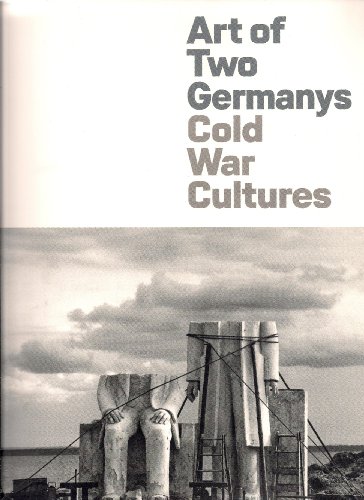
Art of Two Germanys - Cold War Cultures
Sprache: Englisch
Verlag: Los Angeles County Museum of Art, 2009
ISBN 10: 0810976471 ISBN 13: 9780810976474
Anbieter: Books From California, Simi Valley, CA, USA
Verkäuferbewertung 4 von 5 Sternen

Paperback. Zustand: Good. vminor wear and creasing.
-
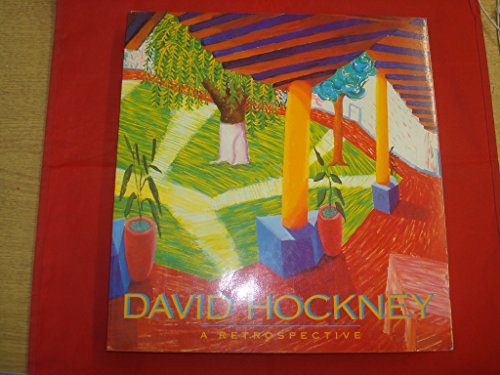
David Hockney: A Retrospective
Sprache: Englisch
Verlag: Los Angeles County Museum, 1988
ISBN 10: 0875871437 ISBN 13: 9780875871431
paperback. Zustand: New. In shrink wrap.
-

The Avant Garde in Russia 1910-1930
Verlag: MIT Press, NY, 1991
Anbieter: Schoen Books, South Deerfield, MA, USA
Verbandsmitglied: SNEAB
Verkäuferbewertung 2 von 5 Sternen

Hardcover & Dust Jacket. Zustand: Good +.
-
exiles and emigres: The Flight of European Artists from Hitler
Verlag: Abrams/LA County Museum, Los Angeles, 1997
Anbieter: Schoen Books, South Deerfield, MA, USA
Verbandsmitglied: SNEAB
Verkäuferbewertung 2 von 5 Sternen
Hardcover & Dust Jacket. Zustand: Very Good. 430 pp. Exhibition catalog and collection of articles concerning exile artists in America. Meaning and consequence of the displacement.
-

Degenerate Art: The Fate of the Avant-Garde in Nazi Germany
Anbieter: Redux Books, Grand Rapids, MI, USA
Verkäuferbewertung 5 von 5 Sternen

Paperback. Zustand: Good. Paperback. Pages are clean and unmarked. Covers show light edge wear.; 100% Satisfaction Guaranteed! Ships same or next business day!
-
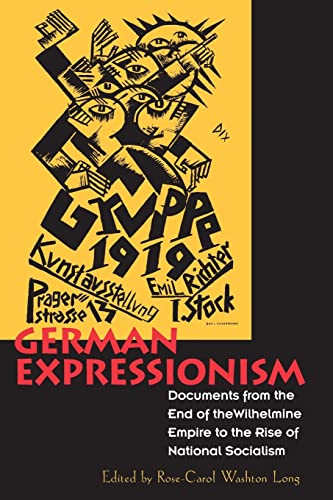
German Expressionism: Documents from the End of the Wilhelmine Empire to the Rise of National Socialism
Buch 4 von 17: Documents of Twentieth-Century ArtAnbieter: Revaluation Books, Exeter, Vereinigtes Königreich
Verkäuferbewertung 5 von 5 Sternen
EUR 60,00
EUR 14,48 Versand
Versand von Vereinigtes Königreich nach USAAnzahl: 2 verfügbar
In den WarenkorbPaperback. Zustand: Brand New. reprint edition. 370 pages. 9.50x6.25x1.00 inches. In Stock.
-

John McLaughlin Paintings: Total Abstraction Nov. 13, 2016 - Apr. 16, 2017
Sprache: Englisch
Verlag: Los Angeles: Los Angeles County museum., 2016
ISBN 10: 3791355600 ISBN 13: 9783791355603
Anbieter: Wittenborn Art Books, San Francisco, CA, USA
Verkäuferbewertung 5 von 5 Sternen
Erstausgabe
Zustand: Good. 4to. Hard Cover [ca. 150 pp.], First edition, B&W and Color Plates. Very Good, Provenance: Gagosian Gallery.
-

John McLaughlin Paintings Total Abstraction
Anbieter: Revaluation Books, Exeter, Vereinigtes Königreich
Verkäuferbewertung 5 von 5 Sternen
EUR 77,83
EUR 14,48 Versand
Versand von Vereinigtes Königreich nach USAAnzahl: 1 verfügbar
In den WarenkorbHardcover. Zustand: Brand New. 01 edition. 144 pages. 11.00x9.00x1.00 inches. In Stock.
-

"Degenerate Art"; The Fate of the Avant-Garde in Nazi Germany
Sprache: Englisch
Verlag: Harry N. Abrams, Inc, New York, N.Y., 1991
ISBN 10: 0810936534 ISBN 13: 9780810936539
Anbieter: Ground Zero Books, Ltd., Silver Spring, MD, USA
Verkäuferbewertung 5 von 5 Sternen
Erstausgabe
Hardcover. Zustand: Good. Presumed First Edition, First printing. 423, [1] pages. Oversized book, measuring 12 inches by 9-1/2 inches. Small dings/damage at bottom edge of front cover and spine. Contributors to this book include Peter Guenther, Andreas Huneke, Annegret Janda, Mario-Andreas von Luttichau, Michael Meyer, William Moritz, George L. Mosse, and Chrisoph Zuschlag. Includes Foreword, Chronology, Register of Frequently Cited Names and Organizations, Exhibition Ephemera, Entartete Kunst: The Literature, Selected Bibliography, Acknowledgments, List of Lenders, and Index. This book was published in conjunction with the exhibition "Degenerative Art": The Fate of the Avant-Garde in Nazi Germany, which was organized by the Los Angels County Museum of Art. This is a key work in the field of what was termed 'Degenerate Art' ('Entartete Kunst') by the Nazis. Particularly valuable for its reconstruction of the 'Entartete Kunst' Exhibition held in Munich in 1937 on the basis of existing photographs and documentation, and the touring of versions to other major cities. This book examines the events surrounding the condemnation of modern art by the National Socialists. This book documents one of the most appalling moments in our century's cultural history, but it also reminders us that art and creativity will survive censorship and oppression. Degenerate Art also was the title of an exhibition, held by the Nazis in Munich in 1937, consisting of 650 modernist artworks chaotically hung and accompanied by text labels deriding the art. The National Socialists rejected and censured virtually everything that had existed on the German modern art scene. The book also includes a detailed description of the exhibit, explanations of how the exhibit design influenced the viewers, and short biographies of every artist included, as well as examples of their work, many of which were destroyed. Degenerate art was a term adopted in the 1920s by the Nazi Party in Germany to describe modern art. During the dictatorship of Adolf Hitler, German modernist art, including many works of internationally renowned artists, was removed from state-owned museums and banned in Nazi Germany on the grounds that such art was an "insult to German feeling", un-German, Jewish, or Communist in nature. Those identified as degenerate artists were subjected to sanctions that included being dismissed from teaching positions, being forbidden to exhibit or to sell their art, and in some cases being forbidden to produce art. The Nazis promoted paintings and sculptures that were traditional in manner and that exalted the "blood and soil" values of racial purity, militarism, and obedience. In 1937 the National Socialists staged the most virulent attack ever mounted against modern art with the opening on July 19 in Munich of the Entartete Kunst (Degenerate art) exhibition, in which were brought together more than 650 important paintings, sculptures, prints, and books that had until a few weeks earlier been in the possession of thirty-two German public museum collections. The works were assembled for the purpose of clarifying for the German public by defamation and derision exactly what type of modern art was unacceptable to the Reich, and thus "un-German." During the four months Entartete Kunst was on view in Munich it attracted more than two million visitors, over the next three years it traveled throughout Germany and Austria and was seen by nearly one million more. On most days twenty thousand visitors passed through the exhibition, which was free of charge; records state that on one Sunday August 2, 1937-thirty six thousand people saw it. The popularity of Entartete Kunst has never been matched by any other exhibition of modern art. According to newspaper accounts, five times as many people visited Entartete Kunst as saw the Grosse Deutsche Kunstaussiellung (Great German art exhibition), an equally large presentation of Nazi-approved art that had opened on the preceding day to inaugurate Munich's Haus der Deutschen Kunst (House of German art.
-
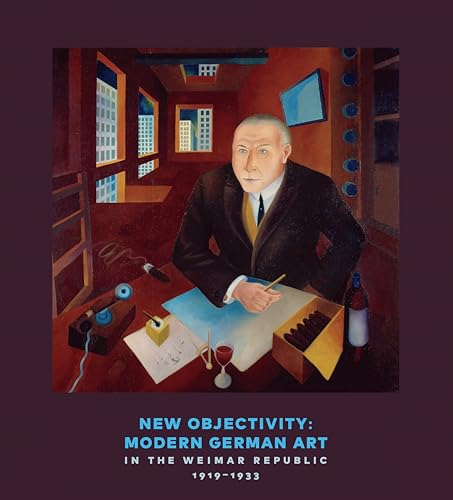
New Objectivity: Modern German Art in the Weimar Republic 1919-1933
Anbieter: Revaluation Books, Exeter, Vereinigtes Königreich
Verkäuferbewertung 5 von 5 Sternen
EUR 283,24
EUR 23,17 Versand
Versand von Vereinigtes Königreich nach USAAnzahl: 1 verfügbar
In den WarenkorbHardcover. Zustand: Brand New. 360 pages. 11.75x10.25x1.50 inches. In Stock.
-
German Expressionism, 1915-1925 the Second Generation
Verlag: Los Angeles County Museum of Art / Prestel
Paperback. Zustand: New. In shrink wrap.
-
The Avant Garde in Russia, 1910-1930; New Perspectives
Verlag: Los Angeles County Museum of Art and MIT {Distributor], Los Angeles /Cambridge, MA, 1980
Anbieter: Ground Zero Books, Ltd., Silver Spring, MD, USA
Verkäuferbewertung 5 von 5 Sternen
Erstausgabe
Wraps. Zustand: Very good. Presumed First Edition, First printing. The format is approximately 8.5 inches by 11 inches. 288 pages. Illustrations. Illustrated front cover. The cover has slight wear and soiling. This is an exhibition catalogue. This exhibition is funded in part by a grant from the National Endowment for the Humanities, by an indemnity from the Federal Council on the Arts and Humanities, and by an grant from the Shubert Foundation. Los Angeles County Museum of Art and Hershhorn Museum and Sculpture Garden Smithsonian Institution Washington D.C. The contents include a Foreword, Lenders, Contributors, Essays, Notes to the Reader, Catalogue, Supplemental Checklist, Chronologies, and Selected Bibliography. This catalogue includes a suite of insightful essays. This exhibition included information on Avant-Garde architectural influences. The Russian avant-garde was a large, influential wave of avant-garde modern art that flourished in the Russian Empire and the Soviet Union, approximately from 1890 to 1930although some have placed its beginning as early as 1850 and its end as late as 1960. The term covers many separate, but inextricably related, art movements that flourished at the time; including Suprematism, Constructivism, Russian Futurism, Cubo-Futurism, Zaum, Imaginism, and Neo-primitivism. In Ukraine, many of the artists who were born, grew up or were active in what is now Belarus and Ukraine (including Kazimir Malevich, Aleksandra Ekster, Vladimir Tatlin, David Burliuk, Alexander Archipenko), are also classified in the Ukrainian avant-garde. The Russian avant-garde reached its creative and popular height in the period between the Russian Revolution of 1917 and 1932, at which point the ideas of the avant-garde clashed with the newly emerged state-sponsored direction of Socialist Realism. The influence of the Russian avant-garde on recent developments in Western art is now undisputed. Without Kazimir Malevich's Black Square on White Background (1915), his later Suprematist composition White on White, Rodchenko's series of Black Pictures (1917/18), and his primary-colored triptych (1921), the evolution of non-representational art by artists such as Yves Klein, Barnett Newman, and Ad Reinhardt would be inconceivable. the same applies, for example, to works of American minimal art by Donald Judd and Carl Andre, which can be traced back to the materiality and functionality of early sculptures by Tatlin and Rodchenko. The founding of the National Academy of Arts in 1923, promoted by Lunacharsky, and the associated journals were primarily intended to promote exchange with Western countries. This was reflected above all in the establishment of the Soviet pavilion at the Paris Exhibition of Applied Arts in 1925 and in a major exhibition of contemporary French art in Moscow in 1928. The politicized Western art influenced by the Russian avant-garde also had an impact on Russia, as demonstrated by the exhibition of revolutionary art from the West in Moscow in 1926.
-
Degenerate Art. The fate of the Avant-Garde in Nazi Germany.
Anbieter: Antiquariaat Wim de Goeij, Kalmthout, ANTW, Belgien
Verbandsmitglied: ILAB
Verkäuferbewertung 5 von 5 Sternen
New York, Harry Abramsn Los Angeles County Museum of Art, 1991, in-4°, 423 pp , index, ills. publisher's cloth with printed dust wrapper. Fine copy. Published in conjunction with an exhibition with the same name.


