

Gesamtpreis (1 Artikel Artikel):
Versandziel:

stem jonathan (1 Ergebnisse)
Meinten Sie:
stea jonathan
Direkt zu den wichtigsten Suchergebnissen
Suchfilter
Produktart
- Alle Product Types
- Bücher (1)
- Magazine & Zeitschriften (Keine weiteren Ergebnisse entsprechen dieser Verfeinerung)
- Comics (Keine weiteren Ergebnisse entsprechen dieser Verfeinerung)
- Noten (Keine weiteren Ergebnisse entsprechen dieser Verfeinerung)
- Kunst, Grafik & Poster (Keine weiteren Ergebnisse entsprechen dieser Verfeinerung)
- Fotografien (Keine weiteren Ergebnisse entsprechen dieser Verfeinerung)
- Karten (Keine weiteren Ergebnisse entsprechen dieser Verfeinerung)
- Manuskripte & Papierantiquitäten (Keine weiteren Ergebnisse entsprechen dieser Verfeinerung)
Zustand Mehr dazu
- Neu (Keine weiteren Ergebnisse entsprechen dieser Verfeinerung)
- Wie Neu, Sehr Gut oder Gut Bis Sehr Gut (Keine weiteren Ergebnisse entsprechen dieser Verfeinerung)
- Gut oder Befriedigend (1)
- Ausreichend oder Schlecht (Keine weiteren Ergebnisse entsprechen dieser Verfeinerung)
- Wie beschrieben (Keine weiteren Ergebnisse entsprechen dieser Verfeinerung)
Einband
- alle Einbände
- Hardcover (Keine weiteren Ergebnisse entsprechen dieser Verfeinerung)
- Softcover (1)
Weitere Eigenschaften
- Erstausgabe (Keine weiteren Ergebnisse entsprechen dieser Verfeinerung)
- Signiert (Keine weiteren Ergebnisse entsprechen dieser Verfeinerung)
- Schutzumschlag (Keine weiteren Ergebnisse entsprechen dieser Verfeinerung)
- Angebotsfoto (Keine weiteren Ergebnisse entsprechen dieser Verfeinerung)
Sprache (1)
Preis
- Beliebiger Preis
- Weniger als EUR 20
- EUR 20 bis EUR 45 (Keine weiteren Ergebnisse entsprechen dieser Verfeinerung)
- Mehr als EUR 45 (Keine weiteren Ergebnisse entsprechen dieser Verfeinerung)
Gratisversand
- Kostenloser Versand nach USA (Keine weiteren Ergebnisse entsprechen dieser Verfeinerung)
Land des Verkäufers
Verkäuferbewertung
-
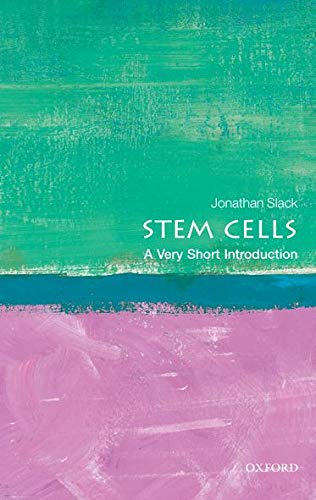
Stem Cells: A Very Short Introduction
Sprache: Englisch
Verlag: Oxford University Press, United Kingdom, Oxford, 2012
ISBN 10: 0199603383 ISBN 13: 9780199603381
Anbieter: WorldofBooks, Goring-By-Sea, WS, Vereinigtes Königreich
Verkäuferbewertung 5 von 5 Sternen

EUR 4,43
EUR 6,48 Versand
Versand von Vereinigtes Königreich nach USAAnzahl: 6 verfügbar
In den WarenkorbPaperback. Zustand: Very Good. The topic of stem cells has been very high profile in the media in recent years. There is much public interest in stem cells but also much confusion and misinformation, with some companies already offering 'stem cell products' and bogus 'stem cell therapies'. In this Very Short Introduction, Jonathan Slack introduces stem cells; what they are, what scientists do with them, what stem cell therapies are available today, and how they might be used in future. Despite important advances, clinical applications of stem cells are still in their infancy. Most real stem cell therapy today is some form of bone marrow transplantation. Slack introduces stem cells by explaining the difference between embryonic stem cells, which exist only in laboratory cultures, and tissue-specific stem cells, which exist in our bodies. Embryonic stem cells can become any cell type in the body, so diseases that may in future be treated by functional cells derived from these sorts of stem cell include diabetes, Parkinson's disease, heart disease, and spinal trauma. He then goes on to discuss the properties of tissue-specific stem cells and the important technique of bone marrow transplantation. Slack concludes by analysing how medical innovation has occurred in this area in the past, and draws out some of the lessons for the development of new therapies in the future. ABOUT THE SERIES: The Very Short Introductions series from Oxford University Press contains hundreds of titles in almost every subject area. These pocket-sized books are the perfect way to get ahead in a new subject quickly. Our expert authors combine facts, analysis, perspective, new ideas, and enthusiasm to make interesting and challenging topics highly readable. The book has been read, but is in excellent condition. Pages are intact and not marred by notes or highlighting. The spine remains undamaged.
