

Gesamtpreis (1 Artikel Artikel):
Versandziel:

spencer yan (4 Ergebnisse)
Direkt zu den wichtigsten Suchergebnissen
Suchfilter
Produktart
- Alle Product Types
- Bücher (4)
- Magazine & Zeitschriften (Keine weiteren Ergebnisse entsprechen dieser Verfeinerung)
- Comics (Keine weiteren Ergebnisse entsprechen dieser Verfeinerung)
- Noten (Keine weiteren Ergebnisse entsprechen dieser Verfeinerung)
- Kunst, Grafik & Poster (Keine weiteren Ergebnisse entsprechen dieser Verfeinerung)
- Fotografien (Keine weiteren Ergebnisse entsprechen dieser Verfeinerung)
- Karten (Keine weiteren Ergebnisse entsprechen dieser Verfeinerung)
- Manuskripte & Papierantiquitäten (Keine weiteren Ergebnisse entsprechen dieser Verfeinerung)
Zustand Mehr dazu
- Neu (2)
- Wie Neu, Sehr Gut oder Gut Bis Sehr Gut (Keine weiteren Ergebnisse entsprechen dieser Verfeinerung)
- Gut oder Befriedigend (2)
- Ausreichend oder Schlecht (Keine weiteren Ergebnisse entsprechen dieser Verfeinerung)
- Wie beschrieben (Keine weiteren Ergebnisse entsprechen dieser Verfeinerung)
Einband
- alle Einbände
- Hardcover (Keine weiteren Ergebnisse entsprechen dieser Verfeinerung)
- Softcover (3)
Weitere Eigenschaften
- Erstausgabe (1)
- Signiert (1)
- Schutzumschlag (Keine weiteren Ergebnisse entsprechen dieser Verfeinerung)
- Angebotsfoto (1)
Sprache (2)
Preis
- Beliebiger Preis
- Weniger als EUR 20 (Keine weiteren Ergebnisse entsprechen dieser Verfeinerung)
- EUR 20 bis EUR 45
- Mehr als EUR 45
Gratisversand
- Kostenloser Versand nach USA (Keine weiteren Ergebnisse entsprechen dieser Verfeinerung)
Land des Verkäufers
Verkäuferbewertung
-

The Road To Roo Inn (Adventures of Aberrant)
Buch 2 von 2: The Adventures Of AberrantAnbieter: Ria Christie Collections, Uxbridge, Vereinigtes Königreich
Verkäuferbewertung 5 von 5 Sternen

EUR 22,90
EUR 13,86 Versand
Versand von Vereinigtes Königreich nach USAAnzahl: Mehr als 20 verfügbar
In den WarenkorbZustand: New. Spencer, Yan (illustrator). In.
-

EUR 28,10
EUR 48,99 Versand
Versand von Deutschland nach USAAnzahl: Mehr als 20 verfügbar
In den WarenkorbKartoniert / Broschiert. Zustand: New. Spencer, Yan (illustrator).
-
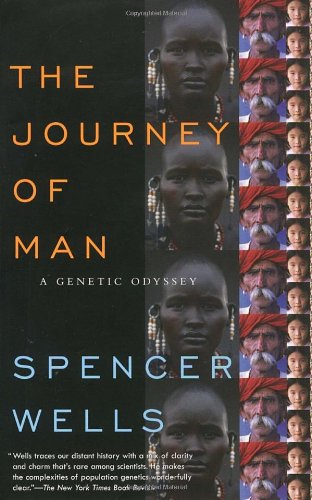
The Journey of Man; A Genetic Odyssey
Anbieter: Ground Zero Books, Ltd., Silver Spring, MD, USA
Verkäuferbewertung 5 von 5 Sternen
Erstausgabe Signiert
Trade paperback. Zustand: Good. John Sann and Wei Yan and Karen Moskowitz (cover p (illustrator). The format is approximately 5.125 inches by 8 inches. 218 pages. Figures. Illustration. Maps. Further Reading. Index. Inscribed by the author on the title page. The inscription reads To Sally --Spencer Wells. The cover has some wear and soiling. Spencer Wells (born April 6, 1969) is an American geneticist, anthropologist, author and entrepreneur. He co-hosts The Insight podcast with Razib Khan. Wells led The Genographic Project from 2005 to 2015, as an Explorer-in-Residence at the National Geographic Society, and is the founder and executive director of personal genomics nonprofit The Insitome Institute. He wrote the book The Journey of Man: A Genetic Odyssey, which explains how genetic data has been used to trace human migrations over the past 50,000 years, when modern humans first migrated outside of Africa. According to Wells, one group took a southern route and populated southern India and southeast Asia, then Australia. The other group, accounting for 90% of the world's non-African population (some 5.4 billion people as of 2014), took a northern route, eventually peopling most of Eurasia (largely displacing the aboriginals in southern India, Sri Lanka and Southeast Asia in the process), North Africa and the Americas. Wells also wrote and presented the 2003 PBS/National Geographic documentary of the same name. From 2005-2015, Wells led the Genographic Project, undertaken by the National Geographic Society, IBM, and the Waitt Foundation, which aimed to create a picture of how our ancestors populated the planet by analyzing DNA samples from around the world. Around 60,000 years ago, a man, genetically identical to us, lived in Africa. Every person alive today is descended from him. How did this real-life Adam wind up as the father of us all? What happened to the descendants of other men who lived at the same time? And why, if modern humans share a single prehistoric ancestor, do we come in so many sizes, shapes, and races? Examining the hidden secrets of human evolution in our genetic code, Spencer Wells reveals how developments in the revolutionary science of population genetics have made it possible to create a family tree for the whole of humanity. The Journey of Man is an enthralling, epic tour through the history and development of early humankind. The Journey of Man: A Genetic Odyssey uses techniques and theories of genetics and evolutionary biology to trace the geographical dispersal of early human migrations out of Africa. According to the recent single-origin hypothesis, human ancestors originated in Africa, and eventually made their way out to the rest of the world. Analysis of the Y chromosome is one of the methods used in tracing the history of early humans. Thirteen genetic markers on the Y-chromosome differentiate populations of human beings. It is believed, on the basis of genetic evidence, that all human beings in existence now descend from one single man who lived in Africa about 60,000 years ago. The earliest groups of humans are believed to find their present-day descendants among the San people, a group that is now found in western southern Africa. The San are smaller than the Bantu. They have lighter skins, more tightly curled hair, and they share the epicanthal fold with the people of Central and South East Asia. Southern and eastern Africa are believed to originally have been populated by people akin to the San. Since that early time much of their range has been taken over by the Bantu. Skeletal remains of these ancestral people are found in Paleolithic sites in Somalia and Ethiopia. There are also peoples in east Africa today who speak substantially different languages that nevertheless share the archaic characteristics of the San language, with its distinctive repertoire of click and pop sounds. These are the only languages in the entire world that use these sounds in speech. As humans migrated out of Africa, they all carried a genetic marker on the Y chromosome known as M168 (Haplogroup CT (Y-DNA)).
-

Qun Xue Si Yan ???? [The Study of Sociology] 1903. 4 volumes. The landmark in introducing sociology to China
Verlag: Shanghai, 1903
Anbieter: Senkei Co., Ltd., Odawara Shi, KANAG, Japan
Verkäuferbewertung 4 von 5 Sternen

Zustand: Very Good. 25.5x15cm. Qun Xue Yi Yan (????), the Chinese translation of Herbert Spencer's The Study of Sociology, was produced by Yan Fu (1854-1921), the leading late Qing enlightenment thinker and a pioneering figure in the introduction of Western social thought to China. First published in 1903, it represents the earliest Chinese rendering of Spencer's sociological work and constitutes the landmark in the introduction of sociology to China. In translating Spencer, Yan Fu adopted and systematized the term qunxue (??, "the study of groups/society"), a neologism he had earlier coined while translating Thomas Huxley. The concept deliberately fused classical Chinese philosophical vocabulary?particularly ideas of social order and collective life drawn from the Xunzi?with Western sociological theory. Through Qun Xue Yi Yan, Yan explicitly equated qunxue with the Western discipline of sociology, thereby establishing the first sustained conceptual bridge between traditional Chinese social philosophy and modern social science. Although the Japanese-derived term shehuixue (???) later became the standard Chinese translation of "sociology," Yan Fu's formulation of qunxue marked the initial stage of disciplinary translation and intellectual adaptation. The publication of Qun Xue Yi Yan is therefore widely regarded as a foundational event in the formation of modern Chinese sociology and the broader reception of Western social theory in late imperial China.


