
Gesamtpreis (1 Artikel Artikel):
Versandziel:

sims jeff (5 Ergebnisse)
Direkt zu den wichtigsten Suchergebnissen
Suchfilter
Produktart
- Alle Product Types
- Bücher (5)
- Magazine & Zeitschriften (Keine weiteren Ergebnisse entsprechen dieser Verfeinerung)
- Comics (Keine weiteren Ergebnisse entsprechen dieser Verfeinerung)
- Noten (Keine weiteren Ergebnisse entsprechen dieser Verfeinerung)
- Kunst, Grafik & Poster (Keine weiteren Ergebnisse entsprechen dieser Verfeinerung)
- Fotografien (Keine weiteren Ergebnisse entsprechen dieser Verfeinerung)
- Karten (Keine weiteren Ergebnisse entsprechen dieser Verfeinerung)
- Manuskripte & Papierantiquitäten (Keine weiteren Ergebnisse entsprechen dieser Verfeinerung)
Zustand Mehr dazu
- Neu (3)
- Wie Neu, Sehr Gut oder Gut Bis Sehr Gut (Keine weiteren Ergebnisse entsprechen dieser Verfeinerung)
- Gut oder Befriedigend (2)
- Ausreichend oder Schlecht (Keine weiteren Ergebnisse entsprechen dieser Verfeinerung)
- Wie beschrieben (Keine weiteren Ergebnisse entsprechen dieser Verfeinerung)
Einband
Weitere Eigenschaften
- Erstausgabe (Keine weiteren Ergebnisse entsprechen dieser Verfeinerung)
- Signiert (Keine weiteren Ergebnisse entsprechen dieser Verfeinerung)
- Schutzumschlag (Keine weiteren Ergebnisse entsprechen dieser Verfeinerung)
- Angebotsfoto (1)
Sprache (1)
Gratisversand
Land des Verkäufers
Verkäuferbewertung
-

Hey, Why Not: One Man's Unusual Quest for True Love
Sprache: Englisch
Verlag: Createspace Independent Publishing Platform, 2017
ISBN 10: 1547011106 ISBN 13: 9781547011100
Anbieter: ThriftBooks-Atlanta, AUSTELL, GA, USA
Verkäuferbewertung 5 von 5 Sternen

Paperback. Zustand: Good. No Jacket. Pages can have notes/highlighting. Spine may show signs of wear. ~ ThriftBooks: Read More, Spend Less.
-
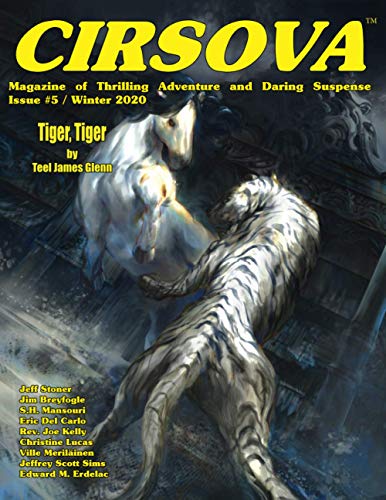
Cirsova Magazine of Thrilling Adventure and Daring Suspense: Issue #5 / Winter 2020
Buch 5 von 25: Cirsova Magazine of Thrilling Adventure and Daring SuspenseAnbieter: HALCYON BOOKS, LONDON, Vereinigtes Königreich
Verkäuferbewertung 5 von 5 Sternen
EUR 6,18
EUR 20,75 Versand
Versand von Vereinigtes Königreich nach USAAnzahl: 1 verfügbar
In den WarenkorbPaperback. Zustand: Very Good. ALL ITEMS ARE DISPATCHED FROM THE UK WITHIN 48 HOURS ( BOOKS ORDERED OVER THE WEEKEND DISPATCHED ON MONDAY) ALL OVERSEAS ORDERS SENT BY TRACKABLE AIR MAIL. IF YOU ARE LOCATED OUTSIDE THE UK PLEASE ASK US FOR A POSTAGE QUOTE FOR MULTI VOLUME SETS BEFORE ORDERING.
-

The Conron Compromise: Book 6 of The Alliance Conflict
Buch 6 von 6: The Alliance ConflictAnbieter: Revaluation Books, Exeter, Vereinigtes Königreich
Verkäuferbewertung 5 von 5 Sternen
EUR 23,36
EUR 14,41 Versand
Versand von Vereinigtes Königreich nach USAAnzahl: 1 verfügbar
In den WarenkorbPaperback. Zustand: Brand New. 346 pages. 9.00x6.00x0.78 inches. In Stock.
-

Discovering the Allagash: A Canoeing Guide to the Allagash Wilderness Waterway, North Maine Woods
Anbieter: Majestic Books, Hounslow, Vereinigtes Königreich
Verkäuferbewertung 4 von 5 Sternen

EUR 47,62
EUR 7,49 Versand
Versand von Vereinigtes Königreich nach USAAnzahl: 1 verfügbar
In den WarenkorbZustand: New. pp. 190.
-

Morphological Diversity and Linguistic Cognition
Sprache: Englisch
Verlag: Cambridge University Press, 2022
ISBN 10: 1108479898 ISBN 13: 9781108479899
Anbieter: AHA-BUCH GmbH, Einbeck, Deutschland
Verkäuferbewertung 5 von 5 Sternen
Buch. Zustand: Neu. Druck auf Anfrage Neuware - Printed after ordering - Morphological structures interact dynamically with lexical processing and storage, with the parameters of morphological typology being partly dependent on cognitive pathways for processing, storage and generalization of word structure, and vice versa. Bringing together a team of well-known scholars, this book examines the relationship between linguistic cognition and the morphological diversity found in the world's languages. It includes research from across linguistic and cognitive science sub-disciplines that looks at the nature of typological diversity and its relationship to cognition, touching on concepts such as complexity, interconnectedness within systems, and emergent organization. Chapters employ experimental, computational, corpus-based and theoretical methods to examine specific morphological phenomena, and an overview chapter provides a synthesis of major research trends, contextualizing work from different methodological and philosophical perspectives. Offering a novel perspective on how cognition contributes to our understanding of word structure, it is essential reading for psycholinguists, theoreticians, typologists, computational modelers and cognitive scientists.

