

Gesamtpreis (1 Artikel Artikel):
Versandziel:

schepers bert (15 Ergebnisse)
Direkt zu den wichtigsten Suchergebnissen
Suchfilter
Produktart
- Alle Product Types
- Bücher (15)
- Magazine & Zeitschriften (Keine weiteren Ergebnisse entsprechen dieser Verfeinerung)
- Comics (Keine weiteren Ergebnisse entsprechen dieser Verfeinerung)
- Noten (Keine weiteren Ergebnisse entsprechen dieser Verfeinerung)
- Kunst, Grafik & Poster (Keine weiteren Ergebnisse entsprechen dieser Verfeinerung)
- Fotografien (Keine weiteren Ergebnisse entsprechen dieser Verfeinerung)
- Karten (Keine weiteren Ergebnisse entsprechen dieser Verfeinerung)
- Manuskripte & Papierantiquitäten (Keine weiteren Ergebnisse entsprechen dieser Verfeinerung)
Zustand Mehr dazu
- Neu (11)
- Wie Neu, Sehr Gut oder Gut Bis Sehr Gut (Keine weiteren Ergebnisse entsprechen dieser Verfeinerung)
- Gut oder Befriedigend (Keine weiteren Ergebnisse entsprechen dieser Verfeinerung)
- Ausreichend oder Schlecht (Keine weiteren Ergebnisse entsprechen dieser Verfeinerung)
- Wie beschrieben (4)
Einband
- alle Einbände
- Hardcover (14)
- Softcover (Keine weiteren Ergebnisse entsprechen dieser Verfeinerung)
Weitere Eigenschaften
- Erstausgabe (Keine weiteren Ergebnisse entsprechen dieser Verfeinerung)
- Signiert (Keine weiteren Ergebnisse entsprechen dieser Verfeinerung)
- Schutzumschlag (Keine weiteren Ergebnisse entsprechen dieser Verfeinerung)
- Angebotsfoto (4)
Sprache (2)
Preis
- Beliebiger Preis
- Weniger als EUR 20 (Keine weiteren Ergebnisse entsprechen dieser Verfeinerung)
- EUR 20 bis EUR 40
- Mehr als EUR 40
Gratisversand
Land des Verkäufers
Verkäuferbewertung
-

hardcover. Zustand: New.
-
Campaspe Talks Back
Anbieter: PBShop.store US, Wood Dale, IL, USA
Verkäuferbewertung 5 von 5 Sternen

HRD. Zustand: New. New Book. Shipped from UK. Established seller since 2000.
-
Campaspe Talks Back: Women Who Made a Difference in Early Modern Art
Anbieter: Revaluation Books, Exeter, Vereinigtes Königreich
Verkäuferbewertung 5 von 5 Sternen
EUR 143,98
EUR 22,86 Versand
Versand von Vereinigtes Königreich nach USAAnzahl: 2 verfügbar
In den WarenkorbHardcover. Zustand: Brand New. 436 pages. 10.98x9.02x9.00 inches. In Stock.
-
Campaspe Talks Back
Anbieter: PBShop.store UK, Fairford, GLOS, Vereinigtes Königreich
Verkäuferbewertung 4 von 5 Sternen

EUR 160,66
EUR 16,64 Versand
Versand von Vereinigtes Königreich nach USAAnzahl: 8 verfügbar
In den WarenkorbHRD. Zustand: New. New Book. Shipped from UK. Established seller since 2000.
-
Campaspe Talks Back: Women Who Made a Difference in Early Modern Art
Anbieter: Kennys Bookstore, Olney, MD, USA
Verkäuferbewertung 4 von 5 Sternen
Zustand: New. 2024. 1st Edition. hardcover. . . . . . Books ship from the US and Ireland.
-

Mythological Subjects, Paris to Venus
Anbieter: PBShop.store UK, Fairford, GLOS, Vereinigtes Königreich
Verkäuferbewertung 4 von 5 Sternen
EUR 295,72
EUR 20,61 Versand
Versand von Vereinigtes Königreich nach USAAnzahl: 13 verfügbar
In den WarenkorbHRD. Zustand: New. New Book. Shipped from UK. Established seller since 2000.
-

HRD. Zustand: New. New Book. Shipped from UK. Established seller since 2000.
-
Mythological Subjects, Paris to Venus
Anbieter: PBShop.store US, Wood Dale, IL, USA
Verkäuferbewertung 5 von 5 Sternen
HRD. Zustand: New. New Book. Shipped from UK. Established seller since 2000.
-

Mythological Subjects, A-g: Achilles to the Graces
Anbieter: Revaluation Books, Exeter, Vereinigtes Königreich
Verkäuferbewertung 5 von 5 Sternen
EUR 314,35
EUR 28,58 Versand
Versand von Vereinigtes Königreich nach USAAnzahl: 2 verfügbar
In den WarenkorbHardcover. Zustand: Brand New. 944 pages. 7.00x10.00x2.50 inches. In Stock.
-
Mythological Subjects: Hercules to Olympus
Anbieter: Revaluation Books, Exeter, Vereinigtes Königreich
Verkäuferbewertung 5 von 5 Sternen
EUR 336,88
EUR 28,58 Versand
Versand von Vereinigtes Königreich nach USAAnzahl: 2 verfügbar
In den WarenkorbHardcover. Zustand: Brand New. pck edition. 946 pages. 10.00x6.75x2.75 inches. In Stock.
-
Part XI, 2
Anbieter: PBShop.store UK, Fairford, GLOS, Vereinigtes Königreich
Verkäuferbewertung 4 von 5 Sternen
EUR 381,52
EUR 16,64 Versand
Versand von Vereinigtes Königreich nach USAAnzahl: 12 verfügbar
In den WarenkorbHRD. Zustand: New. New Book. Shipped from UK. Established seller since 2000.
-

kunst van het drinken.
Verlag: , Van Wiele / Museum , 2011, 2011
Anbieter: BOOKSELLER - ERIK TONEN BOOKS, Antwerpen, Belgien
Verbandsmitglied: ILAB
Verkäuferbewertung 5 von 5 Sternen
gebonden ,168pp.hardcover, vier kleuren, 125 kleurenafbeeldingen.ondanks wat krassen op de cover, is het boek zelf in nieuwstaat ! ISBN 9789076297491. De catalogus van de tentoonstelling De kunst van het drinken belicht het genre van de 19de- en vroeg 20ste-eeuwse herberg- en drinkscenes in de Belgische schilderkunst en laat een 40-tal werken zien van kunstenaars als Constantin Meunier (1831-1905), Josse Impens (1840-1905), Gerard Portielje (1856-1929), Prosper De Wit (1860-1947) en Eugeen Van Mieghem (1875-1930). Herbergen en staminees waren in de 19de eeuw een geliefd onderwerp in de schilderkunst. Als kruispunt van talloze kleine, meanderende menselijke levenslopen, met al hun bescheiden mijmeringen en uitgelaten verzetjes, bood de kroeg in de eerste plaats immers een scene waarop het leven van dat moment zelf geensceneerd en getoond kon worden, in al haar vrolijke gulzigheid en treurige eenzaamheid. 970 g.
-

Campaspe Talks Back. Women Who Made a Difference in Early Modern Art
Verlag: , Brepols, 2024, 2024
Anbieter: BOOKSELLER - ERIK TONEN BOOKS, Antwerpen, Belgien
Verbandsmitglied: ILAB
Verkäuferbewertung 5 von 5 Sternen
Hardback, 436 pages, Size:230 x 280 mm, Illustrations:10 b/w, 196 col., 2 tables b/w., Language: English.*New. ISBN 9782503613055. Summary With forty-three contributions this book pays homage to Katlijne Van der Stighelen, who has shown exceptional range in her own contributions to the history of art in the Southern Netherlands and beyond. With monographs on Peter Paul Rubens and Anthony van Dyck, she has considerably expanded scholarship on canonical artists. Yet early on, a catalogue raisonn of the portraits of the lesser-known Cornelis de Vos revealed that Van der Stighelen was not one to preserve the status quo but to challenge it. Mindful of protagonists and their historiographical pull, she has consistently rehabilitated artists relegated to the background, in some cases by single-handedly saving them from total oblivion and - remarkable feat - having them added to the canon. Portraiture, supposedly a sijd-wegh der consten, was paved into a central avenue of inquiry in Van der Stighelen's work. Her approach to the genre made it into a pathway for the introduction of women artists. What was a sijd-wegh became a zij-weg. From seminal publications on Anna-Maria van Schurman to revelatory exhibitions on Michaelina Wautier, Van der Stighelen's particular brand of feminism has impacted scholarship as deeply as it has touched the museum-going public. Women and portraiture are the core themes of the essays assembled in this book. The resulting group portrait is crowded and rambunctious and reflects the varied subject matter that has attracted Van der Stighelen's professional attention. It also paints a partial portrait of the community of scholars that she has so generously fostered. In trying to summarize the motivations of authors to contribute to this volume or the gratitude of generations of art historians trained by her, it is best to quote the title of the first exhibition on women artists in Belgium and The Netherlands, which Van der Stighelen curated in 1999: Elck zijn waerom. TABLE OF CONTENTS Introduction Campaspe, Apelles, and Alexander the Great Hans Vlieghe, Katlijne: Portrait of an Art Historian I: Sitters & Subjects Barbara Baert, Cutting the Gaze: Salome in Andrea Solario's Oeuvre (c. 1465-1524) Nils B ttner, Rubens, the Capaio Ladies, and Their Niece Hans Cools, Why Margaret of Parma Should Make It to the Next Version of the Flemish Canon Liesbeth De Belie, Concerning Orbs and the Value of a Destroyed Portrait Guy Delmarcel, The Virtuous Women of the Bible: A Series of Baroque Tapestries from Bruges and Their Mysteries Gerlinde Gruber, Brave (if Brazen) Women: Spartans, not Amazons, by Otto van Veen (1556-1629) Karen Hearn, Portrait of a Poisoner? An Early Seventeenth-Century British Female Portrait Reconsidered Fiona Healy, Sacred History Imitating Real Life: How a Curious Portrayal of the Birth of the Virgin Reflects Childbirth Practices in the Early Modern Period Koenraad Jonckheere, Rubens's Verwe: Head Studies and Complexion Elizabeth McGrath, The Girls in Rubens's Allegory of Peace Hubert Meeus, Judith's Maid Bert Schepers, Lifting the Veil on Justus van Egmont (1602-1674): On Cleopatra Approaching Alexandria and Some Other Newly Identified Designs for Tapestries Lieke van Deinsen, The Voiceless Virgin and the Speaking Likeness: Anna Maria van Schurman's Portrait as a Labadist Hans Vlieghe, Portrait of a Young Woman in Triplicate: On a 'Rubensian' Head Study II: Artists & Artisans Rudy Jos Beerens, Unravelling the Story of Jannetje Laurensd. Wouters (c. 1640-1722), Tapitsierster Ralph Dekoninck, Pausias and Glycera by Rubens and Beert: Amorous Emulation and/or Mimetic Rivalry Kirsten Derks, Leaving Her Mark: Michaelina Wautier's Signing Practice Inez De Prekel, Female Artists and Artisans in the Antwerp Guild of St Luke, 1629-1719 Ad Leerintveld, Constantijn Huygens and Louise Hollandine, Princess of the Palatinate, or How High a Highness Could Rise in the Arts Fred G. Meijer, All in the Family: A Previously Unrecorded Landscape Painter: Catrina Tieling, 1670-? Judith Noorman, 'Elck heeft sijn eijgen pop': Dollmaker Drawings by Leonart Bramer and Dolls as Indicators of Class and Identity Anna Orlando, Sofonisba and van Dyck: A Matter of Style Marjan Sterckx, Talent and Sentiment: A Portrait of the Artist Marie-Anne Collot (1748-1821) as a Young Woman Jan Van der Stock, Women Who Stood Their Ground in the Guild of St Luke at the Beginning of Antwerp's 'Golden Age', 1453-1552 Francisca van Vloten, From 'Russian Rembrandt' to 'Baronin' and 'Nonna': Marianne von Werefkin (1860-1938), Evolution and Appreciation Wendy Wiertz, Craft, Gender, and Humanitarian Aid: The Representation of Belgian Lacemakers in the Era of World War I Beatrijs Wolters van der Wey, Catharina Pepyn, Rising Star III: Partners & Patrons Rudi Ekkart and Claire van den Donk, In the Lead: Another Look at the Role of Women in Seventeenth-Century Family Portraits Valerie Herremans, Arte et Marte: Countess Maria-Anna Mulert-van den Tympel and Ian-Christiaen Hansche's Pioneering Stucco Ceilings in Horst Castle (1655) Corina Kleinert, Hidden in the Footnotes: The Collection of Anna-Isabella van den Berghe, 1677-1754 Hannelore Magnus, 'Periculum in Mora': Frans Langhemans the Younger (1661-c.1720) and the Scandalous Elopement of Maria Cecilia de Wille Volker Manuth and Marieke de Winkel, The Marital Misfortunes and Messy Divorce of a Mennonite Woman: Catharina Hoogsaet Sarah Joan Moran, Court Beguinage Mistresses as Art Curators Erik Muls, Isabella and Catharina Ondermarck: Spiritual Daughters on a Mission Eric Jan Sluijter, Rembrandt's Saskia Laughing (1633): The Affect and Effect of Reciprocal Love Bert Timmermans, Art Patronage in an Unequal Playing Field: Women's Convents during the Building Boom of the Antwerp 'Invasion Conventuelle' Ben van Beneden, A Flemish Shepherd for Amalia? Some Thoughts on a Newly Discovered Painting by Thomas Willeboirts Bosschaert Carla van de Puttelaar, Marriage in Painting: P.
-
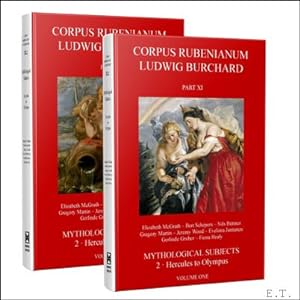
Hercules to Olympus Part XI, 2: Mythological Subjects Hercules to Olympus / 2 volumes.
Verlag: , Brepols - Harvey Miller, 2023, 2023
Anbieter: BOOKSELLER - ERIK TONEN BOOKS, Antwerpen, Belgien
Verbandsmitglied: ILAB
Verkäuferbewertung 5 von 5 Sternen
hardcover with dusjacket, 2 vols, 946 pages.Size:175 x 260 mm Illustrations:450 b/w. Language(s):English. ISBN 9781912554867. One remarkable feature of European culture as it developed in the Renaissance was the accommodation it made with ancient paganism. The classical gods and their legends were allegorised, transformed into symbolic figures or emblematic scenes that might accord with Christian morality. At the same time a secular space was created in art for the depiction of the most popular myths, above all the love stories recounted by the ancient poets. These stories were not only attractive in themselves; they offered the opportunity to depict nude figures in narrative action, which the example of antiquity held forth as the highest goal for painting. Rubens was one of the greatest creators of classical allegory; he was also a supreme interpreter of the classical stories. No painter was so at home in the literature of the Greeks and Romans. When he painted for pleasure, which, increasingly in the course of his life, he felt able to do, he used pagan myth to express and celebrate themes of love, beauty and the creative forces of nature, often in wonderfully idiosyncratic ways. At the same time, as a Christian committed to the ideals of the Catholic Reformation, Rubens respected the restrictions generally placed on the depiction of pagan tales. Most of his mythological paintings were made for private settings, for display within houses (including his own) or in the galleries of princes, noblemen and prelates. It is happy accident of history that these splendid paintings are now widely visible in the great museums of the world. 0 g.
-

Mythological Subjects, Paris to Venus. Corpus Rubenianum Ludwig Burchard, vol. 11.3 Corpus
Verlag: Turnhout, Brepols, 2025, 2025
Anbieter: BOOKSELLER - ERIK TONEN BOOKS, Antwerpen, Belgien
Verbandsmitglied: ILAB
Verkäuferbewertung 5 von 5 Sternen
2 vols, 976 pages 175 x 260 mm, Illustrations:224 b/w, 91 col. English text. NEW . ISBN 9781915487636. One remarkable feature of European culture as it developed in the Renaissance was the accommodation it made with ancient paganism. The classical gods and their legends were allegorised, transformed into symbolic figures or emblematic scenes that might accord with Christian morality. At the same time there emerged a new, secular, genre of art devoted to the depiction of the most popular myths, above all the love stories recounted by the ancient poets. These stories were not only attractive in themselves; they offered the opportunity to depict nude figures in narrative action, which the example of antiquity held forth as the highest goal for painting. Rubens was one of the greatest creators of classical allegory; he was also a supreme interpreter of the classical stories. No painter was so at home in the literature of the Greeks and Romans. When he painted for pleasure, which, increasingly in the course of his life, he felt able to do, he used pagan myth to express and celebrate themes of love, beauty and the creative forces of nature, often in wonderfully idiosyncratic ways. Still, as a Christian committed to the ideals of the Catholic Reformation, Rubens respected the restrictions generally placed on the depiction of pagan tales. Most of his mythological paintings were made for private settings, for display within houses (including his own) or in the galleries of princes, noblemen and prelates. It is a happy accident of history that so many of these splendid paintings are now widely visible in the great museums of the world. TABLE OF CONTENTS Volume One Preface Catalogue Raisonn - Paris and his Judgement of the Goddesses: Nos 101-106 - Phaeton?s Temerity and the Consequences: Nos 107-108 - Philemon and Baucis: No.109 - Procris and Cephalus: No. 110 - Prometheus: No. 111 - Proserpina?s Abduction by Pluto: No. 112 - The Story of Psyche: Nos 113-114 - Satyr Subjects: Nos 115-120 - Silenus, with Bacchic and Rustic Companions: Nos 121-129 - Venus: Her Loves and her Worship: Nos 130-139 - Vertumnus and Pomona: No. 140 - Rejected Attributions: Nos R1-5 Volume Two List of Figures Figures Bibliography Indexes I: Collections II: Subjects III: Other Works by Rubens Mentioned in the Text IV: Names and Places Sources of Photographs 0 g.

