
Gesamtpreis (1 Artikel Artikel):
Versandziel:

robinson martha ann (2 Ergebnisse)
Direkt zu den wichtigsten Suchergebnissen
Suchfilter
Produktart
- Alle Product Types
- Bücher (2)
- Magazine & Zeitschriften (Keine weiteren Ergebnisse entsprechen dieser Verfeinerung)
- Comics (Keine weiteren Ergebnisse entsprechen dieser Verfeinerung)
- Noten (Keine weiteren Ergebnisse entsprechen dieser Verfeinerung)
- Kunst, Grafik & Poster (Keine weiteren Ergebnisse entsprechen dieser Verfeinerung)
- Fotografien (Keine weiteren Ergebnisse entsprechen dieser Verfeinerung)
- Karten (Keine weiteren Ergebnisse entsprechen dieser Verfeinerung)
- Manuskripte & Papierantiquitäten (Keine weiteren Ergebnisse entsprechen dieser Verfeinerung)
Zustand Mehr dazu
- Neu (Keine weiteren Ergebnisse entsprechen dieser Verfeinerung)
- Wie Neu, Sehr Gut oder Gut Bis Sehr Gut (Keine weiteren Ergebnisse entsprechen dieser Verfeinerung)
- Gut oder Befriedigend (1)
- Ausreichend oder Schlecht (Keine weiteren Ergebnisse entsprechen dieser Verfeinerung)
- Wie beschrieben (1)
Einband
Weitere Eigenschaften
- Erstausgabe (Keine weiteren Ergebnisse entsprechen dieser Verfeinerung)
- Signiert (Keine weiteren Ergebnisse entsprechen dieser Verfeinerung)
- Schutzumschlag (Keine weiteren Ergebnisse entsprechen dieser Verfeinerung)
- Angebotsfoto (2)
Sprache (1)
Preis
- Beliebiger Preis
- Weniger als EUR 20 (Keine weiteren Ergebnisse entsprechen dieser Verfeinerung)
- EUR 20 bis EUR 45
- Mehr als EUR 45 (Keine weiteren Ergebnisse entsprechen dieser Verfeinerung)
Gratisversand
- Kostenloser Versand nach USA (Keine weiteren Ergebnisse entsprechen dieser Verfeinerung)
Land des Verkäufers
Verkäuferbewertung
-

5000 Artists Return to Artists Space : 25 Years
Sprache: Englisch
Verlag: Artists Space New York, NY, 1998
ISBN 10: 0966362608 ISBN 13: 9780966362602
Anbieter: Specific Object / David Platzker, New York, NY, USA
Verkäuferbewertung 5 von 5 Sternen

351 pp.; 27.9 x 21.7 cm.; sewn bound; black-and-white & color; edition size unknown; unsigned and unnumbered; offset-printed Monograph published in conjunction with Artists Spaces' 25 Year anniversary. Edited by Claudia Gould and Valerie Smith. Introduction by Claudia Gould. Texts by J. Abbott Miller, Trudie Grace, Irving Sandler, Joan Rosenblum, Helene Winer, Cindy Sherman, Linda Shearer, Carlos Gutierrez-Solana, Amy Wanggaard, Denise Fasanello, and Ronald Jones. Includes dozens of artists interviews. Artists include Gregg Bordowitz, Judith Barry, Connie Butler, Edit deAk, Walter Robinson, Jane Dickson, Mark Dion, Andrea Fraser, Ellen Gallagher, Ann Hamilton, Mike Kelley, Jeff Koons, Louise Lawler, Zoe Leonard, Lucy Lippard, Robert Longo, Allan McCollum, Annette Messager, Lee Mullican, Tony Oursler, Adrian Piper, Carolee Schneemann, Kiki Smith, Fred Wilson, Martha Wilson, Vito Acconci, Laurie Anderson, Janine Antoni, Joan Jonas, Elizabeth Murray, Shirin Neshat, Howardena Pindell, Richard Prince, Nan Goldin, Rita McBride, Felix Gonzalez-Torres, Barbara Kruger and many others. Endnote by Jenny Holzer. Includes director interviews, chronology of activities at artists space and artist interviews, key to the chronology, artists space services and staff, publications, and multiples histories, funders histories, and index. Very Good / Fine. Light bumping of cover corners. Contents clean and unmarked. Due to large size and weight additional shipping charges will be required for international orders.
-
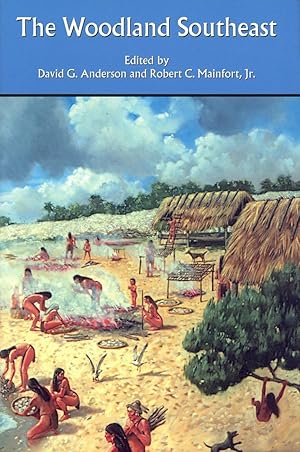
The Woodland Southeast
Anbieter: Birkitt's Books, SARASOTA, FL, USA
Verkäuferbewertung 4 von 5 Sternen

Paperback. Zustand: Very Good. Minor shelf wear, binding tight, pages clean and unmarked. This collection presents, for the first time, a much-needed synthesis of the major research themes and findings that characterize the Woodland Period in the southeastern United States.The Woodland Period (ca. 1200 B.C. to A.D. 1000) has been the subject of a great deal of archaeological research over the past 25 years. Researchers have learned that in this approximately 2000-year era the peoples of the Southeast experienced increasing sedentism, population growth, and organizational complexity. At the beginning of the period, people are assumed to have been living in small groups, loosely bound by collective burial rituals. But by the first millennium A.D., some parts of the region had densely packed civic ceremonial centers ruled by hereditary elites. Maize was now the primary food crop. Perhaps most importantly, the ancient animal-focused and hunting-based religion and cosmology were being replaced by solar and warfare iconography, consistent with societies dependent on agriculture, and whose elites were increasingly in competition with one another. This volume synthesizes the research on what happened during this era and how these changes came about while analyzing the period's archaeological record.In gathering the latest research available on the Woodland Period, the editors have included contributions from the full range of specialists working in the field, highlighted major themes, and directed readers to the proper primary sources. Of interest to archaeologists and anthropologists, both professional and amateur, this will be a valuable reference work essential to understanding the Woodland Period in the Southeast.

