
Gesamtpreis (1 Artikel Artikel):
Versandziel:

ramee pierre (31 Ergebnisse)
Direkt zu den wichtigsten Suchergebnissen
Suchfilter
Produktart
- Alle Product Types
- Bücher (31)
- Magazine & Zeitschriften (Keine weiteren Ergebnisse entsprechen dieser Verfeinerung)
- Comics (Keine weiteren Ergebnisse entsprechen dieser Verfeinerung)
- Noten (Keine weiteren Ergebnisse entsprechen dieser Verfeinerung)
- Kunst, Grafik & Poster (Keine weiteren Ergebnisse entsprechen dieser Verfeinerung)
- Fotografien (Keine weiteren Ergebnisse entsprechen dieser Verfeinerung)
- Karten (Keine weiteren Ergebnisse entsprechen dieser Verfeinerung)
- Manuskripte & Papierantiquitäten (Keine weiteren Ergebnisse entsprechen dieser Verfeinerung)
Zustand Mehr dazu
- Neu (6)
- Wie Neu, Sehr Gut oder Gut Bis Sehr Gut (Keine weiteren Ergebnisse entsprechen dieser Verfeinerung)
- Gut oder Befriedigend (5)
- Ausreichend oder Schlecht (1)
- Wie beschrieben (19)
Weitere Eigenschaften
- Erstausgabe (6)
- Signiert (1)
- Schutzumschlag (Keine weiteren Ergebnisse entsprechen dieser Verfeinerung)
- Angebotsfoto (19)
Sprache (4)
Gratisversand
Land des Verkäufers
Verkäuferbewertung
-
The Latine Grammar of P. Ramus
Anbieter: Better World Books, Mishawaka, IN, USA
Verkäuferbewertung 5 von 5 Sternen

Zustand: Good. Used book that is in clean, average condition without any missing pages.
-
The Latine Grammar or P. Ramus, London 1585 [The English Experience: Its Record in Early Printed Books Published in Facsimile, no. 289]
Anbieter: Windows Booksellers, Eugene, OR, USA
Verkäuferbewertung 5 von 5 Sternen
Hardcover, no dust jacket. Ex-library, otherwise very good. pp.
-
Les Enfants Celebres
Verlag: (A. Herment) circa 1900, (Paris), 1900
Anbieter: Old New York Book Shop, ABAA, Atlanta, GA, USA
Verkäuferbewertung 5 von 5 Sternen
Original wraps. Zustand: Very good. Octavo, approx 20 blank leaves, childhood workbook , coupleof closed tears.
-

Dialectique 1555
Sprache: Französisch
Verlag: Librairie Philosophique J. Vrin, 1996
ISBN 10: 2711612686 ISBN 13: 9782711612680
Erstausgabe
paperback. Zustand: New. 1st.
-

Rudiments of Latin Grammar
Verlag: The Scolar Press, 1971
Anbieter: Walden Books, London, Vereinigtes Königreich
Verkäuferbewertung 4 von 5 Sternen

EUR 23,75
EUR 17,29 Versand
Versand von Vereinigtes Königreich nach USAAnzahl: 1 verfügbar
In den WarenkorbHardback. Zustand: Very Good. Quarter binding of green leater and green cloth, gilt lettering on spine, gilt illustrations on front, corners sharp if a touch rubbed, owner's name on title, no annotations, binding tight.; A Scolar Press Fascimile ; Vol. 306; 7.8 x 4.10 x .6; 60 pages.
-
Dialectique 1555 (de Petrarque a Descartes,) (French Edition)
Sprache: Französisch
Verlag: Librarie Philosophique J. Vrin, 1996
ISBN 10: 2711612686 ISBN 13: 9782711612680
Anbieter: Gallix, Gif sur Yvette, Frankreich
Verkäuferbewertung 4 von 5 Sternen
Zustand: Neuf.
-
Gravure sur acier issue des Galeries historiques de Versailles : Pierre de la Ramée dit Ramus
Verlag: Diagraphe et pantographe Gavard
Anbieter: Librairie Lis Tes Ratures, Nantes, Frankreich
Verbandsmitglied: ILAB
Verkäuferbewertung 5 von 5 Sternen
Paris, 1838-1849, Tirage sur beau papier vélin, format de la feuille : 45 x 32 cm. Gravure sur acier. Timbre à sec du ministère de la guerre. Pierre de La Ramée1 latinisé en Petrus Ramus (vers 1515 - 26 août 1572) est un logicien et philosophe français converti au calvinisme qui fut assassiné durant les massacres de la Saint-Barthélemy.
-

Grammaire (1572): 3 (Traites sur la langue francaise, 3)
Anbieter: Kennys Bookstore, Olney, MD, USA
Verkäuferbewertung 4 von 5 Sternen
Zustand: New. 2023. paperback. . . . . . Books ship from the US and Ireland.
-

EUR 26,01
EUR 48,99 Versand
Versand von Deutschland nach USAAnzahl: Mehr als 20 verfügbar
In den WarenkorbZustand: New.
-
DIALECTIQUE (1555). Dedicatoria autografa de Michel Dassonville. Año 1964
Verlag: 0
Anbieter: AL TOSSAL, Valencia, V, Spanien
Verbandsmitglied: LIBRIS
Verkäuferbewertung 5 von 5 Sternen
Edition critique avec introduction, notes et commentaires de Michel Dassonville. Genéve 1964 Libraire Droz. 168 p.1 h. 26x20 cm. Tapas duras. Ref.49225. Libro.
-

Gramere (1562). Grammaire (1572). Dialectique (1555). Reimpression de l'éditions de Paris.
Sprache: Französisch
Verlag: Genève, Slatkine, 1972
Anbieter: Antiquariat An der Vikarie, Grafschaft-Leimersdorf, Deutschland
Verbandsmitglied: GIAQ
Verkäuferbewertung 5 von 5 Sternen
126, 211, 140 pp., ex-library copy with label on spine and stamps, binding slightly rubbed, else good and clean, text in French, Sprache: Französisch Gewicht in Gramm: 900 original hardcover (no dust jacket),
-
Taschenbuch. Zustand: Neu. Grammaire | Pierre de la Ramée | Taschenbuch | Kartoniert / Broschiert | Französisch | 2018 | Hachette Livre - BNF | EAN 9782019229429 | Verantwortliche Person für die EU: Libri GmbH, Europaallee 1, 36244 Bad Hersfeld, gpsr[at]libri[dot]de | Anbieter: preigu.
-
Dialectique 1555
Sprache: Französisch
Verlag: Librairie Philosophique J. Vrin, 1996
ISBN 10: 2711612686 ISBN 13: 9782711612680
Anbieter: Kennys Bookstore, Olney, MD, USA
Verkäuferbewertung 4 von 5 Sternen
Zustand: New. 1996. Paperback. . . . . . Books ship from the US and Ireland.
-

Dialectique (1555). Edition critique avec introduction, notes et commentaires de Michel Dassonville.
Verlag: Librairie Droz, 1964
Anbieter: Rometti Vincent, Nice, Frankreich
Verkäuferbewertung 5 von 5 Sternen
Erstausgabe
Couverture rigide. Zustand: Assez bon. Edition originale. Genève, Librairie Droz, 1964. In-4, 168pp. Plein cartonnage toilé de l'éditeur, pièce de titre de papier sur le dos. Toile un peu défraichie : un petit accroc, très légères rousseurs, partiellement insolée ; intérieur frais. Assez agréable exemplaire.
-

Dialektik 1572 mit Begleittexten. Zusammengesellt, übersetzt mit einer Einleitung und Anmerkungen versehen von Hans Günter Zekl.
Verlag: Würzburg, Königshausen und Neumann, 2011., 2011
Anbieter: Antiquariat Thomas Rezek, München, Deutschland
Verkäuferbewertung 5 von 5 Sternen
Gr- 8°. 447 SS., mit einigen Abbildungen Original-Broschur Dialectica in deutscher Übersetzung. - Sauber und gut erhalten.
-
Oeuvres diverses.
Anbieter: Librairie Diogène SARL, Lyon, Frankreich
Verkäuferbewertung 5 von 5 Sternen
Slatkine Reprints, 1971, 612 p., percaline éditeur rouge, dos insolé, une signature et une date sur la page de garde, 2 lignes d'annotations sur la page de titre, bon état pour le reste. Publiées par Nicolas Bergeron.
-
DIALECTIQUE
Verlag: Librairie Droz, Geneva, 1964
Anbieter: J. Wyatt Books, Ottawa, ON, Kanada
Verkäuferbewertung 5 von 5 Sternen
Hardcover. Zustand: VG-. FRENCH text. Reprint of 1555 edition. 168 pages in very good, clean condition. Pages are yellowed. Light foxing on the fore-edges. Previous owners name and address on the ffep. Beige cloth. Beige label with black titles on the spine. Titles slightly faded. Light foxing and yellowing on the covers. Scarce book. VG-. Book.
-

Scholarum mathematicarum libri unus et triginta.
Verlag: Hildesheim, Zürich und New York, Georg Olms Verlag., 2008
ISBN 10: 3487135159 ISBN 13: 9783487135151
Anbieter: Antiquariat Rainer Schlicht, Berlin, Deutschland
Verbandsmitglied: GIAQ ILAB VDA
Verkäuferbewertung 5 von 5 Sternen
Ca. 22 x 16 cm. 10 Blätter, 320 Seiten, mit graphischen Darstellungen. Blauer Original-Leinenband. Nachdruck der Ausgabe Basel, 1569. Die fehlerhafte Paginierung des Originals wurde beibehalten. Stempel "Archivstück" auf vorderem fliegenden Vorsatz. Schönes Exemplar.
-
Ramus (Pierre de la Ramée). Sa vie, ses écrits et ses opinions.
Verlag: Meyrueis 1855, 1855
Anbieter: Librairie Vignes Online, Paris, Frankreich
Verbandsmitglied: ILAB
Verkäuferbewertung 5 von 5 Sternen
Erstausgabe
Zustand: Acceptable. in-8, broché, 480 pp. Edition originale de l'une des premières monographies du philosophe franco-anglais Charles Waddington (1819-1914) qui reprend et appronfondit sa thèse, soutenue en 1848. L'attachement de Waddington au calvinisme (Ramus fut une des victimes de la Saint-Barthélémy) n'est sans doute pas étranger à l'intérêt porté à ce philosophe humaniste qui a notamment contribué à révolutionner l'enseignement des mathématiques à l'Université. Exemplaire de travail avec de nombreuses soulignures aux crayons de couleurs rouge et bleu.
-
Liber de militia C.Julii Caesaris, cum praefatione Joannis Thomae Freigii.
Verlag: Frankfurt, heirs of Andreas Wechel, 1584., 1584
Anbieter: Bernard Quaritch Ltd ABA ILAB, London, Vereinigtes Königreich
Verbandsmitglied: ABA ILAB PBFA
Verkäuferbewertung 4 von 5 Sternen
EUR 534,32
EUR 28,82 Versand
Versand von Vereinigtes Königreich nach USAAnzahl: 1 verfügbar
In den Warenkorb8vo, pp.222, [2]; woodcut printer's devices to title and final page, woodcut initials and head-piece; trimmed close at head in places, occasionally touching running titles, very subtle repair to inner blank margin of title, the odd spot, but an attractive copy; in eighteenth-century German or Austrian red morocco gilt, gilt green paper lettering-piece to spine, edges paste-decorated in blue, marbled endpapers, green ribbon place-marker; deleted eighteenth-century ownership inscription to title, a few annotations and underlinings to the first few pages, shelfmarks to front free endpapers, early twentieth-century bookplate to upper pastedown of Burg Kreuzenstein, Austria, engraved by Alfred Cossmann.An attractively bound copy of Ramus's uncommon treatise on Caesar's military tactics, with unusual edge decoration. The humanist Petrus Ramus (15151572) published widely on classical history and grammar while teaching at the Collège de France. He was briefly forced from his post after converting to Calvinism in 1562, and was killed during the St Bartholomew's Day massacres. His De militia Caesaris was reprinted several times after its first appearance in 1559 and posthumously promoted, as here, by Ramus's follower Johann Thomas Freige (or Frei, 15431583). VD16 L-526.
-
![Bild des Verkäufers für P. Rami, Regii eloquentiae et philosophiae professoris, Animadversionum Aristotelicarum libri XX [Aristotelicae animadversiones] [unito a: Quod sit] zum Verkauf von Libreria Antiquaria Pontremoli SRL](https://pictures.abebooks.com/inventory/md/md30282245732.jpg)
P. Rami, Regii eloquentiae et philosophiae professoris, Animadversionum Aristotelicarum libri XX [Aristotelicae animadversiones] [unito a: Quod sit]
Verlag: apud Andream Wechelum sub Pegaso, in vico Bellovaco,, 1556
Anbieter: Libreria Antiquaria Pontremoli SRL, Milano, MI, Italien
Verkäuferbewertung 5 von 5 Sternen
Erstausgabe
Parisiis, apud Andream Wechelum sub Pegaso, in vico Bellovaco, 1556, Prima edizione del «Quod sit». Usuali segni del tempo, nel complesso bell'esemplare con margini ampi. Le «Aristotelicae animadversiones» furono pubblicate a Parigi per la prima volta nel 1543: lo scalpore fu grande date le posizioni fortemente antiaristoteliche e antiscolastiche di Ramo, che «si era [.] proposto di riformare l'intero corpo delle dottrine dialettiche, seguendo Agricola nella particolare accentuazione del primato dell'inventio e nella richiesta di nuovi criteri di semplicità, brevità ed efficacia didattica». Ben presto arrivò la condanna e l'interdizione all'insegnamento. Dopo alcuni anni, nel 1551, il filosofo riuscì però ad ottenere una cattedra universitaria e nel 1561 si convertì al protestantesimo. Dopo alcuni periodi trascorsi in Germania e Svizzera in cerca di riparo, tornò a Parigi e qui morì nella celebre quanto sanguinosa strage della notte di San Bartolomeo (23-24 agosto 1572), durante la quale i cattolici francesi uccisero migliaia di ugonotti. I venti libri delle «Animadversiones» sono suddivisi in tre sezioni differenti, ciascuno con proprio frontespizio e propria paginazione. Nello specifico, nell'esemplare proposto: libri I-VIII, apud Andream Wechelum, Parisiis, 1556; libri IX-X, apud Andream Wechelum, Parisiis, 1560; libri XI-XX, apud Andream Wechelum, Parisiis, 1556. In fine è unita, dello stesso Ramo, la prima edizione del «Quod sit unica doctrinae instituendae methodus, locus e IX Animadversionum P. Rami», Parisiis, apud Andream Wechelum, 1557, altro tassello fondamentale del suo pensiero sul "metodo": di grande rarità, non se ne riscontra nessuna copia in Iccu. 4 voll. in uno, legatura coeva in piena pergamena floscia con titoli manoscritti al dorso, pp. [16] 328; [16] 271 [1] bianca; 141 [3] con marca tipografica; 22 [1] bianca Prima edizione del «Quod sit». Usuali segni del tempo, nel complesso bell'esemplare con margini ampi. legatura coeva in piena pergamena floscia con titoli manoscritti al dorso,
-

LIBER DE MORIBUS VETERUM GALLORUM.
Verlag: Apud Andream Wechelum. París, 1559, 1559
Anbieter: FARRÉ Libreria Anticuaria, Barcelona, B, Spanien
Verkäuferbewertung 5 von 5 Sternen
Erstausgabe
. 17 cm. [8], 74 h., 2 h. (sign A-I8, K4). Enc. en plena piel s. XIX. Pequeña restauración en la parte inferior derecha de la portada que no afecta. Marcas y pequeña fotografía sobrepuesta de anterior poseedor. Subrayados antiguos en algunas páginas. * Primera edición, rara, de una obra que rápidamente adquirió un gran éxito. Pierre de la Ramée (1515-1572) fue un humanista y retórico francés, creador de una corriente de pensamiento antiaristotélica denominada Ramismo. En un mundo en el que la palabra escrita tenía la supremacía, el ramismo surge como alternativa formal a la lógica y la retórica clásicas. Contrario al escolasticismo que reinaba en las universidades de la época, a pesar de su ideología ocupó la cátedra de matemáticas del Collège de France a mediados del siglo XVI, y lo consiguió gracias a la figura del cardenal de Lorena, a quien dedica la presente obra. Sus controvertidas teorías acabaron por costarle la vida durante la matanza de San Bartolomé, en la que se persiguió y asesinó a miles de protestantes. Voltaire dedica precisamente un fragmento de su Diccionario filosófico a este episodio y se lamenta de la actitud de las masas y de la triste suerte de Ramée. En el Liber de moribus el autor ofrece una visión filosófico-política y a la vez antropológica que reinterpreta las fuentes históricas clásicas bajo la óptica francesa y tiende a ver en los antiguos galos la raíz de la etnia propia. Inspirándose en César, Ramée realiza un halagüeño retrato de los galos, de quienes recalca especialmente su amor por la libertad, frugalidad y ardor en el trabajo y expresa abiertamiente cuál era su objetivo: ?Amo patriam ut debeo ejusque praeclaras laudes illustrari celebrarique maxime cupio.? Brunet 23204 (IV, 1099) califica la obra de ?curiosa y bien escrita? historia de francia, galia, ramismo, siglo XVI.
-
In Ciceronis orationes
Verlag: Andreas Wechelus 1580-82, Frankfurt a. M., 1580
Anbieter: Antiquariat Narrenschiff, Trin, Schweiz
Verkäuferbewertung 2 von 5 Sternen

Untertitel: Beigebunden Ramus, P; Untergebiet: Philosophie Abbildungen: Renaissance-Initialen und Vignetten Zustand: Titelblatt des ersten Bandes fehlt. Teilw. Wasserr. Seiten: II/709/X /IV/263 S. Format: Kl.-8°. Einband: o. Ebd. Gebiet: Alte Drucke.
-
Aristotelis Aristotelis Ethicorvm, sive De Moribvs, ad Nicomachvm, libri decem. Adiecta ad contextum Græcum interpretatione latina Dionysii LAMBINI [---]. Studio & opera Matthiae BERGII. Hanoviae. Claudii Marnii. 1601. Suivi de : Aristotelis politica a Petro Ramo regio professore latina facta et dialecticis summis breviter exposita & illustrata (---) Francofvrti. Claudium Marnium & heredes. 1601.
Anbieter: Mesnard - Comptoir du Livre Ancien, Ruelle-sur-Touvre, Frankreich
Verkäuferbewertung 5 von 5 Sternen
1 volume in-8° relié plein vélin d'époque, taches sur le vélin ce dernier en très bon état. 496 p. + 537 p. + 49 f. (index), petite galerie de vers en page de garde.
-
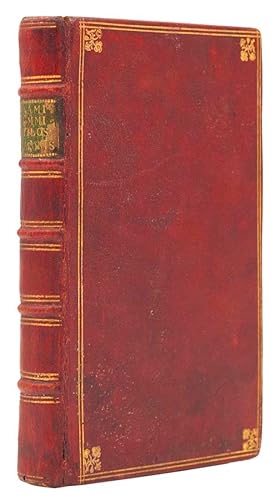
Rudimenta grammaticae, ex P. Rami. postrema Grammatica, breviter collecta [a Nicolao Bergeronio] [bound with :] Grammatica, ab eo demùm recognita : et ex variis ipsius scholis ac praelectionibus breviter explicata
Anbieter: Le Zograscope, Paris, Frankreich
Verbandsmitglied: ILAB
Verkäuferbewertung 5 von 5 Sternen
Erstausgabe
Paris, Emmanuel Richard, 1578. 12°, 2 works in one volume, 50-(2) pages ; 127-(1) pages ; 19th-century gold calf, gilt spine with raised bands, boards ruled in triple gilt fillets, boards edges ruled in double gilt fillets, gilt turn-ins (binding by Petit successeur de Simier). Joint lightly rubbed. Rare volume containing Ramus's Latin Grammar bound with its abridgement ; first editions given by his friend Nicolas Bergeron. The first edition of Ramus's Latin Grammar appeared in 1559. In the same year, he published an anonymous abridgement entitled Rudimenta grammaticae (Paris, Wechel, 1559). According to Ong, this abridgement was redone by Nicolas Bergeron in 1578 after Ramus's death. (cf. Dominique Couzinet, Inventaire bibliographique des uvres de Pierre de La Ramée, dit Ramus (1515-1572), p. 36). Nicolas Bergeron was a polymath and lawyer at the Parliament of Paris. He was one of the two executors of Petrus Ramus. He published a new edition of the compendium of Ramus's grammar and an important collection of prefaces, letters and speeches by Ramus and Omer Talon. (cf. Dominique Couzinet, "Ramus, philosophe, humaniste, réformateur des arts et des sciences") Two rare publications by the Parisian bookseller Emmanuel Richard. This little-known Parisian bookseller ran Plantin's Paris branch for 7 months in 1577, before it was sold to Michel Sonnius due to financial difficulties. Through his wife Jehanne Du Puys, Richard was related to the great Parisian bookseller Jacques Du Puys, who probably recommended him to Plantin. Between 1577 and 1583, he only published half a dozen books. In 1578, his shop was located rue Saint-Jean de Beauvais, « à l'enseigne de Saint-Michel ». He stopped publishing in 1583 but pursued his retail activity and valuations. His name is last mentioned in 1597 in the valuation of the books of the late Jehan Dulac, adviser to the Châtelet. (Cf. Denis Pallier, "La fin de la succursale plantinienne de Paris (1577) : Emmanuel Richard, facture de Plantin", Revue française d'histoire du livre, premier trimestre 1978, n° 1978). Ong, Ramus and Talon inventory, n° 548 et n° 520.
-

Georgica, P.Rami praelectionibus illustrata, ad Carolum Lotharingum cardinalem.
Verlag: Paris, André Wechel, 1564., 1564
Anbieter: Bernard Quaritch Ltd ABA ILAB, London, Vereinigtes Königreich
Verbandsmitglied: ABA ILAB PBFA
Verkäuferbewertung 4 von 5 Sternen
EUR 1.128,00
EUR 28,82 Versand
Versand von Vereinigtes Königreich nach USAAnzahl: 1 verfügbar
In den Warenkorb[boundwith:]. Bucolica, P.Rami praelectionibus exposita, quibus poetae vita praeposita est, ad Carolum Lotharingum cardinalem, editio secunda. Paris, André Wechel, 1558. Two works in one vol., 8vo, pp.Georgics: [2], '11-367' [i.e.3-359], [1(blank)], Bucolics: 184; woodcut printers device to titles, woodcut initials and headpieces, complete despite erratic pagination; lightly toned, small marginal dampstains to a few leaves, but an attractive copy; in contemporary calf, boards panelled in blind with gilt centre- and corner-pieces; corners and endcaps very skilfully repaired, superficial cracks to upper joint; a single philological marginal annotation (Bucolics p.43) and index note to rear free endpaper in the same hand, nineteenth-century ink stamp 'E.Drouin' to front free endpaper.Second editions of Ramus's extensive commentaries on Virgil's two poems on country life, written in reaction to the dry doctrines of several French schools who based their teaching of nature on Aristotle's Physics. Ramus wanted to keep in contact with the concrete realities of nature and in this spirit composed his commentaries, in which he often refers to Pliny and the Roman agronomers. The two commentaries were first published by Wechel in 1556 and 1555 respectively; a third edition of the Bucolics was issued in 1564. Adams V-548 & V-537; Ong 480 & 474; USTC 198707 & 152391. Language: Latin.
-
Dialectica. Audomari Talaei praelectionibus illustrata
Verlag: Theodorus Baumius, Koln, 1578
Anbieter: Hugues de Latude, Villefranche de Lauragais, Frankreich
Verbandsmitglied: ILAB
Verkäuferbewertung 5 von 5 Sternen
In-8, [153 x 98 mm] de (24), 450, (6) pp. Vélin à rabats. (Reliure ancienne.). Edition avec les commentaire d'Omer Talon (1510-1562), disciple de Ramus et professeur au Collège du Cardinal Lemoine. La première édition a été publiée à Paris en 1543. "C'est dans la Dialectica que se lit l'exposé de la "méthode" ramiste, unique et universelle, présentée par son inventeur non comme un système philosophique, mais comme "un art d'enseigner direct et aisé", éclairé par "la plus haute lumière de la raison", selon une dialectique descendante, inspirée du mythe platonicien de la caverne, même si peu à peu, Aristote y devient plus présent, comme appui d'une construction fondée pourtant sur une rupture avec l'aristotélisme post-médiéval." (A. Coron, En français dans le texte 51). Le protestant Pierre de La Ramée (1515-1572) a été une des victimes de la Saint-Barthélémy. Papier un peu bruni. Intéressante reliure réalisée (au XIXe siècle ou peut-être avant) avec un parchemin manuscrit du début du XVIe, avec de grandes initiales en bleu et rouge. In-8, [153 x 98 mm] de (24), 450, (6) pp. Vélin à rabats. (Reliure ancienne.) - - - - - - - - - - - - - - - - - - - - -.
-
Arithmeticae libri duo: geometriae septem et viginti. (2 Teile in 1 Bd.).
Sprache: Deutsch
Verlag: Basel, Eusebius & Nicolaus Episcopius,, 1580
Anbieter: Matthaeus Truppe Antiquariat, Graz, Österreich
Verkäuferbewertung 5 von 5 Sternen
4 Bll., 52, 192 S. mit zahlr. Textholzschnitten. Dritte Ausgabe, erstmals 1569 in Basel erschienen. - Adams R-70. Smith I, 209. VD 16 L 452. - "Petrus Ramus, or Pierre de la Ramée (15151572), French humanist, was born at the village of Cuth in Picardy in 1515, a. member of a noble but impoverished family; his father was a charcoal-burner. Having gained admission, in a menial capacity, to the college of Navarre, he worked with his hands by day and carried on his studies at night. The reaction against scholasticism was still in full tide; it was the transition time between the old and the new, when the eager and forward looking spirits had first of all to do battle with scholastic Aristotelianism. Ramus outdid his predecessors in the impetuosity of his revolt. On the occasion of taking his degree (1536) he actually took as his thesis "Everything that Aristotle taught is false." This tour de force was followed up by the publication in 1543 of Aristotelicae Animadversiones and Dialecticae Partitiones, the former a criticism on the old logic and the latter a new textbook of the science. What are substantially fresh editions of the Partitiones appeared in 1547 as Institutiones Dialecticae, and in 1548 as Scholae Dialecticae; his Dialectique (1555), a French version of his system, is the earliest work on the subject in the French language. Meanwhile Ramus, as graduate of the university, had opened courses of lectures; but his audacities drew upon him the hostility of the conservative party in philosophy and theology. He was accused of undermining the foundations of philosophy and religion, and the matter was brought before the parlement of Paris, and finally before Francis I. By him it was referred to a commission of five, who found Ramus guilty of having "acted rashly, arrogantly and impudently," and interdicted his lectures (1544). He withdrew from Paris, but soon afterwards returned, the decree against him being cancelled through the influence of the cardinal of Lorraine. In 1551 Henry II. appointed him professor of philosophy and eloquence at the Collège de France, where for a considerable time he lectured before audiences numbering as many as 2000. He published fifty works in his lifetime and nine appeared after his death. In 1561, however, the enmity against him was fanned into flame by his adoption of Protestantism. He had to flee from Paris; and, though he found an asylum in the palace of Fontainebleau, his house was pillaged and his library burned in his absence. He resumed his chair after this for a time, but in 1568 the position of affairs was again so threatening that he found it advisable to ask permission to travel. Returning to France he fell a victim to his opponents in the massacre of St Bartholomew (1572)" (Encyclopedia Britannica Online). - Durchgehend etw. gebräunt. Im weißen Rand kleiner Wurmgang bzw. minimaler Duckstck. Teils mit längeren alten hs. Notizen und Anmerkungen sowie Anstreichungen. S. 1 des zweiten Teils mt stärkerer Verschmutzung. Nur wenig fleckig. *** *** Copyright: Matthaeus TRUPPE Buchhandlung & Antiquariat - Stubenberggasse 7 - A-8010 Graz - ++43 (0)316 - 829552 *** *** Sprache: Deutsch Gewicht in Gramm: 0 Gr.-8°. Pgmt. der Zeit (fleckig, und etw. gebräunt, etw. bestoßen).
-
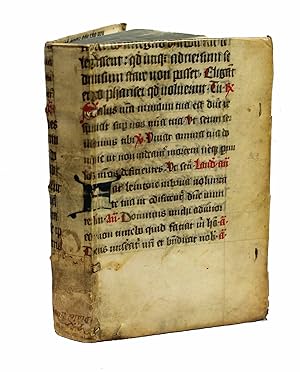
Institutionum dialecticarum libri III. [Bound with:] Animadversionum Aristotelicarum Libri XX
Anbieter: Le Zograscope, Paris, Frankreich
Verbandsmitglied: ILAB
Verkäuferbewertung 5 von 5 Sternen
Paris, Louis Grandin, 1547, and Paris, Mathieu David, 1548. Deux ouvrages en un volume in-8 de (16)-173-(1) pages ; (1) feuillet blanc ; (16)-473-(3) pages et (1) feuillet blanc; demi-basane fauve du XIXe siècle, dos lisse orné (un peu passé). Coins légèrement émoussés ; petite auréole marginale en haut des huit premiers feuillets. Rare réunion des deux pendants de la pensée anti-aristotélicienne de Ramus. Les Institutions dialectiques et les Remarques sur Aristote sont les deux premières publications du logicien, mathématicien et philosophe Pierre de La Ramée (1515-1572), dit Petrus Ramus. Elles paraissent pour la première fois, conjointement, en septembre 1543. Dans le premier texte, il propose à l'Université de Paris une logique simple et naturelle, alternative à celle des Aristotéliciens. Le second constitue une satire allègre de la logique du philosophe antique. Les attaques de Ramus contre Aristote lui valent de violentes réactions dans une université lui vouant un véritable culte. Ses livres sont condamnés et il se voit interdire l'enseignement de la philosophie par François Ier. En 1547, son protecteur, le cardinal Charles de Lorraine, intervient auprès du nouveau roi, Henri II, pour que l'interdiction soit levée. Au-delà de la réputation sulfureuse acquise dès la publication de ces deux écrits, la pensée de Ramus s'est rapidement répandue dans l'Europe réformée et en Nouvelle Angleterre, où elle a joué un rôle majeur dans la formation des esprits jusqu'au XVIIe siècle. I. Les Institutions dialectiques : Une première version paraît, sous le titre Dialecticae partitiones, en 1543. La même année, une nouvelle version remaniée est publiée sous le titre Dialecticae institutiones, condamnée par François Ier. Elle reparaît sous le nom de son élève Omer Talon en 1546. Après l'avènement d'Henri II, la Dialectique est à nouveau publiée sous le nom de Ramus, reprenant les commentaires de Talon, en 1547 chez Louis Grandin. "Dès 1547, Ramus publie de nouveau une Dialectique, en reprenant le titre inversé de l'ouvrage condamné, les Dialecticae institutiones (Institutions dialectiques), pour cette nouvelle édition qui tient compte des Dialectici commentarii de Talon." (Dominique Couzinet, Inventaire bibliographique des uvres de Pierre de La Ramée, dit Ramus (1515-1572), p. 20). Provenance : Ex-libris à l'encre caviardé au bas du titre du premier ouvrage : "Hectoris Carray 1596" (i.e. Hector Carray, vice-chancelier de la principauté de Montbéliard, né entre 1553 et 1555, mort en 1626). II. Les Remarques sur Aristote : La première édition de 1543 est suivie d'une contrefaçon pirate en 1545 à Lyon. Puis paraît celle de 1548, très augmentée, car en 20 livres. C'est l'édition canonique donnée par Ramus, qui va être rééditée par la suite. "Ramus procède aussi à une inversion du titre, pour cette nouvelle version des Aristotelicae animadversiones divisée en vingt livres, quatre fois plus étendue que les précédentes, et qui suit les différentes parties de l'Organon [d'Aristote]." (Couzinet, op.cit., p. 21). Il est rare de trouver réunis ces deux textes complémentaires et emblématiques de la philosophie anti-aristotélicienne de Ramus. Ong, Ramus and Talon inventory, n° 4 et n° 21-22 (édition partagée avec Jean Roigny).
-

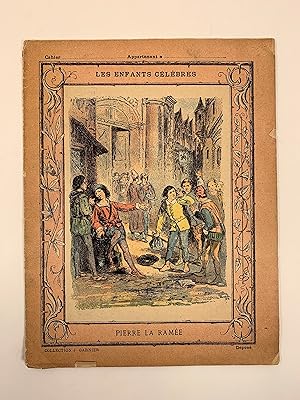
Brutinæ Quaestiones, in Oratorem Ciceronis, ad Henricum Valesium Franciæ Regem.
Anbieter: Librairie HATCHUEL, PARIS, Frankreich
Verbandsmitglied: ILAB
Verkäuferbewertung 4 von 5 Sternen
Signiert
Parisiis Matthei Davidis [Paris, Mathieu David], 1552. Petit in-8, plein cartonnage vélin à la Bradel, titre doré en long, daté en pied (reliure moderne signée Goy), 126 p., (1) f. blanc [sign. a-h8]. Troisième édition de cette uvre composée et profondément remaniée par l'auteur, Pierre de La Ramée dit Ramus (1515-1572), logicien et philosophe, un des plus grands savants humanistes du XVIe. Elle est dédiée à Henri II (la première date de 1547) Ramus soumet "l'Orateur" ('De Orator') de Cicéron, jusqu'alors considéré comme modèle indépassable des traités de rhétorique, à une critique systématique. Dans un style passionné, il marque son étonnement devant le fait que Cicéron, grand orateur et grand homme d'État, ait écrit une oeuvre si peu méthodique, si peu cohérente, et, selon lui, si pleine d'erreurs, à laquelle il oppose son propre système. Cet ouvrage suscita une tempête et réveilla des haines tenaces contre Ramus: Jacques Charpentier en particulier, peut-être l'un des responsables de son assassinat lors de la Saint-Barthélemy le 26 août 1572, qui lui avait succédé à la chaire de mathématiques au Collège de France et dont Ramus avait dénoncé l'ignorance. Caractères italiques, lettrines et marque de l'imprimeur gravée au titre. Cf. M. van der Poel, "L'attaque de Pierre de la Ramée contre la rhétorique antique. Les 'Brutinae Quaestiones'" in R.S.P.T, 2019/2-3 (Tome 103), p. 263-284. (W. J. Ong, 'Ramus & Talon Inventory', n° 57). Mouillure claire en coin. Très bon exemplaire, frais, grand de marges, bien relié.




![Bild des Verkäufers für Aristotelis Aristotelis Ethicorvm, sive De Moribvs, ad Nicomachvm, libri decem. Adiecta ad contextum Græcum interpretatione latina Dionysii LAMBINI [---]. Studio & opera Matthiae BERGII. Hanoviae. Claudii Marnii. 1601. Suivi de : Aristotelis politica a Petro Ramo regio professore latina facta et dialecticis summis breviter exposita & illustrata (---) Francofvrti. Claudium Marnium & heredes. 1601. zum Verkauf von Mesnard - Comptoir du Livre Ancien](https://pictures.abebooks.com/inventory/md/md12611051674.jpg)
![Bild des Verkäufers für Rudimenta grammaticae, ex P. Rami. postrema Grammatica, breviter collecta [a Nicolao Bergeronio] [bound with :] Grammatica, ab eo demùm recognita : et ex variis ipsius scholis ac praelectionibus breviter explicata zum Verkauf von Le Zograscope](https://pictures.abebooks.com/inventory/md/md31495456169.jpg)

![Bild des Verkäufers für Institutionum dialecticarum libri III. [Bound with:] Animadversionum Aristotelicarum Libri XX zum Verkauf von Le Zograscope](https://pictures.abebooks.com/inventory/md/md31495446879.jpg)