
Gesamtpreis (1 Artikel Artikel):
Versandziel:

pool ian (13 Ergebnisse)
Direkt zu den wichtigsten Suchergebnissen
Suchfilter
Produktart
- Alle Product Types
- Bücher (13)
- Magazine & Zeitschriften (Keine weiteren Ergebnisse entsprechen dieser Verfeinerung)
- Comics (Keine weiteren Ergebnisse entsprechen dieser Verfeinerung)
- Noten (Keine weiteren Ergebnisse entsprechen dieser Verfeinerung)
- Kunst, Grafik & Poster (Keine weiteren Ergebnisse entsprechen dieser Verfeinerung)
- Fotografien (Keine weiteren Ergebnisse entsprechen dieser Verfeinerung)
- Karten (Keine weiteren Ergebnisse entsprechen dieser Verfeinerung)
- Manuskripte & Papierantiquitäten (Keine weiteren Ergebnisse entsprechen dieser Verfeinerung)
Zustand Mehr dazu
- Neu (10)
- Wie Neu, Sehr Gut oder Gut Bis Sehr Gut (1)
- Gut oder Befriedigend (1)
- Ausreichend oder Schlecht (Keine weiteren Ergebnisse entsprechen dieser Verfeinerung)
- Wie beschrieben (1)
Einband
Weitere Eigenschaften
- Erstausgabe (Keine weiteren Ergebnisse entsprechen dieser Verfeinerung)
- Signiert (Keine weiteren Ergebnisse entsprechen dieser Verfeinerung)
- Schutzumschlag (Keine weiteren Ergebnisse entsprechen dieser Verfeinerung)
- Angebotsfoto (8)
Sprache (3)
Gratisversand
Land des Verkäufers
Verkäuferbewertung
-

Colonization and Development in New Zealand between 1769 and 1900. The Seeds of Rangiatea.
Buch 3 von 12: Demographic Transformation and Socio-Economic DevelopmentAnbieter: Universitätsbuchhandlung Herta Hold GmbH, Berlin, Deutschland
Verbandsmitglied: GIAQ ILAB VDA
Verkäuferbewertung 5 von 5 Sternen

335 p. Hardcover. Versand aus Deutschland / We dispatch from Germany via Air Mail. Einband bestoßen, daher Mängelexemplar gestempelt, sonst sehr guter Zustand. Imperfect copy due to slightly bumped cover, apart from this in very good condition. Stamped. Sprache: Englisch.
-

The New Zealand Family from 1840: A Demographic History
Anbieter: Revaluation Books, Exeter, Vereinigtes Königreich
Verkäuferbewertung 5 von 5 Sternen
EUR 31,40
EUR 14,38 Versand
Versand von Vereinigtes Königreich nach USAAnzahl: 1 verfügbar
In den WarenkorbPaperback. Zustand: Brand New. 454 pages. 10.00x6.00x1.25 inches. In Stock.
-

Trans Tasman migration proceedings of a workshop on population flows between Australia and New Zealand or vice versa.
Verlag: University of Waikato, New Zealand, 1980
ISBN 10: 0959758305 ISBN 13: 9780959758306
Anbieter: Book Express (NZ), Shannon, Neuseeland
Verkäuferbewertung 4 von 5 Sternen

Paperback. Zustand: Good. 150 pages. reasonable ex library.
-
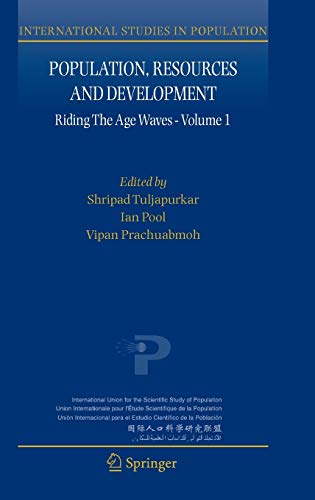
Population, Resources And Development
Anbieter: Romtrade Corp., STERLING HEIGHTS, MI, USA
Verkäuferbewertung 5 von 5 Sternen
Zustand: New. This is a Brand-new US Edition. This Item may be shipped from US or any other country as we have multiple locations worldwide.
-

Les populations océaniennes aux XIXe et XXe siècles
Sprache: Französisch
Verlag: PUF, coll. « Travaux et Documents, Cahier », n° 128, 1990
ISBN 10: 273320128X ISBN 13: 9782733201282
Anbieter: Librairie de l'Avenue - Henri Veyrier, Saint-Ouen, FR, Frankreich
Verkäuferbewertung 5 von 5 Sternen
Couverture souple. Zustand: Bon état. In-8 broché 24 cm sur 16. 348 pages. Bon état d'occasion.
-
Colonization and Development in New Zealand between 1769 and 1900: The Seeds of Rangiatea
Buch 3 von 12: Demographic Transformation and Socio-Economic DevelopmentAnbieter: Revaluation Books, Exeter, Vereinigtes Königreich
Verkäuferbewertung 5 von 5 Sternen
EUR 150,99
EUR 14,38 Versand
Versand von Vereinigtes Königreich nach USAAnzahl: 2 verfügbar
In den WarenkorbHardcover. Zustand: Brand New. 364 pages. 9.25x6.25x1.00 inches. In Stock.
-

Colonization and Development in New Zealand between 1769 and 1900
Buch 3 von 12: Demographic Transformation and Socio-Economic DevelopmentSprache: Englisch
Verlag: Springer International Publishing, Springer International Publishing Okt 2016, 2016
ISBN 10: 3319372149 ISBN 13: 9783319372143
Anbieter: buchversandmimpf2000, Emtmannsberg, BAYE, Deutschland
Verkäuferbewertung 5 von 5 Sternen
Taschenbuch. Zustand: Neu. Neuware -This book details the interactions between the Seeds of Rangiatea, New Zealand¿s Maori people of Polynesian origin, and Europe from 1769 to 1900. It provides a case-study of the way Imperial era contact and colonization negatively affected naturally evolving demographic/epidemiologic transitions and imposed economic conditions that thwarted development by precursor peoples, wherever European expansion occurred. In doing so, it questions the applicability of conventional models for analyses of colonial histories of population/health and of development.The book focuses on, and synthesizes, the most critical parts of the story, the health and population trends, and the economic and social development of Maori. It adopts demographic methodologies, most typically used in developing countries, which allow the mapping of broad changes in Maori society, particularly their survival as a people.The book raises general theoretical questions about how populations react to the introduction of diseases to which they have no natural immunity. Another more general theoretical issue is what happens when one society¿s development processes are superseded by those of some more powerful force, whether an imperial power or a modern-day agency, which has ingrained ideas about objectives and strategies for development. Finally, it explores how health and development interact.The Maori experience of contact and colonization, lasting from 1769 to circa 1900, narrated here, is an all too familiar story for many other territories and populations, Natives and former colonists. This book provides a case-study with wider ramifications for theory in colonial history, development studies, demography, anthropology and other fields.Springer Verlag GmbH, Tiergartenstr. 17, 69121 Heidelberg 364 pp. Englisch.
-

Colonization and Development in New Zealand between 1769 and 1900
Buch 3 von 12: Demographic Transformation and Socio-Economic DevelopmentSprache: Englisch
Verlag: Springer International Publishing, Springer International Publishing Sep 2015, 2015
ISBN 10: 3319169033 ISBN 13: 9783319169033
Anbieter: buchversandmimpf2000, Emtmannsberg, BAYE, Deutschland
Verkäuferbewertung 5 von 5 Sternen
Buch. Zustand: Neu. Neuware -This book details the interactions between the Seeds of Rangiatea, New Zealand¿s Maori people of Polynesian origin, and Europe from 1769 to 1900. It provides a case-study of the way Imperial era contact and colonization negatively affected naturally evolving demographic/epidemiologic transitions and imposed economic conditions that thwarted development by precursor peoples, wherever European expansion occurred. In doing so, it questions the applicability of conventional models for analyses of colonial histories of population/health and of development.The book focuses on, and synthesizes, the most critical parts of the story, the health and population trends, and the economic and social development of Maori. It adopts demographic methodologies, most typically used in developing countries, which allow the mapping of broad changes in Maori society, particularly their survival as a people.The book raises general theoretical questions about how populations react to the introduction of diseases to which they have no natural immunity. Another more general theoretical issue is what happens when one society¿s development processes are superseded by those of some more powerful force, whether an imperial power or a modern-day agency, which has ingrained ideas about objectives and strategies for development. Finally, it explores how health and development interact.The Maori experience of contact and colonization, lasting from 1769 to circa 1900, narrated here, is an all too familiar story for many other territories and populations, Natives and former colonists. This book provides a case-study with wider ramifications for theory in colonial history, development studies, demography, anthropology and other fields.Springer Verlag GmbH, Tiergartenstr. 17, 69121 Heidelberg 364 pp. Englisch.
-

Colonization and Development in New Zealand between 1769 and 1900 : The Seeds of Rangiatea
Buch 3 von 12: Demographic Transformation and Socio-Economic DevelopmentSprache: Englisch
Verlag: Springer International Publishing, Springer International Publishing, 2016
ISBN 10: 3319372149 ISBN 13: 9783319372143
Anbieter: AHA-BUCH GmbH, Einbeck, Deutschland
Verkäuferbewertung 5 von 5 Sternen
Taschenbuch. Zustand: Neu. Druck auf Anfrage Neuware - Printed after ordering - This book details the interactions between the Seeds of Rangiatea, New Zealand's Maori people of Polynesian origin, and Europe from 1769 to 1900. It provides a case-study of the way Imperial era contact and colonization negatively affected naturally evolving demographic/epidemiologic transitions and imposed economic conditions that thwarted development by precursor peoples, wherever European expansion occurred. In doing so, it questions the applicability of conventional models for analyses of colonial histories of population/health and of development.The book focuses on, and synthesizes, the most critical parts of the story, the health and population trends, and the economic and social development of Maori. It adopts demographic methodologies, most typically used in developing countries, which allow the mapping of broad changes in Maori society, particularly their survival as a people.The book raises general theoretical questions about how populations react to the introduction of diseases to which they have no natural immunity. Another more general theoretical issue is what happens when one society's development processes are superseded by those of some more powerful force, whether an imperial power or a modern-day agency, which has ingrained ideas about objectives and strategies for development. Finally, it explores how health and development interact.The Maori experience of contact and colonization, lasting from 1769 to circa 1900, narrated here, is an all too familiar story for many other territories and populations, Natives and former colonists. This book provides a case-study with wider ramifications for theory in colonial history, development studies, demography, anthropology and other fields.
-

Colonization and Development in New Zealand between 1769 and 1900 : The Seeds of Rangiatea
Buch 3 von 12: Demographic Transformation and Socio-Economic DevelopmentSprache: Englisch
Verlag: Springer International Publishing, 2015
ISBN 10: 3319169033 ISBN 13: 9783319169033
Anbieter: AHA-BUCH GmbH, Einbeck, Deutschland
Verkäuferbewertung 5 von 5 Sternen
Buch. Zustand: Neu. Druck auf Anfrage Neuware - Printed after ordering - This book details the interactions between the Seeds of Rangiatea, New Zealand's Maori people of Polynesian origin, and Europe from 1769 to 1900. It provides a case-study of the way Imperial era contact and colonization negatively affected naturally evolving demographic/epidemiologic transitions and imposed economic conditions that thwarted development by precursor peoples, wherever European expansion occurred. In doing so, it questions the applicability of conventional models for analyses of colonial histories of population/health and of development.The book focuses on, and synthesizes, the most critical parts of the story, the health and population trends, and the economic and social development of Maori. It adopts demographic methodologies, most typically used in developing countries, which allow the mapping of broad changes in Maori society, particularly their survival as a people.The book raises general theoretical questions about how populations react to the introduction of diseases to which they have no natural immunity. Another more general theoretical issue is what happens when one society's development processes are superseded by those of some more powerful force, whether an imperial power or a modern-day agency, which has ingrained ideas about objectives and strategies for development. Finally, it explores how health and development interact.The Maori experience of contact and colonization, lasting from 1769 to circa 1900, narrated here, is an all too familiar story for many other territories and populations, Natives and former colonists. This book provides a case-study with wider ramifications for theory in colonial history, development studies, demography, anthropology and other fields.
-
EUR 124,02
EUR 48,99 Versand
Versand von Deutschland nach USAAnzahl: Mehr als 20 verfügbar
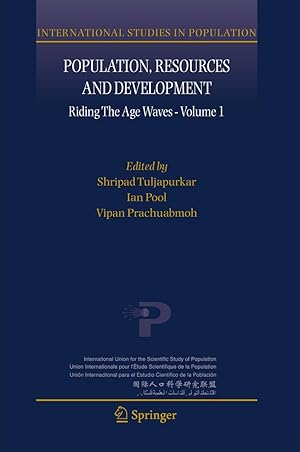
In den WarenkorbGebunden. Zustand: New. This is one of a small number of pioneering studies that identify population-development or policy links more exactly than in the pastIt takes age-transition analysis far beyond the well-trodden area of population agingIt studies implicatio.
-
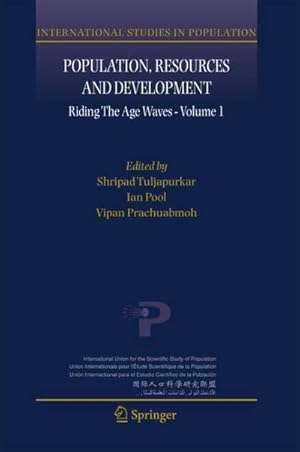
Population, Resources and Development : Riding the Age Waves - Volume 1
Sprache: Englisch
Verlag: Springer Netherlands, Springer Netherlands, 2006
ISBN 10: 1402038216 ISBN 13: 9781402038211
Anbieter: AHA-BUCH GmbH, Einbeck, Deutschland
Verkäuferbewertung 5 von 5 Sternen
Taschenbuch. Zustand: Neu. Druck auf Anfrage Neuware - Printed after ordering - In the 21st century, the populations of the world's nations will display large and long-lived changes in age structure. Many of these began with fertility change and are amplified by declining mortality and by migration within and between nations. Demography will matter in this century not by force of numbers, but by the pressures of waves of age structural change.Many developing countries are in relatively early stages of fertility decline and will experience age waves for two or more generations. These waves create shifting flows of people into the key age groups, greatly complicating the task of managing development, from building human capabilities and creating jobs to growing industry, infrastructure and institutions. In this book, distinguished scientists examine key demographic, social, economic, and policy aspects of age structural change in developing economies. This book provides a joint examination of dimensions of age structural change that have often been considered in isolation from each other (for example, education, job creation, land use, health); it uses case studies to examine policy consequences and options and develops qualitative and formal methods to analyze the dynamics and consequences of age structural change.
-

Population, Resources and Development : Riding the Age Waves - Volume 1
Anbieter: AHA-BUCH GmbH, Einbeck, Deutschland
Verkäuferbewertung 5 von 5 Sternen
Buch. Zustand: Neu. Druck auf Anfrage Neuware - Printed after ordering - In the 21st century, the populations of the world's nations will display large and long-lived changes in age structure. Many of these began with fertility change and are amplified by declining mortality and by migration within and between nations. Demography will matter in this century not by force of numbers, but by the pressures of waves of age structural change.Many developing countries are in relatively early stages of fertility decline and will experience age waves for two or more generations. These waves create shifting flows of people into the key age groups, greatly complicating the task of managing development, from building human capabilities and creating jobs to growing industry, infrastructure and institutions. In this book, distinguished scientists examine key demographic, social, economic, and policy aspects of age structural change in developing economies. This book provides a joint examination of dimensions of age structural change that have often been considered in isolation from each other (for example, education, job creation, land use, health); it uses case studies to examine policy consequences and options and develops qualitative and formal methods to analyze the dynamics and consequences of age structural change.

