
Paul noorlander (4 Ergebnisse)
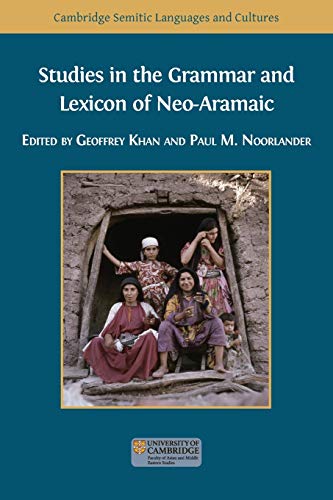
Sprache: Englisch
Verlag: Open Book Publishers 2020
Serie: Cambridge Semitic Languages and Cultures, Buch 2 von 3. Buch 2 von 3 - Cambridge Semitic Languages and Cultures
- Softcover
Anbieter: Ria Christie Collections, Uxbridge, Vereinigtes KönigreichRia Christie Collections
Verkäufer/-in kontaktierenVerkäufer/-in mit 5 SternenZustand: Neu
EUR 34,49
EUR 13,89 VersandVersand von Vereinigtes Königreich nach USAAnzahl: Mehr als 20 verfügbar
Zustand: New. In.

Sprache: Englisch
Verlag: Open Book Publishers 2021
Serie: Cambridge Semitic Languages and Cultures, Buch 2 von 3. Buch 2 von 3 - Cambridge Semitic Languages and Cultures
- Hardcover
Anbieter: Ria Christie Collections, Uxbridge, Vereinigtes KönigreichRia Christie Collections
Verkäufer/-in kontaktierenVerkäufer/-in mit 5 SternenZustand: Neu
EUR 51,61
EUR 13,89 VersandVersand von Vereinigtes Königreich nach USAAnzahl: Mehr als 20 verfügbar
Zustand: New. In.

- Softcover
- Erstausgabe
Anbieter: moluna, Greven, Deutschlandmoluna
Verkäufer/-in kontaktierenVerkäufer/-in mit 5 SternenZustand: Neu
EUR 216,33
EUR 48,99 VersandVersand von Deutschland nach USAAnzahl: Mehr als 20 verfügbar
Hardcover. Zustand: New. Über den AutorPaul M. Noorlander, Ph.D. (2018) is currently a Rubicon Fellow at Leiden University seconded to the University of Cambridge. He is involved in Neo-Aramaic documentation and has published on various topics in Sem.

- Hardcover
Anbieter: AHA-BUCH GmbH, Einbeck, DeutschlandAHA-BUCH GmbH
Verkäufer/-in kontaktierenVerkäufer/-in mit 5 SternenZustand: Neu
EUR 266,85
EUR 64,04 VersandVersand von Deutschland nach USAAnzahl: 2 verfügbar
Buch. Zustand: Neu. Neuware - The alignment splits in the Neo-Aramaic languages display a considerable degree of diversity, especially in terms of agreement. While earlier studies have generally oversimplified the actual state of affairs, Paul M. Noorlander offers a meticulous and clear account of nearly all microvariation docum…ented so far, addressing all relevant morphosyntactic phenomena. By means of fully glossed and translated examples, the author shows that this vast variation in morphological alignment, including ergativity, is unexpected from a functional typological perspective. He argues the alignment splits are rather the outcome of several construction-specific processes such as internal system harmonization and grammaticalization, as well as language contact.


