
Gesamtpreis (1 Artikel Artikel):
Versandziel:

panday b n (8 Ergebnisse)
Direkt zu den wichtigsten Suchergebnissen
Suchfilter
Produktart
- Alle Product Types
- Bücher (8)
- Magazine & Zeitschriften (Keine weiteren Ergebnisse entsprechen dieser Verfeinerung)
- Comics (Keine weiteren Ergebnisse entsprechen dieser Verfeinerung)
- Noten (Keine weiteren Ergebnisse entsprechen dieser Verfeinerung)
- Kunst, Grafik & Poster (Keine weiteren Ergebnisse entsprechen dieser Verfeinerung)
- Fotografien (Keine weiteren Ergebnisse entsprechen dieser Verfeinerung)
- Karten (Keine weiteren Ergebnisse entsprechen dieser Verfeinerung)
- Manuskripte & Papierantiquitäten (Keine weiteren Ergebnisse entsprechen dieser Verfeinerung)
Zustand Mehr dazu
- Neu (3)
- Wie Neu, Sehr Gut oder Gut Bis Sehr Gut (3)
- Gut oder Befriedigend (Keine weiteren Ergebnisse entsprechen dieser Verfeinerung)
- Ausreichend oder Schlecht (Keine weiteren Ergebnisse entsprechen dieser Verfeinerung)
- Wie beschrieben (2)
Einband
Weitere Eigenschaften
- Erstausgabe (Keine weiteren Ergebnisse entsprechen dieser Verfeinerung)
- Signiert (Keine weiteren Ergebnisse entsprechen dieser Verfeinerung)
- Schutzumschlag (1)
- Angebotsfoto (Keine weiteren Ergebnisse entsprechen dieser Verfeinerung)
Sprache (2)
Gratisversand
- Kostenloser Versand nach USA (Keine weiteren Ergebnisse entsprechen dieser Verfeinerung)
Land des Verkäufers
Verkäuferbewertung
-

The Break-up of British India
Anbieter: N. Fagin Books, Chicago, IL, USA
Verkäuferbewertung 4 von 5 Sternen

1969. Asia, Colonialism. The making of the 20th Century/St. Martin's Press. 246p. Very good paperback.
-
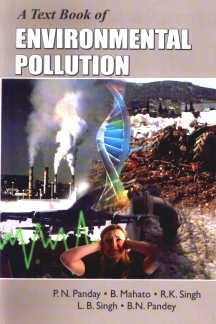
A Text Book of Environmental Pollution
Sprache: Englisch
Verlag: Narendra Publishing House, 2010
ISBN 10: 9380428022 ISBN 13: 9789380428024
Anbieter: Majestic Books, Hounslow, Vereinigtes Königreich
Verkäuferbewertung 4 von 5 Sternen
EUR 30,67
EUR 7,49 Versand
Versand von Vereinigtes Königreich nach USAAnzahl: 4 verfügbar
In den WarenkorbZustand: New. pp. x + 222.
-

Economics of Fisheries
Anbieter: Majestic Books, Hounslow, Vereinigtes Königreich
Verkäuferbewertung 4 von 5 Sternen
EUR 31,14
EUR 7,49 Versand
Versand von Vereinigtes Königreich nach USAAnzahl: 4 verfügbar
In den WarenkorbZustand: New. pp. viii + 191 Figures, Illus., Map.
-

Performance of Silkworm
Anbieter: Majestic Books, Hounslow, Vereinigtes Königreich
Verkäuferbewertung 4 von 5 Sternen
EUR 37,77
EUR 7,49 Versand
Versand von Vereinigtes Königreich nach USAAnzahl: 4 verfügbar
In den WarenkorbZustand: New. pp. xii + 435.
-
Performance of Silkworm : Sarihan Ecorace
Sprache: Englisch
Verlag: Narendra Publishing House, 2011
ISBN 10: 9380428391 ISBN 13: 9789380428390
Anbieter: Vedams eBooks (P) Ltd, New Delhi, Indien
Verkäuferbewertung 4 von 5 Sternen
Contents Preface 1 Introduction 2 Materials and methods 3 Observation 4 Discussion References From the introduction Silk is a protein fibre produced by sericigenous insects belonging to family Saturniidae superfamily Bomycoidea order Lepidoptera which is one of the finest and most beautiful natural fibres of the world and is said to be the queen of the fibres It is yarn of life extruded by that unassuming caterpillar into a continuous filament It is secreted from the silk glands of the silkworm Basically there are two proteins which form the silk fibre viz fibroin which constitutes the core of the fibre and sericin a waxy substance which encase the fibroin Silk is as old as that of civilization itself According to available records and antiques of silk articles unearthed by archeologists China is the homeland of silk industry which dates back to at least 5000 years da huan et al For hundreds of years the Chinese guarded the secret of sericulture by imperial law According to popular legend the Chinese dominance of sericulture was weakened when emperor Justinian in the sixth century dispatched several monks on an espionage mission to bring back silkworm eggs from China They brought the eggs back to constentinopole from where it spread to different parts of the world In India sericulture is as old as Indian culture Datta silk especially tasar silk has been mentioned in the old epics like Ramayana and Mahabharata According to the Indian legend sericulture was introduced about 2000 years ago the wild silkmoth producing yellow silk fibre was very popular from the ancient time Mukherjee though according to European scholars Chinese bi voltine silk was introduced in India in 140 BC 435 pp.
-
Text Book of Environmental Pollution
Verlag: Narendra Pub, New Delhi, 2010
Anbieter: Vedams eBooks (P) Ltd, New Delhi, Indien
Verkäuferbewertung 4 von 5 Sternen
Hardbound. Zustand: As New. New. Content Preface. Introduction. I. Water pollution 1. Introduction. 2. Water pollutants sources and effects. 3. Eutrophication. 4. Prevention and control of water pollution. II. Air pollution 1. Introduction. 2. Air pollutants and their classification. 3. Sources and effects of air pollutants. 4. Green house effect. 5. Ozone depletion. 6. Photochemical smog. 7. Aerosols. 8. Acid rain. 9. Control of air pollution. III. Soil pollution 1. Introduction. 2. Sources and effects of soil pollution. 3. Effects of soil pollutants. 4. Prevention and control of soil pollution. IV. Noise pollution 1. Introduction. 2. Sources of noise pollution. 3. Control of noise pollution. V. Radiation pollution 1. Introduction. 2. Concepts of nuclear chemistry and terms used in radiations ecology. 3. Sources of ionizing radiations. 4. Effects of ionizing radiations. From the Preface Aim of this book is to bridge the gap between traditional materials on pollution and quantitative and technical aspects that are the essence of most advanced environmental science. The book will also provide necessary informations on environmental chemistry and physics that are prerequisite for the mechanism of working of pollutants. Various chapters of the book covering water pollution air pollution soil pollution noise pollution and radiation describe in details about the sources and effects of pollutants. Control measures to mitigate pollution are added at the end of each chapters. Special emphasis has been laid on topics of international and global concern such as greenhouse effect stratospheric ozone depletion photochemical smog aerosols and acid rains and are discussed well. This book will satisfy the needs of undergraduate and postgraduate students of environmental biology. This book has been checked thoroughly and corrected to the best of our knowledge however errors and suggestions brought to our notice will be appreciated. 222 pp.
-
Ecology of Aquatic Insects
Verlag: Narendra Pub, New Delhi, 2009
Anbieter: Vedams eBooks (P) Ltd, New Delhi, Indien
Verkäuferbewertung 4 von 5 Sternen
Hardbound. Zustand: As New. New. Contents Preface. 1. Introduction i. Ecology. ii. Insects. 2. Classification of insects. 3. Origin of insects. 4. Insects one of the most successful group. 5. Aquatic insects i. Fresh water habitat. ii. Marine water habitat. iii. Orders of aquatic insects. iv. Adaptation in aquatic insects. v. Life cycle in aquatic insects. vi. Filter feeding in aquatic insects. This is the happiest moment for the authors to present Ecology of Aquatic Insects to readers of this discipline. Study of any organism without considering its ecology is not complete as no organism can be separated from its environment. About 75% of earth's surface is covered by water which is source of life on earth. It is the medium within which all aspects of ecosystem co exist both living and non living. Insects have adopted themselves to occupy almost every conceivable ecological niche in on or above the earth. They are all around us occupying our houses puncturing our skin consuming our food and clothing. There is scarcely any place on the earth that is not home to atleast one kind of insects. They endure all extremes of environment and are the most successful group of animals from Protozoa to mammals. This is an attempt to provide distinct advantage to its user (undergraduate postgraduate and life science students and also the researchers who are engaged in deciphering the mystery of aquatic ecology) towards better understanding of relation between insects and aquatic environment. 240 pp.
-
New Frontiers of Zoology
Verlag: Narendra Pub, Delhi, 2009
Anbieter: Vedams eBooks (P) Ltd, New Delhi, Indien
Verkäuferbewertung 4 von 5 Sternen
Hardbound. Zustand: As New. New. Contents Preface. 1. European Eel still a mystery of the natural history/V.R.P. Sinha. 2. Challenging food security in India aquaculture a viable option/Shyam S. Salim. 3. Indian fisheries as a tool for nutritional security poverty alleviation and employment/B.N. Pandey. 4. Advances in freshwater aquaculture/N. Sarangi. 5. Fisheries development in North Eastern states/M. Sinha. 6. Breeding of Indian major carps an overview/S.K. Sarkar and S.C. Rath. 7. Selective breeding and development of a genetically improved Rohu the Jayanti Rohu/Ambedkar E. Eknath Kanta Das Mahapatra Jatendra N. Saha and Binod K. Chaudhary. 8. Freshwater pearl farming/Kuldip Kumar Gayatri Mishra Utkal Laxmi Mohanty and Joy Krushna Jena. 9. Breeding and culture of ornamental fishes in India an emerging cottage industry/S.K. Swain and N.K. Barik. 10. Microbes in aquaculture/S. Ayyappan. 11. Aquaculture public concerns and sustainable practices/T.T. George and V.R.P. Sinha. 12. Man made modifications of rivers and their effect on its fishery/M. Sinha. 13. Inland fisheries enhancements/V.V. Sugunan. 14. Inland water pollution and algal bio indicator a review/M.K. Bandyopadhyay and B.C. Jha. 15. Bioindicators for surveillance of the status of Indian aquatic pollution and toxicity/K.K. Vass and S. Samanta. 16. Eutrophication and succession of biota in inland aquatic ecosystem/B.C. Jha and Anita Chakraborty. 17. New approach to aquatic biodiversity conservation at NBFGR Lucknow/W.S. Lakra and K.K. Lal. 18. Conservation of marine faunal diversity in India an overview/R. Soundararajan and W.S. Lakra. 19. Marine faunal biodiversity of Maharashtra and Gujarat Coast and conservation strategies/Dilip Kumar and Geetanjali Deshmukhe. 20. Current status of biotechnology in Karnataka/Geetha Bali. 21. Prebiotics and probities microflora for mankind an overview/G.R. Bharawadkar and G.K. Kulkarni. 22. Corpuscles of Stannius of air breathing teleosts ultrastructure and cellular composition/M. Firoz Ahmod Abdul Salim N.S. Sen and N.V.A. Rao. 23. Melatonin the nature's own antioxidant/Amitab Hore. 24. A quantitative study on food consumption and larval growth of Sarihan ecorace of Antheraea mylitta Drury/R.B. Sinha and P.N. Pandey. 25. Derelict Pedosphere ecosystem and soil arthropods a case study of Bermo coalfield area of Jharkhand/B.K. Sinha A. Hembrom M. Mahto P.N. Panday and D.K. Prasad. 26. Fish nutrigenomics fundamental research for understanding nutrient gene interactions and fish nutrition/P.P. Srivastava and W.S. Lakra. 27. Carotenoids pigments in freshwater fish types of Carotenoids and their metabolic transformation into Vitamin A/Umesh C. Goswami. 360 pp.

