
Gesamtpreis (1 Artikel Artikel):
Versandziel:

nielson daniel (10 Ergebnisse)
Direkt zu den wichtigsten Suchergebnissen
Suchfilter
Produktart
- Alle Product Types
- Bücher (10)
- Magazine & Zeitschriften (Keine weiteren Ergebnisse entsprechen dieser Verfeinerung)
- Comics (Keine weiteren Ergebnisse entsprechen dieser Verfeinerung)
- Noten (Keine weiteren Ergebnisse entsprechen dieser Verfeinerung)
- Kunst, Grafik & Poster (Keine weiteren Ergebnisse entsprechen dieser Verfeinerung)
- Fotografien (Keine weiteren Ergebnisse entsprechen dieser Verfeinerung)
- Karten (Keine weiteren Ergebnisse entsprechen dieser Verfeinerung)
- Manuskripte & Papierantiquitäten (Keine weiteren Ergebnisse entsprechen dieser Verfeinerung)
Zustand Mehr dazu
- Neu (5)
- Wie Neu, Sehr Gut oder Gut Bis Sehr Gut (1)
- Gut oder Befriedigend (4)
- Ausreichend oder Schlecht (Keine weiteren Ergebnisse entsprechen dieser Verfeinerung)
- Wie beschrieben (Keine weiteren Ergebnisse entsprechen dieser Verfeinerung)
Einband
Weitere Eigenschaften
- Erstausgabe (1)
- Signiert (Keine weiteren Ergebnisse entsprechen dieser Verfeinerung)
- Schutzumschlag (Keine weiteren Ergebnisse entsprechen dieser Verfeinerung)
- Angebotsfoto (3)
Sprache (1)
Gratisversand
Land des Verkäufers
Verkäuferbewertung
-

Delegation and Agency in International Organizations
Buch 34 von 81: Political Economy of Institutions and DecisionsSprache: Englisch
Verlag: Cambridge University Press, 2006
ISBN 10: 0521680468 ISBN 13: 9780521680462
Anbieter: Better World Books, Mishawaka, IN, USA
Verkäuferbewertung 5 von 5 Sternen

Zustand: Good. Former library copy. Pages intact with minimal writing/highlighting. The binding may be loose and creased. Dust jackets/supplements are not included. Includes library markings. Stock photo provided. Product includes identifying sticker. Better World Books: Buy Books. Do Good.
-
Delegation and Agency in International Organizations
Buch 34 von 81: Political Economy of Institutions and DecisionsSprache: Englisch
Verlag: Cambridge University Press, 2006
ISBN 10: 0521680468 ISBN 13: 9780521680462
Anbieter: ThriftBooks-Atlanta, AUSTELL, GA, USA
Verkäuferbewertung 5 von 5 Sternen
Paperback. Zustand: Very Good. No Jacket. Former library book; May have limited writing in cover pages. Pages are unmarked. ~ ThriftBooks: Read More, Spend Less.
-
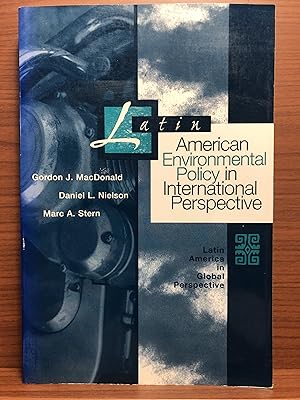
Latin American Environmental Policy In International Perspective (Latin America in Global Perspective)
Anbieter: Rosario Beach Rare Books, Lake Stevens, WA, USA
Verbandsmitglied: CBA ESA IOBA
Verkäuferbewertung 5 von 5 Sternen
Erstausgabe
Soft cover. Zustand: Very Good. 1st Edition. *Veteran-Owned, Family-Run, Small Business in the Pacific Northwest*.
-
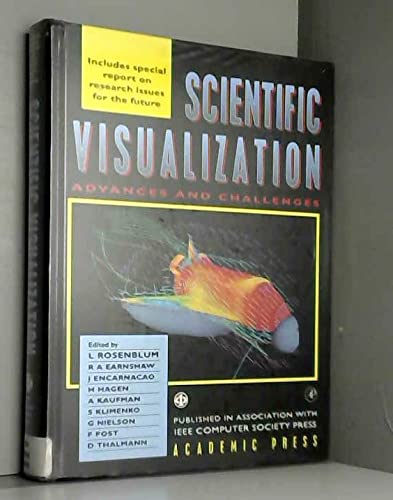
Scientific Visualization
Anbieter: Majestic Books, Hounslow, Vereinigtes Königreich
Verkäuferbewertung 4 von 5 Sternen

EUR 28,02
EUR 7,51 Versand
Versand von Vereinigtes Königreich nach USAAnzahl: 1 verfügbar
In den WarenkorbZustand: New. pp. 532.
-

Delegation and Agency in International Organizations (Political Economy of Institutions and Decisions)
Buch 34 von 81: Political Economy of Institutions and DecisionsSprache: Englisch
Verlag: Cambridge University Press, 2006
ISBN 10: 0521862094 ISBN 13: 9780521862097
Anbieter: Labyrinth Books, Princeton, NJ, USA
Verkäuferbewertung 4 von 5 Sternen
Zustand: Good.
-
Delegation and Agency in International Organizations (Political Economy of Institutions and Decisions)
Buch 34 von 81: Political Economy of Institutions and DecisionsSprache: Englisch
Verlag: Cambridge University Press, 2006
ISBN 10: 0521680468 ISBN 13: 9780521680462
Softcover. Zustand: Bon. Ancien livre de bibliothèque avec équipements. Livre reconditionné de bibliothèque. Ammareal reverse jusqu'à 15% du prix net de cet article à des organisations caritatives. ENGLISH DESCRIPTION Book Condition: Used, Good. Former library book. Refurbished library book. Ammareal gives back up to 15% of this item's net price to charity organizations.
-

Global Shell Games: Experiments in Transnational Relations, Crime, and Terrorism
Buch 62 von 96: Cambridge Studies in International RelationsAnbieter: Revaluation Books, Exeter, Vereinigtes Königreich
Verkäuferbewertung 5 von 5 Sternen
EUR 47,80
EUR 11,55 Versand
Versand von Vereinigtes Königreich nach USAAnzahl: 2 verfügbar
In den WarenkorbPaperback. Zustand: Brand New. 250 pages. 9.00x6.00x0.75 inches. In Stock.
-

Delegation and Agency in International Organizations
Buch 34 von 81: Political Economy of Institutions and DecisionsSprache: Englisch
Verlag: Cambridge University Press, 2006
ISBN 10: 0521680468 ISBN 13: 9780521680462
Anbieter: AHA-BUCH GmbH, Einbeck, Deutschland
Verkäuferbewertung 5 von 5 Sternen
Taschenbuch. Zustand: Neu. Druck auf Anfrage Neuware - Printed after ordering - Why do states delegate certain tasks and responsibilities to international organizations rather than acting unilaterally or cooperating directly Furthermore, to what extent do states continue to control IOs once authority has been delegated Examining a variety of different institutions including the World Trade Organization, the United Nations and the European Commission, this book explores the different methods that states employ to ensure their interests are being served, and identifies the problems involved with monitoring and managing IOs. The contributors suggest that it is not inherently more difficult to design effective delegation mechanisms at international level than at domestic level and, drawing on principal-agent theory, help explain the variations that exist in the extent to which states are willing to delegate to IOs. They argue that IOs are neither all evil nor all virtuous, but are better understood as bureaucracies that can be controlled to varying degrees by their political masters.
-

Global Shell Games: Experiments in Transnational Relations, Crime, and Terrorism
Buch 62 von 96: Cambridge Studies in International RelationsAnbieter: Revaluation Books, Exeter, Vereinigtes Königreich
Verkäuferbewertung 5 von 5 Sternen
EUR 170,85
EUR 14,44 Versand
Versand von Vereinigtes Königreich nach USAAnzahl: 2 verfügbar
In den WarenkorbHardcover. Zustand: Brand New. 288 pages. 9.25x6.25x0.75 inches. In Stock.
-

Delegation and Agency in International Organizations
Buch 34 von 81: Political Economy of Institutions and DecisionsSprache: Englisch
Verlag: Cambridge University Press, 2006
ISBN 10: 0521862094 ISBN 13: 9780521862097
Anbieter: AHA-BUCH GmbH, Einbeck, Deutschland
Verkäuferbewertung 5 von 5 Sternen
Buch. Zustand: Neu. Druck auf Anfrage Neuware - Printed after ordering - Why do states delegate certain tasks and responsibilities to international organizations rather than acting unilaterally or cooperating directly Furthermore, to what extent do states continue to control IOs once authority has been delegated Examining a variety of different institutions including the World Trade Organization, the United Nations and the European Commission, this book explores the different methods that states employ to ensure their interests are being served, and identifies the problems involved with monitoring and managing IOs. The contributors suggest that it is not inherently more difficult to design effective delegation mechanisms at international level than at domestic level and, drawing on principal-agent theory, help explain the variations that exist in the extent to which states are willing to delegate to IOs. They argue that IOs are neither all evil nor all virtuous, but are better understood as bureaucracies that can be controlled to varying degrees by their political masters.

